Category: Uncategorized

What We’re Watching – Priorities for 2020

Tonight, the President will deliver his third State of the Union. Each address provides the President with an opportunity to lay out his priorities for the upcoming year and reflect on past accomplishments. We will be listening for the President to cover the importance of nutrition and health care to moms and young children. We also hope he once again recognizes that many working families still need access to affordable childcare and paid family and medical leave. In December, Congress and the Trump Administration agreed on a measure to provide paid parental leave for federal workers starting in October 2020. We hope the President continues to build on this success in his speech, working toward comprehensive paid leave for all workers. 1,000 Days will continue to engage policymakers and our partners around the unique impact that access to paid leave can have on the health of mothers and the health and development of young children.

In addition, we will be listening for the President to preview his proposed budget for FY2021. Set to be released next Monday, the President’s budget provides more information on his Administration’s policy and budget priorities for the coming year. Last year, Congress increased the U.S.’s investment in global nutrition to $150 million, helping to ensure more moms and young children around the world can have a healthy 1,000-day window. Congress also provided additional funding for the WIC Breastfeeding Peer Counselor program, expanding the reach of this important initiative. In spite of these crucial improvements, the Trump Administration has proposed new regulations that will make it harder for families to access the nutrition assistance they need. We urge President Trump to use this opportunity to encourage his Administration to reevaluate their plans for implementation. 1,000 Days will continue to work with partners and Congressional champions to ensure that families have access to critical nutrition programs needed for them to thrive.

2020 promises to be a busy year. Congress and the White House must work together to address several key priorities. 1,000 Days is committed to ensuring a healthy 1,000-day window for all moms and young children. Over the coming year, we will continue to educate and engage policymakers and their staff about the supports, funding and programs that families need during this critical time period. Specifically, we will be focused on highlighting the importance of a nutritious diet during pregnancy, infancy and early childhood. In the United States and around the world, moms and babies deserve access to nutritious food and the support from their communities necessary for a healthy 1,000 days.

Statement in Response to Development in Texas v. United States

1,000 Days is deeply concerned by Wednesday’s decision by the U.S. Court of Appeals for the Fifth Circuit. Access to quality, comprehensive health care helps ensure moms and babies can get the services they need to be healthy and thrive. However, this opinion could jeopardize that access for millions of families.

Over the years, we have heard from families around the country about the positive difference the Affordable Care Act (ACA) has made in their lives. We know that families cannot afford to go back. Back to the days where critical protections for people with pre-existing conditions did not exist. Back to when a woman could be charged more for her coverage. Back to when one trip to the ER, one devastating diagnosis or one unexpected medical bill could put a families’ economic security at risk.

Our nation is facing a maternal health crisis and the number of uninsured children has increased for the second year in a row. Dismantling the ACA will not help address these emergencies, but instead will only exacerbate them. While we wait for this case to make it through the judicial system, 1,000 Days will continue working to ensure access to quality health coverage is not a luxury but available to all families in the 1,000-day window and beyond.

You can help us fight to give all moms and babies the healthy 1,000 days they deserve. Please consider making a donation to our cause here: https://thousanddays.org/donate.

Important Programs for Moms and Babies Included in Congressional Budget Deal

Over the weekend, Congress announced they had reached a deal to continue funding for critical federal programs through September 30, 2020, averting another government shutdown. 1,000 Days is pleased that many of our priorities to better support the nutrition and well-being of moms and babies are included in the agreement.

Here are a few of the wins included:

  • Funding for Global nutrition programs was increased to $150 million, helping to ensure more moms and their young children can have a healthy 1,000-days;
  • The Special Supplemental Nutrition Program for Women, Infants, and Children (WIC) will receive $6 billion in funding and, crucially, the Breastfeeding Peer Counselor Program will receive full funding of $90 million for the first time. WIC helps moms and young children access the nutritious food necessary for a healthy 1,000-day window, as well as critical supports like nutrition education and breastfeeding counseling;
  • CDC’s Hospitals Supporting Breastfeeding program saw a small increase after years of flat funding. The agreement includes $9 million to provide hospitals and states with tools and assistance to support breastfeeding, including the implementation of baby-friendly best practices;
  • And additional funding to improve maternal and child health for families in the US and around the world was included.

1,000 Days will continue to lift up the voices, experiences and needs of moms and their young children in the United States and around the world. We appreciate the continued support from lawmakers on both sides of the political aisle to ensuring all moms and babies can have a healthy 1,000-day window and beyond.

What We’re Watching in Congress – December 2019

As 2019 draws to a close, Congress has indicated that they intend to act on several priorities many of which are important to 1,000 Days. Here are a few things we’ll be watching:

Continuing federal funding for Fiscal Year 2020

Funding for the federal government is set to expire at midnight on December 20th, giving lawmakers less than a week to pass a measure to keep the government open through the holidays. Negotiators from the House and Senate have announced a tentative a deal, which 1,000 Days is monitoring closely. We remain in touch with key legislators in this process, encouraging them to enact funding to ensure all moms and babies can depend on the support and services they need for a healthy 1,000 days.

Paid parental leave for federal employees

Congressional Leaders and the White House have agreed to include a provision providing 12 weeks of paid parental leave for federal employees in the must-pass National Defense Authorization Act for Fiscal Year 2020 (S.1790). If passed, this will provide 2.1 million workers with paid time off from work after the birth or adoption of a new child. 1,000 Days is encouraged by this important step, but we recognize that the work continues to ensure comprehensive paid leave is available to all workers. Read our statement here.

Committee action on paid leave

Last Tuesday, the House Committee on Oversight and Reform held a hearing on the need for a national, comprehensive paid leave policy. Led by Chairwoman Carolyn Maloney, lawmakers emphasized the important promise of paid leave for American families. 1,000 Days, along with more than a dozen maternal and child health partner organizations, submitted a letter to the Committee commending them for holding this important hearing and underlining the importance of paid leave to families in the 1,000-day window.

Supporting Healthy Outcomes for Mothers and Infants Act

In November, Rep. David Trone (D-MD), along with Representatives Glenn Thompson (R-PA), Ann Kuster (D-NH) and Brett Guthrie (R-KY), introduced the Supporting Healthy Outcomes for Mothers and Infants Act (H.R. 5249). This legislation directs USDA and HHS to produce nutrition education materials for WIC families coping with substance use disorder and neonatal abstinence syndrome, and updates outdated and stigmatizing language in the Child Nutrition Act to reflect current understandings of substance use disorder. 1,000 Days will continue to work with lawmakers and partners to ensure that WIC meets the needs of all moms and babies in the 1,000-day window.

What We’re Working On – 1,000 Days Global Policy & Advocacy

A glimpse into what the 1,000 Days Global Policy & Advocacy Team have been leading and prioritizing over the past 3 months:

A sub-set of ICAN face-to-face attendees gathering before the close of the meeting

International Coalition for Advocacy on Nutrition Face-to-Face

The International Coalition for Advocacy on Nutrition (ICAN) came together in October for a 2-day meeting in Washington DC to begin identifying its advocacy strategy ahead of 2020 and the Nutrition for Growth Summit (N4G) in Tokyo.

1,000 Days and 21 ICAN partners across nine donor markets mapped out opportunities, challenges, and potential ways forward to collaborate in resource mobilization and advocacy efforts for global nutrition, ICAN’s key focus. The agenda focused mainly on developing strategy around the N4G opportunity, leading to open and productive conversations around setting advocacy targets and the key political challenges in respective ICAN markets. Organizations confirmed their commitment to support the Government of Japan’s vision and are finalizing advocacy plans within their respective markets ahead of this key moment for nutrition.

SUN Global Gathering – From Kathmandu to Tokyo

Shortly after the ICAN Face-to-Face, 1,000 Days Global Team members Meaza Getachew and Emma Feutl Kent traveled to Kathmandu, Nepal to attend the Scaling Up Nutrition Global Gathering (SUN GG). Over the course of the week in early November, upwards of 1,000 participants from 73 countries gathered under the theme of “Nourishing People and Planet Together” to commit to improving nutrition for all ahead of the 2020 Tokyo N4G . Made up of 61 countries and 4 India states, SUN is a country-led movement collectively accelerating progress towards the World Health Assembly targets and ending malnutrition in all its forms by 2030.

The Gathering organized both large plenaries and workshop-style group discussions aimed to deepen deliberations to identify the actions all stakeholders will need to undertake to accelerate progress in the fight against malnutrition. It was inspiring to interact with SUN Civil Society Network (SUN CSN) organizations, learning about the great strides they have made for nutrition at the national level, and also some of the challenges that CSNs are facing, such as securing sustainable resources for advocacy.

Gerda Verburg, SUN Movement Coordinator, opens a workshop on integrating WASH and nutrition interventions, led by ICAN partner WaterAid International

With the world off track to meet the 2025 World Health Assembly nutrition targets and the SDG 2 target to end malnutrition in all its forms by 2030, the 2020 N4G Summit is a historic opportunity for nutrition.  2020 will mark the five and 10-year (respective) deadlines for the global goals. The SUN GG was well positioned to reinvigorate the nutrition community as we look towards the Summit and call for ambitious commitments that will transform our fight to end malnutrition in all its forms by 2030.

Suaahara II Project Site Visit

A 1,000 day window infographic at Chyangli Health Facilities in Palungtar, Gorkha district

Following the SUN GG, 1,000 Days’ team members  conducted a 2-day site visit of USAID-supported Suaahara II program. Suaahara II aims to improve the nutritional status of women and children in 40 under-served rural districts of Nepal. This program is often cited as one of the most successful nutrition programs due to its multi-sectoral and integrated approach to service delivery as it combines WASH, agriculture, and sexual and reproductive health interventions along with nutrition-specific interventions such as exclusive breastfeeding. Suaahara lead partner Helen Keller International (HKI) in Nepal put together the 2-day site-visit for the 1,000 Days team.

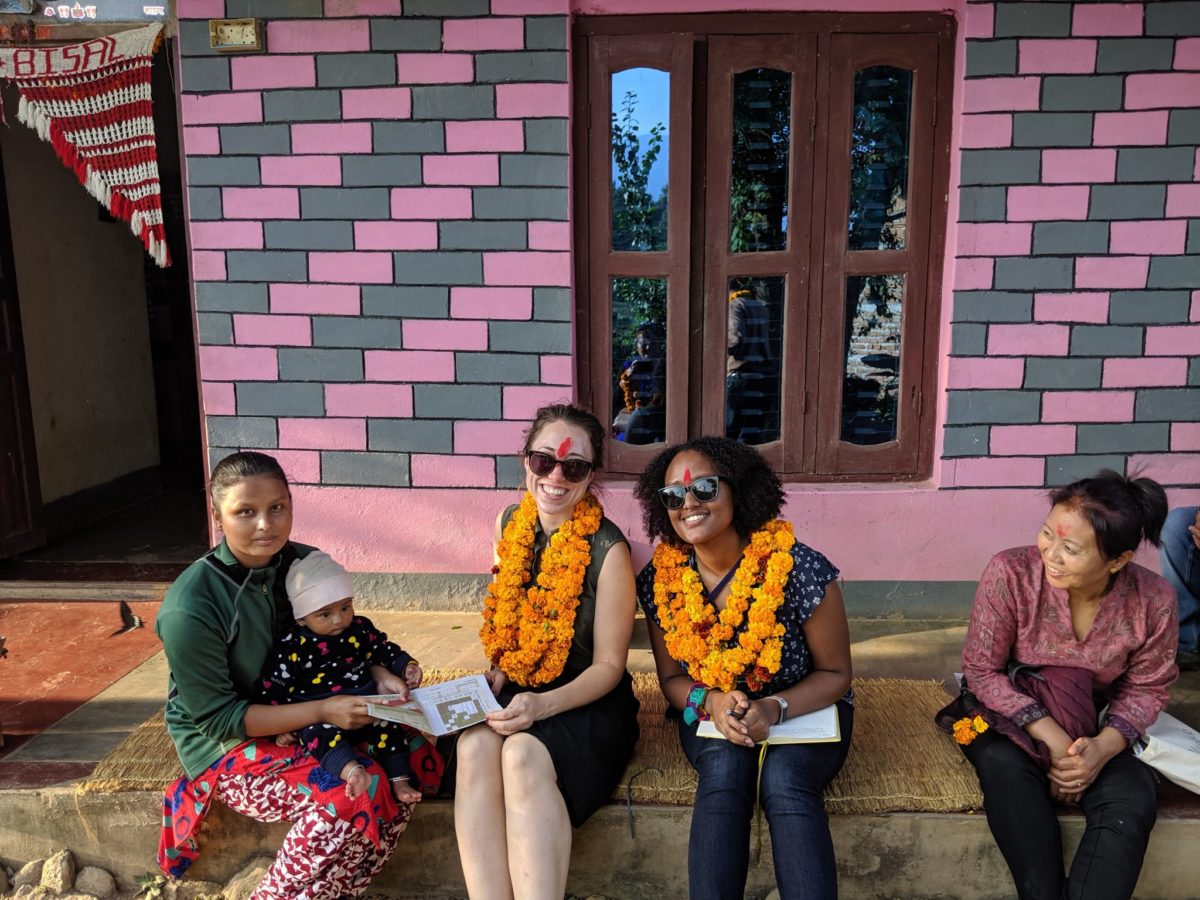
Key Life Event celebration with 1,000 day mother Sun Mays Kumal and her 11-day old daughter, Ayushal Ishereen

The team visited two districts, Gorkha and Lamjung, and spent some time learning from the local NGOs which partner with national and international organizations for community program implementation. In Gorkha, the team visited a health facility to observe and interact with 1,000 day nutrition and health service providers. Team members also attended a Key Life Event celebration where they were able to observe how truly integrated the Suaahara interventions are. Key Life Events are celebrations that occur within different stages of the 1,000 day journey, such as when a baby starts eating solid foods, and are leveraged to continue counseling the mother on best practices over the 1,000 days window. 1,000-day mothers are shown support by their community by being showered with gifts of vegetables from neighbors’ farms (agriculture is a key intervention of the Suaahara II project).

In Lamjang, a more remote and isolated district than Gorkha, the Suaahara II interventions complemented the region’s varying cultural and religious practices. The team met with and observed peer facilitators, a 1,000-day mothers group, and Female Community Health Volunteers (FCHVs). One of the key takeaways from these meetings was the community’s own pride in progress in their fight against malnutrition – it was refreshing to observe this integrated approach to nutrition programming.

What we’re looking forward to

As 2019 comes to an end, the community is gearing up for a critical year for nutrition in 2020. The 1,000 Days Global Team is feeling newly inspired from being able to strategize more closely with key partners and seeing first-hand the positive impact good nutrition programming can bring to a community. The team is working closely with ICAN partners to finalize advocacy plans ahead of 2020 and is excited to channel this renewed sense of energy into raising and building momentum towards the 2020 Nutrition for Growth Summit. Stay tuned for updates!


Statement on Paid Parental Leave for Federal Workers

1,000 Days applauds the inclusion of 12 weeks of paid parental leave for federal workers in the National Defense Authorization Act (S. 1790) conference agreement. As the nation’s largest employer, this measure will ensure that more than 2 million federal workers can take the time they need to care for their new baby and themselves after childbirth. Thank you to all the Members that championed this provision, including Reps. Carolyn Maloney and Chrissy Houlahan and Senator Brian Schatz. We are grateful for the bipartisan cooperation between Chairmen Adam Smith and Jim Inhofe as well as Ranking Members Mac Thornberry and Jack Reed in including this important provision in the NDAA. We urge all Members to support this provision.

Yet, even as we celebrate this critical step forward, we recognize the work continues to ensure comprehensive paid leave is available to all workers. This provision will not provide paid leave for a pregnant worker on bedrest for her health and that of her baby. It will not provide paid leave for a parent whose child is diagnosed with cancer at 18 months. And unfortunately, it will not provide paid leave to millions of private sector workers in every community. Still, this is an important step in ensuring more workers can access the leave they need.

We encourage Congress and the White House to build on this momentum and pass comprehensive paid family and medical leave. No parent should have to choose between taking time to care for and bond with their child and earning the income they need to support their family. And all women should be able to take the time they need to care for themselves during pregnancy and after childbirth. Access to comprehensive paid leave is critical for the health and wellbeing of moms, babies and their families during the 1,000-day window and beyond.

Health Insurance is Important for a Healthy First 1,000 Days

Health insurance is critical to a healthy first 1,000 days. The foundation for lifelong health is set during this window of time, and health insurance helps ensure all moms and babies receive the care they need to thrive. To learn more, check out 1,000 Days’ new briefs on the importance of health insurance during pregnancy, during the postpartum period and for infants and toddlers.

From November 1 to December 15, families can sign up for health insurance through the Health Insurance Marketplace (HealthCare.gov). Plans purchased through the marketplace are comprehensive and cover the essentials that moms and babies need for a healthy first 1,000 days. Best of all, financial help is available to reduce the cost of coverage and care through federal premium tax credits and cost-sharing assistance.

Despite the importance of health insurance during the first 1,000 days, too many families lack the coverage they need. In September, the Census Bureau released new data showing that the number of children without health insurance coverage in the United States rose significantly in 2018. According to the Georgetown University Center for Children and Families (CCF), this is the second year in a row that uninsurance rates have risen after having fallen for much of the past decade, pointing to a troubling trend.

The new data show that 4.3 million children under the age of 19 were uninsured in 2018—an increase of 425,000 children from 2017. That means 5.5% of all children did not have health insurance coverage last year. And for infants, toddlers and young children ages 0-5, the uninsured rate rose from 4.5% in 2017 to 5.3% in 2018.

Analysis by Georgetown University CCF indicates that some groups of children are faring worse than others. For example, Hispanic children saw the largest jump in uninsurance compared to other races, with an increase of 1 percentage point from 7.7% to 8.7%. Children in the South are the worst off regionally, with the highest rates of uninsured children at 7.7%.

There are many reasons for the increase in the number of uninsured children, including a decline in public coverage for kids through Medicaid and the Children’s Health Insurance Program (CHIP). Medicaid and CHIP coverage fell by more than 2 percentage points among young children, from 40.2% to 38.0%. Changing eligibility rules for children and parents, confusion around the use of public benefits by legal immigrant families, and diminished outreach efforts contributed to this decline.

At 1,000 Days, we know how important health insurance is for the health of our nation’s moms, babies and families. That’s why we’re so concerned about this uptick in the number of uninsured children—and why we fight to support high-quality and affordable health insurance for everyone.

What We’re Watching in Congress – November 2019

With the end of the year swiftly approaching, Members of Congress have indicated they have quite a few priorities they hope to attend to before 2019 draws to a close. Here are a few things we are keeping our eyes on at 1,000 Days:

An upcoming funding deadline

Funding for the federal government is currently set to run out on November 21st, following a short-term extension passed in September. House and Senate Appropriators are still working to finalize an agreement about long-term funding, leading to speculation that another stop-gap bill will be necessary. 1,000 Days will continue to monitor the Appropriations process and urge Members to prioritize funding for programs that support the health of moms and babies everywhere.

Supporting investments in global nutrition

On October 30, the House Foreign Affairs Committee passed a global nutrition resolution sponsored by Rep. Roger Marshall (R-KS) and Rep. Jim McGovern (D-MA). House Resolution 189, which has 131 co-sponsors, recognizes the importance of sustained U.S. leadership to accelerate progress against maternal and child malnutrition and helps to highlight the vital role of nutrition in the 1,000-day window. 1,000 Days is grateful to the House Foreign Affairs Committee Chairman Eliot Engel, Ranking Member Michael McCaul, Representatives Marshall, McGovern and the many co-sponsors of the resolution for shining a light on the foundational role of nutrition in a child’s cognitive and physical development.

Progress on legislation to protect pregnant workers

On October 22, the House Committee on Education & Labor Subcommittee held a hearing on the Pregnant Workers Fairness Act (H.R. 2694). This bipartisan bill requires employers to make reasonable accommodations for pregnant employees and ensures that workers cannot be discriminated or retaliated against for seeking those accommodations. While similar laws are already in place in 27 states, H.R. 2694 would create a national standard ensuring that a woman’s safety and well-being at work are not dependent on her zip code. 1,000 Days submitted a letter to the Committee supporting this important legislation.

This Halloween (and Every Day), Avoid Scary Foods and Beverages for Toddlers

Happy Halloween! As families across the country get ready for a night of trick-or-treating, you may be noticing just how much candy there is around you – and your young children – this time of year. In fact, Halloween candy sales are expected to total almost $9 billion in the U.S. this year.

Halloween is just one day a year, but unhealthy eating is a concern year-round. Developing healthy eating habits and supporting healthy weight gain in the first 1,000 days can help build the foundation for a thriving future. This Halloween, 1,000 Days is highlighting the importance of limiting toddlers’ consumption of scary snack foods and spooky beverages.

Scary Snack Foods

Experts recommend that toddlers eat two to three healthy snacks each day. Snacks can be an important source of nutrients for toddlers’ growth and development, but many toddlers in the U.S. snack on foods that are high in added sugar and sodium and low in nutrients. Too often, parents receive mixed messages about which snacks are best for their toddlers. Many snack foods are marketed as “healthy,” “natural,” “organic” or full of vitamins and minerals, but they also contain too much sugar or sodium. Want to hear something scary? A single-serving pouch of fruit snacks can contain as much as 3 or 4 teaspoons of sugar!

At 1,000 Days, we know how difficult it can be to get your toddler to snack on vegetables, fruits and other nutrient-rich foods. From picky eating, to a lack of time or resources, to the convenience of processed foods – the barriers to healthy snacking can seem endless. One way to incorporate more nutrient-dense foods into your toddler’s snack is to include a fruit or a vegetable combined with food from the grain or dairy group at most snacking occasions. Sliced fresh fruit, vegetables with dip or whole grain crackers with cheese are all good options.

Spooky Beverages

When it comes to a healthy diet for toddlers, what they drink is just as important as what they eat. According to new recommendations from leading medical and nutrition organizations, toddlers should drink water and milk each day. Toddlers don’t need to drink juice to be healthy (it’s best for them to meet their daily fruit intake by eating whole fruit), but consuming a small amount of 100% fruit juice is okay.

The recommendations caution against drinks with added sugars, like flavored milks (e.g., chocolate, strawberry), sugar- and low-calorie sweetened beverages (like sodas, sports drinks and fruit-flavored drinks) and toddler milks (sometimes called transition formula, follow-up formula or growing-up milk – and which contain more sodium and less protein than whole cow’s milk). Some of these beverages – especially toddler milks – are marketed as a good source of nutrients to support healthy growth and development. But, they can contribute to dental cavities and other negative health impacts such as weight gain. Talk about spooky!

Check out 1,000 Days’ new videos for more information on healthy drinks and tips for avoiding spooky beverages.

What We’re Watching in Congress – October 2019

Congress returns to Washington D.C. on October 15 following a two-week district work period. Below are a few things we are monitoring here at 1,000 Days:

Access to Healthy Foods for Young Children Act

Senator Bob Casey (D-PA) recently introduced the Access to Healthy Foods for Young Children Act (S. 2501), which strengthens the Child and Adult Care Food Program (CACFP). CACFP provides nutritious food to many children in childcare settings, helping working parents to provide their children with critical healthy meals during the first 1,000 days of life and beyond. Senator Casey’s proposal increases reimbursements to childcare providers to improve nutrition standards and add an additional optional meal for children who spend long periods of time in childcare. 1,000 Days will continue to support legislation that ensures children get the nutrition they need to grow and thrive.

Committee progress on legislation to support moms, babies, and their families

Two 1,000 Days priority bills are nearing important committee consideration:

  • The Pregnant Workers Fairness Act (H.R. 2694) may soon be given a hearing, an important step in advancing the legislation to the floor. This bipartisan bill requires employers to provide reasonable accommodations to their pregnant employees and protect those employees from retaliation in the workplace. 1,000 Days is monitoring the progress of this bill closely and will continue to advocate key legislators for its passage.
  • Additionally, the House Committee on Ways and Means is considering holding a hearing on the Family and Medical Leave Insurance (FAMILY) Act (R. 1195). This is an opportunity for Members to show their support for comprehensive paid family and medical leave that supports all workers and their families. 1,000 Days is working closely with partners and lawmakers to emphasize the lifesaving potential of paid leave for moms, babies and their families.

More time to come to an agreement on government funding

Last month, Congress passed a Continuing Resolution extending federal funding until November 21. Included in this package were critical reauthorizations of many programs impacting the health of moms and babies, including Community Health Centers and the Temporary Assistance to Needy Families (TANF) program. 1,000 Days will continue to urge Members to prioritize funding for programs that help children everywhere get the healthiest start to life.