Category: Uncategorized

Update: Open Invitation For Constructive Dialogue On Infant Feeding Recommendations Still Stands
In the interest of being transparent, 1,000 Days is posting publicly the message our Executive Director, Lucy Sullivan, sent today to the co-founder of the Fed Is Best Foundation. 1,000 Days has joined nearly 100 organizations to request a meeting with the co-founders of the Fed Is Best Foundation. Our hope is to engage in a constructive dialogue to discuss the concerns they have raised with respect to our nation’s infant feeding recommendations and associated health care practices.

Dear Dr. del Castillo-Hegyi,

As you know, almost 100 organizations have requested to meet with Fed is Best in hopes of engaging in a constructive conversation on infant feeding recommendations and associated health care practices. Many of these groups work directly with breastfeeding mothers and have seen first-hand the problems caused by infant feeding complications. They help support parents, work with under-served families and communities, advocate for sick and vulnerable newborns, and are dedicated to improving the health and well-being of mothers and babies.

I will share your “open letter”, as you have asked, with these organizations despite the fact that your letter is unfortunately riddled with inaccuracies and distortions. For example, never once did we indicate that we wanted a closed-door meeting. We are committed to transparency as well and would have gladly made public the proceedings of our meeting with Fed is Best.

Given that your letter indicates that you “have not had the time or interest” and it is a “lower priority” to meet with the 95 organizations that have requested a meeting, it seems that Fed is Best is not interested in trying to find ways to work together for the benefit of mothers and their babies. Moreover, based on the approach you outlined in your open letter, it appears that Fed is Best has no intent in constructively engaging with the many organizations that can be your allies in tackling infant feeding issues. Rather, it would seem that you have chosen to criticize and attempt to discredit groups—including the World Health Organization (WHO)—that have reached out to Fed is Best in good faith.

I personally do not understand how attacking organizations like WHO and other groups helps serve the interests of mothers and babies or advance what you say is your top priority: saving babies’ lives. Nevertheless, our invitation to meet with you remains open, assuming you can approach the meeting with a spirit of honest collaboration and with the intent of trying to find common ground in order to help families get the support they need to give their babies the strongest start to life. In the meantime, I wish you luck with your endeavors.

Sincerely yours,

Lucy M. Sullivan
CHIP Must Be Funded – But Not At The Expense Of Other Public Health Programs

Last week the U.S. House of Representatives passed the Championing Healthy Kids Act (H.R. 3922). While 1,000 Days supports the legislation’s inclusion of funding for Children’s Health Insurance Program (CHIP), Community Health Centers, and other health programs, we are deeply concerned about some of the offsets included in the bill. Specifically, the House bill cuts billions from the Prevention and Public Health Fund and jeopardizes families’ access to critical health coverage.

It has been more than a month since funding for CHIP expired. Without immediate Congressional action, health care for 9 million children and 370,000 pregnant women will remain in jeopardy. Additionally, funding for community health centers and other public health programs expired at the end of September. Congress is long-overdue in extending funding for these programs. However, by cutting the Prevention and Public Health Fund to pay for these extensions, Congress is undermining the very health care system America’s families depend on. The Prevention and Public Health Fund provides funding for many critical initiatives, including breastfeeding support programs, strengthening the public health infrastructure, and reducing health disparities. Together, these programs ensure pregnant women, young children and their families have access to the health care and support they need to be healthy and thrive.

1,000 Days urges Congress to find a bipartisan path forward that ensures all children and their families will have access to quality health coverage, without threatening other important public health programs.

Statement on the Global Nutrition Summit

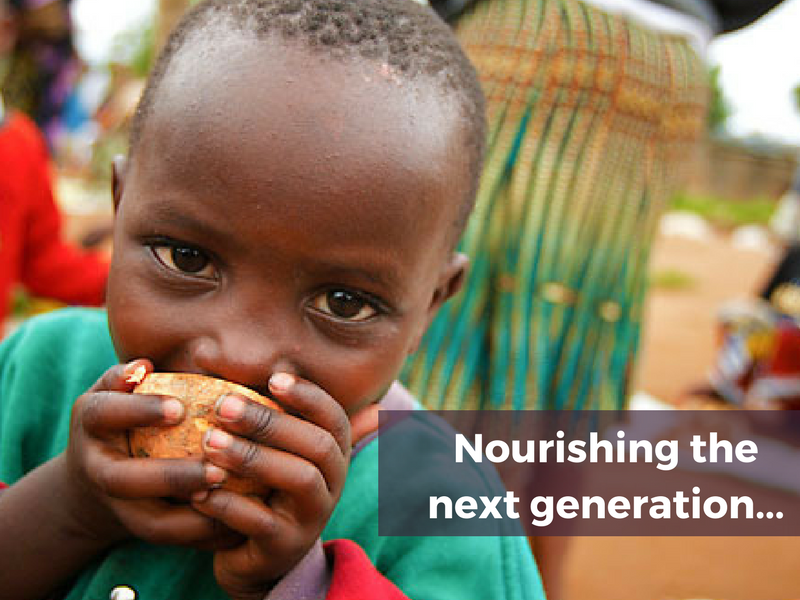
1,000 Days celebrates the 2017 Global Nutrition Summit, organized by the Food and Agriculture Organization, the World Health Organization, the United Kingdom Department for International Development, the Bill & Melinda Gates Foundation and the Global Nutrition Report, for putting nutrition at the forefront of the global agenda. As the world faces competing challenges, we must remain laser focused on the often-overlooked crisis of malnutrition that continues to be responsible for 45% of child deaths and a major obstacle to the achievement of economic prosperity.

The Global Nutrition Summit offered an opportunity to highlight the critical importance and cost-effectiveness of good nutrition to save and improve lives – and in response – recommit to ending malnutrition by 2030, a goal that requires sustained political will from all stakeholders.

In total, the summit mobilized $3.4 billion for nutrition, including $640 million in new commitments. The Eleanor Crook Foundation, a U.S.-based family philanthropy, pledged $100 million by 2030 to focus on research, capacity building and advocacy for good nutrition. In a tremendous reflection of American generosity and leadership, thirteen U.S. civil society organizations pledged a collective $1.17 billion for 2018 – 2020 for nutrition. Additional commitments from foundations in Switzerland, Nigeria, Nepal, and India will also contribute to transformative programming. Several affected countries, including Côte D’Ivoire, El Salvador, and Madagascar, made commitments to expand domestic efforts to fight malnutrition. These combined efforts should embolden governments and donors alike to follow suit with investments of their own that are similarly targeted and impactful.

If we are to end malnutrition, efforts must be urgently redoubled to ensure investments in nutrition are reaching the most vulnerable populations. The newly released Global Nutrition Report, an annual publication designed to hold donors accountable for commitments to global nutrition, serves as a sobering reminder that almost every country in the world is affected by poor nutrition, devastating families and destabilizing the global economy.

Turning the tide on malnutrition will require nothing short of a “turbo-charged” effort. With new funding and demonstrated political will, the Global Nutrition Summit can be the spark that ignites a global response. 1,000 Days is committed to work in partnership with all stakeholders to make this a reality.

Open Enrollment: 5 Things You Need To Know

Thanks to the efforts of millions of Americans around the country, the Affordable Care Act (ACA) remains the law of the land and young children and their families can still get the health insurance they need to thrive.

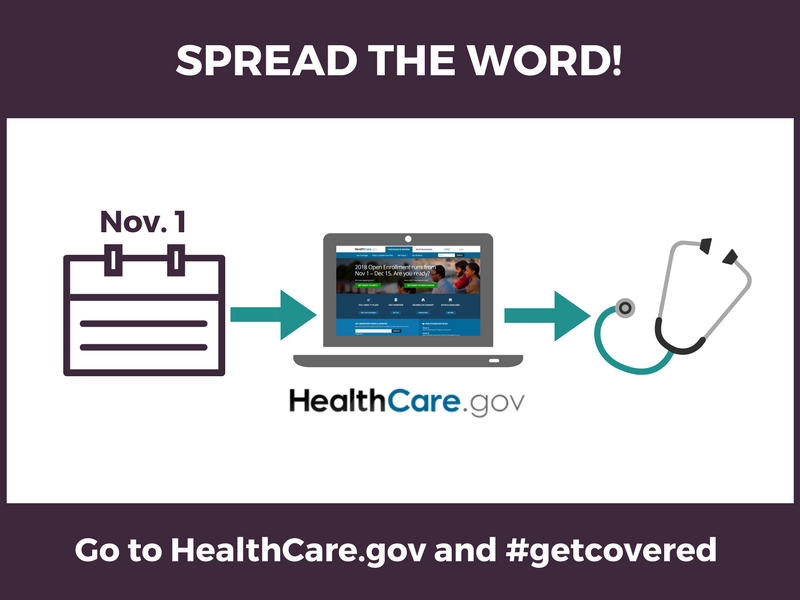
That means that on Wednesday, November 1 those that need comprehensive health insurance coverage that begins on January 1, 2018 can purchase it—often with significant financial help—through HealthCare.gov and state marketplaces.

Don’t let the headlines detract from this fact: moms and babies need health insurance to access critical services that are vital during the first 1,000 days—and it is available!

While we must remain vigilant to defend health care from ongoing threats, we also need to ensure that everyone who needs health insurance gets signed up. Soon, millions of Americans will be able to go to HealthCare.gov to choose a health plan that meets their needs. Leading up to and during open enrollment, we all must get the word out and help ensure people get covered.

Here are the top five things you need to know about open enrollment:

    1. Open Enrollment starts on November 1 and ends on December 15!

      Need health insurance for 2018? You must enroll between November 1 and December 15, 2017.This is the only time in the year to purchase health insurance through the Marketplace (other than in some very limited special life changes). So it’s important to get enrolled during this limited, open enrollment window! Coverage purchased during open enrollment begins January 1, 2018.

    2. HealthCare.gov (or your state’s marketplace) has information about the health plans available in your area.

      If you want to see what coverage options are available in your community, HealthCare.gov or your state marketplace has the information you need. Starting November 1, 2017, you can enroll in a plan that meets your health needs and the needs of your family. And coverage could be more affordable than you think. For many, significant financial help is available based on income and family status. Health insurance plans also offer help paying out-of-pocket expenses for some families. These subsidies are all still available to consumers and have not been impacted by any of the recent debates in Washington, DC.

    3. Shop around!

      Take some time to compare health plans in your area and understand what coverage options are available. HealthCare.gov or your state’s marketplace make it easy to do this. Understanding the differences among the plans is important and can help you choose the best option for your family. You may be able to even save some money!

    4. Help is available. So ask for it!

      Free expert help is available. If you have questions about signing up or want to talk through your options with a trained professional, free help is available online, over the phone, or in person. They can help answer your questions and assist with filling out the paperwork. To find a professional in your area, check out localhelp.healthcare.gov or call 1-800-318-2596.

    5. Spread the word!

      Know someone who needs health coverage? Spread the word! Open enrollment is just 45 days this year—and outreach efforts are limited. Please share this information with anyone you know who needs health insurance. We all can help ensure our family, friends and co-workers get connected and enrolled in the health coverage they need.

Congress: 9 Million Children Are Counting On You To Extend CHIP

Today, we call on Congress to maintain its commitment to existing public health programs who’s funding expired on September 30 – Children’s Health Insurance Program (CHIP), Federally Qualified Health Centers (FQHCs), and Maternal, Infant, and Child Home Visitation (MICHV). Together, these programs ensure children, pregnant women, and their families can access the health services and supports they need to be healthy. Specifically, CHIP provides health insurance for 9 million children nationwide and about 370,000 pregnant women.

We are encouraged by bipartisan action in both the Senate and the House to reauthorize CHIP—and we urge Congress to quickly pass legislation that maintains our nation’s commitment to a robust public health system. However, we strongly oppose any effort that cuts funding for the Prevention and Public Health Fund, limits access to Medicaid, or jeopardizes young children and their families’ access to the health services they need to thrive.

Congress must make the health and wellbeing of young children and their families a priority. To do this, it must extend funding for CHIP and maintain important investments in all other public health programs that serve these vulnerable populations.

Report From UNGA: Progress On Nutrition Is Possible

It is easy to feel overwhelmed by what can seem like insurmountable global challenges. Here at 1,000 Days, we are constantly inspired by stories of success around the world. We know that despite the obstacles that remain, millions of lives have already been transformed by improving nutrition.

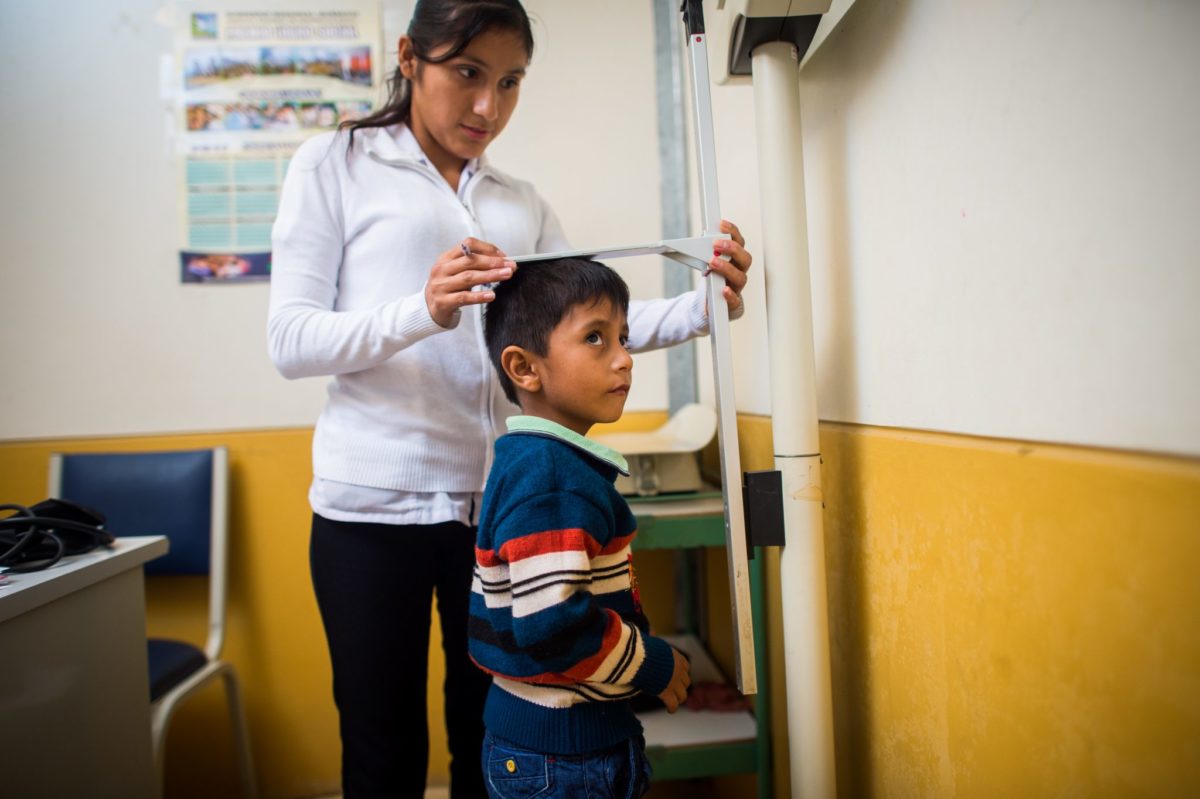
Take for instance a recent success story from Peru– where they successfully reduced stunting by 10% over the past five years thanks to tireless advocacy and a comprehensive nutrition strategy. Peru’s success is just one of many global success stories that are featured in a new report released last week by the Bill & Melinda Gates Foundation.

Stories like this remind us that the work we do can save and improve lives.

The World’s Attention Must Be On Nutrition
Dr. Tedros Speaking At Goalkeepers For Nutrition Side Event

Dr. Tedros Adhanom, Director General, World Health Organization

The truth is when it comes to nutrition, we know what works. What’s needed now is an urgent prioritization of proven interventions so that we have the money, the policies, and the partnerships to do what works.

We carried this message to New York last week, as world leaders gathered for the United Nations General Assembly. There, we called on attendees to take urgent and decisive action to increase investments in nutrition to save and improve lives around the world.

In partnership with the Bill & Melinda Gates Foundation, the Power of Nutrition, the Scaling Up Nutrition Movement and the World Health Organization, 1,000 Days hosted an event at UN Headquarters where we were honored to have the new Director General of the World Health Organization, Dr. Tedros Adhanom. In his remarks, Dr. Tedros reiterated this call to action: “If we want to end stunting, the world’s attention must be on nutrition.”

1,000 Days’ Mwandwe Chileshe also lent her voice as a global nutrition advocate from Zambia to an event on Good Food and nutrition, hosted by Global Citizen and the SDG2 Advocacy Hub.

As part of her work with Global Citizen, Mwandwe also attended the Global Citizen Festival red carpet where she highlighted that investing in nutrition is critical to ending extreme poverty.

Carrying the Message Forward

The opportunity to be around so many people working to see a world free from poverty and malnutrition was inspiring. And yet, there is much more work that needs to be done.

A recent report highlights a devastating trend: in 2016, the number of chronically undernourished people is estimated to have increased by nearly 40 million people compared to 2015. This news signals the urgent need for greater action and political will in the fight against malnutrition.

We can change this trajectory with concerted action. When good nutrition is prioritized – especially during the critical 1,000-day window between pregnancy and age two – children are given the chance to reach their full potential. And that potential, when nurtured and nourished throughout life, knows no bounds.

At 1,000 Days, we will continue to carry this message forward. A high-level Global Nutrition Summit to be hosted in Italy in November is an important upcoming platform to reinforce that now is not the time to retreat.

Progress is possible, but it is not inevitable. We must act now to invest in nutrition and create a healthier and more prosperous future.

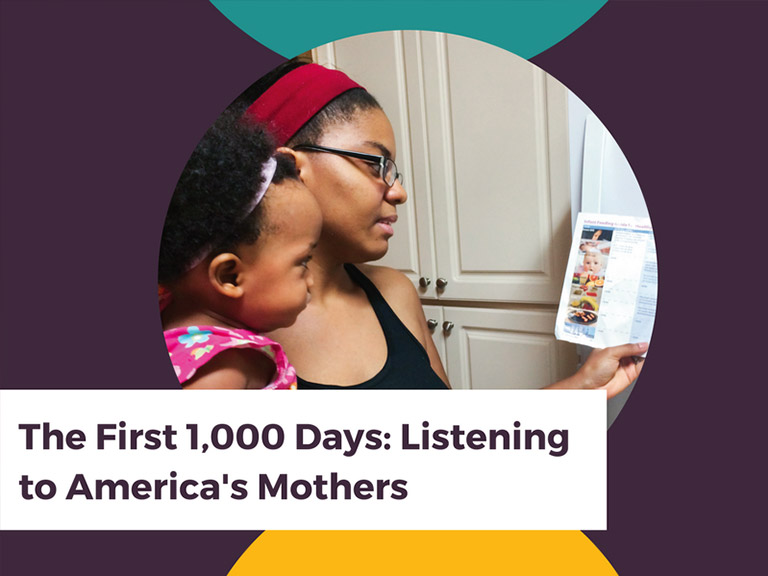
The First 1,000 Days: Listening to America’s Mothers

This Presentation Uses Sound


The numbers and statistics paint a concerning picture for America’s young children and their families: nearly half of all infants and toddlers in the U.S. live in low-income households and 1 in 5 children under the age of 6 live in families that struggle to put enough nutritious food on the table. What’s clear is that too many young children in America aren’t getting the nutrition they need to thrive. But the numbers are only one part of a much more important story: what women themselves have to say about their experiences with nutrition, feeding and diet during pregnancy and their children’s earliest years.

In order to understand the perspectives of mothers themselves, 1,000 Days set off on a listening journey to hear from moms across the country about their thoughts on nutrition and their experiences in feeding their young children. We met nearly 60 mothers –women in rural Oklahoma to urban centers in California; in southern states like Mississippi and Kentucky to Minnesota in the Midwest.

From their very first feeding decisions, the mothers we met face conflicting messages from various sources and too few strategies to put their knowledge into action. Further, they deal with a lack of support in their homes, schools, workplaces and communities. And too often, when they aren’t able to provide what they know is best for their children, moms blame themselves.

Scroll down and listen as Wanda, Chloe and Toshina talk about their personal experiences as moms with young children. Please note, these audio clips were recorded in the women’s homes so there is background noise. You may need to turn up the volume on your headphones.

Wanda

Wanda lives in Kentucky with her husband and 3 boys: a 4-year-old, a 22-month-old and an 8-week-old. In this audio clip, Wanda discusses the challenges of breastfeeding and notes that it can be especially tough in the beginning when mom and baby are still getting the hang of it. At first she didn’t feel comfortable nursing in public, but as time passed she became more confident. Wanda also highlights the hardships many breastfeeding moms face when forced to return to work—especially an unsupportive workplace—before they are ready.

Chloe

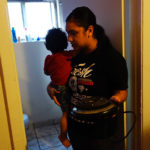
Chloe shares a motel room in California with her husband and her three children, all of which are under age 4. In her audio clip, Chloe discusses the challenges she faces in buying and preparing healthy foods for her family. Without an oven or stove, Chloe must rely on a rice cooker and hot plate for all of her cooking. She worries about the safety of her young children with this set-up, especially when they run around the small room – she doesn’t want them to pull the cords and hurt themselves. When Chloe doesn’t have enough food, she visits food pantries or reaches out to other moms she meets through groups on Facebook. She hopes to be able to move out of the motel and into a better housing situation soon.

Toshina

Toshina is from Mississippi, where she lives with her parents and two sons – a 15-month-old and a 2-month-old. In this clip, Toshina shares her story about trying to meet her breastfeeding goals as a high school student. Despite not having any family members who could help her, Toshina started breastfeeding with the encouragement of another mother she met at a local parenting class. Although she loves all the health benefits of breastfeeding, for Toshina, the best part is the connection she feels to her son when she nurses.

We are deeply grateful to each of the women who participated in this research. All of the moms featured in the report provided permissions for their words and photos to be shared, but their names have been changed. They opened up their homes and hearts to us and generously shared their stories. It is an honor to share those stories with you.

For more information and to read about some of the other moms who participated in this research, read The First 1,000 Days: Listening to America’s Mothers.

5 Reasons Why The Latest Effort To Repeal The Affordable Care Act Is Bad For Moms And Babies

While the future of the Senate Republican’s latest effort to repeal the Affordable Care Act (ACA) is uncertain, one thing is very clear – the Graham-Cassidy bill is bad for moms and babies.

Here’s why:

  1. Maternity, newborn and pediatric care are at risk.
    States would be able to waive the essential health benefits – like prenatal, maternity and pediatric care – currently covered under the ACA. That’s why even physician groups like the American Congress of Obstetricians and Gynecologists (ACOG) and the American Academy of Pediatrics (AAP) are strongly opposing the bill.

    Essentially, this bill could mean a return to a pre-ACA health system when 75% of plans on the individual market did not include maternity coverage. Women would be left to decide between going without needed health services or paying out-of-pocket. That’s a decision no women should be forced to make.

  2. Women could pay more for less health coverage.
    Health plans could charge more for comprehensive coverage. This means more women would be forced to choose between buying cheap bare-bones insurance packages that don’t cover their needs – and paying out-of-pocket for other services (like maternity care) – or paying exorbitant prices for health plans that provide the coverage they need.

    We’d be stepping back in time, before the passage of the ACA, when women could be charged more for their health insurance just because they are women.

  3. Pregnancy could become a pre-existing condition (again).
    Insurers would be able to decide what is – and is not – a pre-existing condition, and then charge more accordingly. Just like before the passage of the ACA, women could be denied coverage (or charged a lot more) for health insurance just for having given birth or being of child-bearing age.

    In fact, according to the Center for American Progress, insurers could charge pregnant women over $17,000 more, putting health insurance out of reach for millions of women – right when they need it the most.

  4. The Medicaid program would be gutted.
    About one TRILLION dollars in federal funding for Medicaid would be cut. Medicaid is a critical source of health insurance for millions of low- and middle-income people. As the largest insurance program for women, it covers the cost of nearly half of all America’s births.

    Without Medicaid, women would become uninsured and lose access to the comprehensive health coverage that they desperately need. For those who could keep their Medicaid insurance, their coverage would likely shrink as states replace comprehensive health services with bare-bones coverage for maternity and infant health services.

  5. It hurts working families the most.
    The bill would end the financial assistance that makes purchasing health insurance possible for millions of America’s middle-income families. It repeals subsidies within ACA – subsidies that currently 85% of people purchasing insurance coverage on the marketplace receive.Coupled with the proposed cuts to Medicaid, the Graham-Cassidy bill would leave millions of Americans without their health insurance, according to analysis from the Congressional Budget Office (CBO).

Graham-Cassidy is not the health care plan that America’s moms and babies—and thus the country as a whole—need. It is time for all Members of Congress from both parties to work together to ensure women, infants and young children have access to comprehensive and affordable health care they need to thrive.

Bipartisanship Is Possible – And We Need It Now More Than Ever

For the past several months, 1,000 Days and its community has called on Congress to work together to ensure America’s women, infants and young children have access to the comprehensive and affordable health care they need to thrive. From sharing personal stories to engaging directly with Members of Congress, we’ve seen how the power of people can truly affect change. Together, we protected health insurance for America’s moms and babies.

But now, once again, we find ourselves at a crossroads for health care—and we need everyone to weigh in.

On one hand, the Republican and Democratic leaders of the Senate Finance Committee have put forward bipartisan legislation to support the Children’s Health Insurance Program (CHIP), a crucial source of health insurance for millions of children across the U.S. Action is needed by September 30th to protect this important program. The introduction of this bill shows that health care can—and does—transcend partisan bickering.

On the other hand, Senate Republicans are making one last-ditch attempt to repeal the Affordable Care Act through the Graham-Cassidy bill. If passed, this bill would prove disastrous for America’s moms and young children.

The Graham-Cassidy bill would strip away comprehensive coverage and result in millions of people—including women and children—losing their health insurance. This bill proposes to:

  • Clamp down on, and quickly eliminate, the federal funding that makes individual coverage affordable.
  • Reduce Medicaid coverage for millions of parents and children.
  • Put benefit decisions in the hands of states and insurance companies, including to allow them to charge more for people with pre-existing conditions.

In short, this bill is a major step backwards for children and their families.

1,000 Days calls on Congress to reject all proposals that repeal the Affordable Care Act and instead to support and quickly advance bipartisan action, like the CHIP legislation, that invests in women, children and America’s future.

Statement on Senate Appropriations Committee’s Passage of State and Foreign Operations Bill

1,000 Days applauds Senate appropriators for their strong, bipartisan support of maternal and child nutrition programs in the Fiscal Year 2018 State and Foreign Operations Appropriations bill. As in the House, the Senate legislation maintains the current funding level of $125 million for nutrition in the Global Health Programs account. Funding from this account supports vital services to improve maternal diets; enhance nutrition during pregnancy; promote breastfeeding; and improve infant and young child feeding practices. These and other activities are foundational to the achievement of broader development goals. The bill, which passed unanimously, also includes report language referencing the need for critical nutrition programs that address malnutrition and micronutrient deficiencies.

1,000 Days appreciates the bipartisan leadership exhibited by the committee in rejecting the Administration’s proposed deep cuts to global health and development programs more broadly. The funding levels contained in the bill signify Congress’ recognition of the critical importance of continued U.S. leadership in support of these vital programs. During the markup, Senator Lindsey Graham (R-SC), Chairman of the State, Foreign Operations, and Related Programs Subcommittee stated, “Now is not the time for retreat; now is the time to double down on diplomacy and development. The bill provides vital security, economic, development, health and humanitarian assistance that makes all Americans safer at home.” Similarly, Senator Patrick Leahy (D-VT), Ranking Member of the Subcommittee said, “This bill repudiates the President’s reckless budget request, and I commend Chairman Graham for reaffirming the primacy of the Congress in appropriating funds.

It is imperative that the full range of nutrition investments are protected and brought to scale so that we can see the tremendous returns possible when contributions from all sources – including the United States – are increased for high-impact interventions: 3.7 million child lives saved, 65 million fewer stunted children, and 265 million fewer women suffering from anemia. Importantly, improved nutritional outcomes require a multi-sectoral response and robust funding across global health, development and humanitarian accounts, as well as sufficient resources to maintain strong technical capacity at USAID and other agencies.

The right nutrition in the 1,000 day window between pregnancy and a child’s second birthday is an investment in ensuring children can reach their full potential and countries can reach their broader economic development goals. We are grateful to the committee for their leadership and to all Members who have championed greater progress against malnutrition. 1,000 Days looks forward to working with them to ensure sustained and greater gains moving forward.