Year: 2021

On Child Health Day, New Focus on Grandparents as Caregivers
Dietary Guidelines highlight life stages; organizations join together to promote resources and support

October 4, 2021 (WASHINGTON DC) Today is the nation’s first Child Health Day since the Dietary Guidelines for Americans began providing nutrition recommendations by life stage, including pregnancy, lactation, infancy, and toddlerhood. With more grandparents caring for grandchildren and continued research demonstrating the power of the earliest years for children’s future health and well-being, public health and child nutrition groups are providing additional resources and support for grandfamilies.

The Dietary Guidelines for Americans, 2020-2025 is the first edition to provide guidance on healthy dietary patterns for every life stage from birth through older adulthood. According to DietaryGuidelines.gov, this edition also emphasizes that it is never too early or too late to eat healthy.

In particular, infancy and toddlerhood provide an important opportunity to build long-lasting healthy habits, including a healthy beverage pattern. What children drink during the early years can help set them on a path for healthy growth and development.

“During the first 1,000 days, the brain grows more quickly than at any other time in a person’s life. Supporting the health and nutrition of families and children during this window of opportunity must be part of any strategy to promote health, reduce disparities and enable future generations to lead better lives,” said Blythe Thomas, 1,000 Days Initiative Director.

Research in the fields of neuroscience, biology and early childhood development provide powerful insights into how nutrition, relationships, and environments in the 1,000 days between a person’s pregnancy and a child’s 2nd birthday shape future outcomes.

A recent study from Generations United, Family Matters: Multigenerational Living Is on the Rise and Here to Stay, finds that the number of Americans living in a multigenerational household with three or more generations has nearly quadrupled over the past decade, with a dramatic increase of 271 percent from 2011 to 2021 (7% vs. 26%). Generations United estimates 66.7 million adults ages 18+ in the U.S. are living in a multigenerational household; that’s more than 1 in 4 Americans.

To support grandparents and older adults who are caring for young children, or who love and support pregnant and birthing people and their children, many resources are available, including:

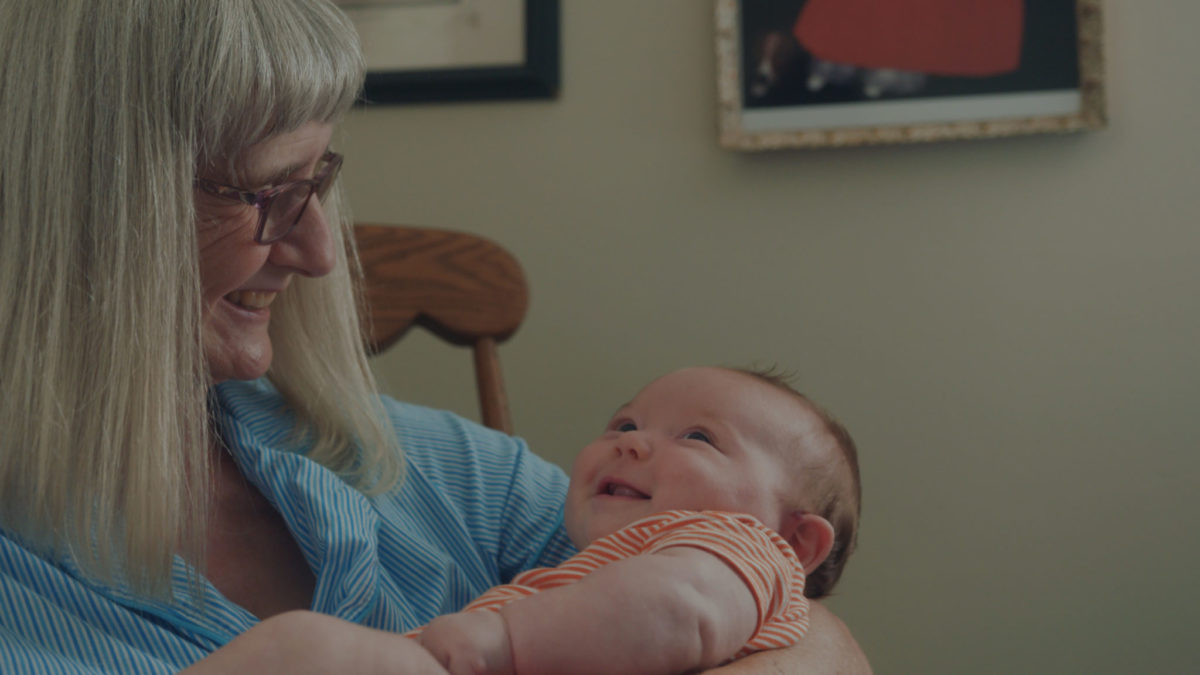
The new videos emphasize small steps grandparents can take to nourish the young kids in their lives, including avoiding serving sugary drinks and instead offering water or plain milk.

“With the rise of multigenerational families, we must recognize and support grandparents in their varied and essential roles in the lives of their grandchildren. Whether raising the children full time, providing care while parents work, or regularly visiting with them, grandparents can be critical figures in supporting their grandchildren’s healthy habits,” said Jaia Lent, Deputy Executive Director and Co-Director of the National Center on Grandfamilies, Generations United.

“Early childhood is an important time to start shaping nutrition habits and promoting healthy beverage consumption,” said Megan Lott, MPH, RD, Deputy Director of Healthy Eating Research. “Grandparents are such an important part of many families, playing an active role in caring for and helping to raise young children. These new videos are a great way to share evidence-based recommendations on what young children should be drinking as part of a healthy diet with this key audience.”

Since the first edition was published in 1980, the Dietary Guidelines for Americans have provided science-based advice on what to eat and drink to promote health, reduce risk of chronic disease, and meet nutrient needs.

Child Health Day became a national day of observance in 1928 when President Calvin Coolidge proclaimed the day at the request of Congress. Ever since then, American presidents have issued proclamations in observance of this day in hopes of rallying the country to support children’s health.

About 1,000 Days

1,000 Days, an initiative of FHI Solutions, leads the fight to build a strong foundation for mothers, children, and families to thrive. The first 1,000 days from pregnancy to age 2 offer a window of opportunity to create a healthier and more equitable future for all pregnant, birthing, postpartum, and parenting people and their children. Our mission is to make health and well-being during the first 1,000 days a policy and funding priority, both in the U.S. and around the world. We envision a world in which families everywhere get the nutrition, care, and support they need. Our work is inspired and informed by families who strive every day to give their children a strong start to life.  Learn more at www.ThousandDays.org and follow us at Facebook.com/1000Days, Twitter.com/1000Days.

About Generations United:
For more than three decades, Generations United has been the catalyst for policies and practices stimulating cooperation and collaboration among generations, evoking the vibrancy, energy and sheer productivity that result when people of all ages come together. We believe that we can only be successful in the face of our complex future if generational diversity is regarded as a national asset and fully leveraged. The National Center on Grandfamilies is a critical part of Generations United’s mission and strives to enact policies and promote programs that support relative caregivers and the children they raise. www.gu.org

About Healthy Eating Research Center

Healthy Eating Research is a national program of the Robert Wood Johnson Foundation (RWJF). The program supports research on policy, systems, and environmental change strategies with strong potential to promote the health and well-being of children, and that advance health equity in the areas of nutrition, nutritional disparities, and food security. https://healthyeatingresearch.org/


###
1,000 Days Statement on Passage of a Continuing Resolution with WIC Benefit Extension

1,000 Days is grateful for the passage of a Continuing Resolution to avoid a lapse in government funding while Congress and the White House work toward resolving a spending plan for FY22. While this stopgap funding does not include necessary increases to a number of vital priorities to improve the health and wellbeing of families in the crucial 1,000-day window, we are grateful for the three-month extension of the WIC Cash Value Benefit (CVB). The increased CVB has improved access to fresh fruits and vegetables for WIC families, leading to better diet quality and improved program satisfaction. This also brings the WIC food package in closer alignment to the 2020 Dietary Guidelines for Americans and prior recommendations from the National Academies of Sciences, Engineering, and Medicine (NASEM). We look forward to continuing to work with partners and champions in Congress to ensure that a final FY22 spending deal extends the CVB increase for the full fiscal year and meets the needs of moms, babies, and families everywhere.

Blythe Thomas
Initiative Director
1,000 Days, an initiative of FHI Solutions

1,000 Days Statement on the White House COVID-19 Summit

Bold action is needed to address the health and economic fallout from COVID-19 and build a better future. Today’s COVID-⁠19 Summit provides an opportunity to expand and enhance efforts for defeating COVID-19 and prioritizing health in the United States and worldwide. Across the world, the pandemic exacerbated existing inequalities and further weakened families’ social safety net. COVID-19 pandemic-related disruptions to food and health systems has led to a devastating rise in severe malnutrition rates around the world. In the United States, significant racial and ethnic disparities in food insecurity which existed before COVID-19 widened in households with children.

The COVID-19 pandemic has hit women and children especially hard, and policies and actions must prioritize this vulnerable group. The 1,000 days between a woman’s pregnancy and her child’s 2nd birthday offer a unique window of opportunity to build healthier and more prosperous futures. The nutrition that mothers and children receive in the 1,000-day window has a profound impact on a child’s ability to grow, learn, and thrive. This has never been more critical than now.

Good nutrition and health services must be at the heart of all COVID-19 pandemic immediate and long-term recovery plans both in the United States and globally. In the U.S., 1,000 Days calls on the U.S Government to support families by passing  comprehensive, universal paid family and medical leave, permanently authorizing the Children’s Health Insurance Program and addressing Medicare coverage gaps. Programs that provided additional resources to families, including the WIC fresh fruits and vegetables Cash Value Benefit and boosted Child Tax Credit, should be extended. There should also be an investment in health equity provisions to address racial and ethnic disparities in maternal and child health outcomes.

The United States has been a long-standing champion of global nutrition programs and life-saving progress has been achieved over the past decade. But without concerted action and additional resources, the world could see a greater rise in child deaths and malnutrition than previously predicted. Increased investment, specifically allocating at least $500 million for nutrition from future COVID supplemental funding, is an immediate action that would help prevent these COVID-related deaths. In addition, we urge the U.S Government to adopt policy measures and make commitments that fully support, protect, and promote exclusive breastfeeding in the first six months of life. Prioritizing the nutritional needs of women, adolescent girls and young children is essential considering the gendered impacts of the COVID pandemic on hunger and malnutrition. We also support the recommendations in the Nourish the Future proposal, sustainable solutions to deploy high-impact interventions at scale, which will not only save children today but promote long-term resilience building and reduced cases of malnutrition for years to come.

Good nutrition, particularly in the 1,000-day window, is critical to building long-term resilience to shocks and overall prosperous and healthy societies. This is a make-or-break year for nutrition and for children and families worldwide and the time to act is now.

Solianna Meaza
Director of Policy and Advocacy, 1,000 Days

Community Statement on the Importance of US Leadership During the Nutrition Year of Action

September 20, 2021

This week, the UN Food Systems Summit will serve as a historic opportunity to combat the COVID-19 pandemic and resume progress toward the achievement of the Sustainable Development Goals (SDGs) by 2030 through tangible, transformational changes to the world’s food systems. This summit is part of 2021’s year of action on nutrition culminating in the Nutrition for Growth Summit in December. These events are not separate but intrinsically and intricately interrelated. Together they have the potential for exponential impact to ensure equitable and quality nutrition. In a time of rapidly rising hunger and malnutrition due to the confluence of the COVID-19 pandemic, climate change, and conflict, increased global attention to strengthening nutrition in inclusive, resilient food systems for the most vulnerable has never been more important.

With malnutrition rates rising dangerously around the world, we urge the U.S. Government to take bold action at the UN Food Systems Summit and commit to working with marginalized communities to end hunger and malnutrition by 2030 and sustainably strengthen local food systems. The U.S. Government must also emphasize the importance of improving nutrition for vulnerable communities, particularly mothers and children – including adolescent girls – in commitments at the UN Food Systems Summit and beyond. In particular, the first 1,000 days from pregnancy to a child’s second birthday is a critical window for strong nutrition, which, if missed, can have serious consequences for the rest of the child’s life. We strongly support breastfeeding as a child’s first food system and urge the U.S. Government to adopt policy measures and make commitments that bolster exclusive breastfeeding in a child’s first six months.  Prioritizing and expanding programs that also increase the access and availability of micronutrients for vulnerable mothers and young children is essential considering the gendered impacts of the COVID pandemic on hunger and malnutrition.

During this year of action, the UN Food Systems Summit offers a critical opportunity for the United States to be a leader in ending preventable child and maternal deaths globally, recognizing nutrition and strong food systems as critical to child and maternal survival.

Sincerely,

1,000 Days, an initiative of FHI Solutions
Action Against Hunger
Alliance to End Hunger
American Academy of Pediatrics
Bread for the World
CARE
Catholic Relief Services
Edesia
Farm Journal Foundation
HarvestPlus
Healthy Mothers Healthy Babies Consortium
Helen Keller International
John Snow, Inc. (JSI)
Save the Children
Standing Together for Nutrition Consortium
The Micronutrient Forum
Vitamin Angels

1,000 Days Statement on Ways and Means Committee Markup

On behalf of 1,000 Days, I would like to commend Chairman Richard Neal and the Ways and Means Committee on the reporting of Title A of the Build Back Better Act out of Committee this afternoon. This is an historic step towards ensuring that all workers and all families in the United States have access to comprehensive, equitable paid family and medical leave. As the past 18 months have made all too clear, paid leave is a public health imperative. At 1,000 Days, we know that access to paid leave is crucial to recovering from the COVID-19 pandemic, strengthening our economy, supporting workers, improving health outcomes and reducing disparities, and building a better future for American families. We are thrilled at this significant progress and look forward to working closely with our partners and allies in Congress to secure paid leave for all.

Blythe Thomas
Initiative Director
1,000 Days, an initiative of FHI Solutions

Black Breastfeeding Week: The Big Pause: Collective Rest for Collective Power

Today marks the beginning of the ninth annual Black Breastfeeding Week, which takes place from August 25-31. Black Breastfeeding Week was created in 2013 to eliminate racial disparities in breastfeeding through increasing diversity in the lactation field, celebrating Black lactation supporters, breaking down stereotypes, and building a community of support.

Founders Kimberly Seals Allers, Kiddada Green, and Anayah Sangodele-Ayoka introduced this year’s theme, The Big Pause: Collective Rest for Collective Power, on Facebook. Kimberly explains, “What a year it has been…an ongoing pandemic, the wave of racial uprisings, our continued fight for Black lives, the ways that mothers have been forced out of the workforce, and the ways that we’ve been overwhelmed with parenting, birthing, breastfeeding, schooling, nurturing, all the things…one thing is clear: we are tired.”

The need for collective rest highlights the relentless efforts of Black lactation supporters in helping families meet their breastfeeding goals. All over the United States, Black women and men are leading innovative programs that are making an impact on breastfeeding rates.

One such program, All Moms Empowered to Nurse (AMEN), started in a predominantly-Black neighborhood with low breastfeeding rates in Cincinnati, Ohio. Breastfeeding moms in the neighborhood can become Breastfeeding Champions and lead support groups, which create a source of community and family support in an under-resourced area. Since AMEN started in 2017, breastfeeding rates in the neighborhood have increased by 12%.

Over the years, the work of Black lactation support providers has made great strides in closing gaps in breastfeeding rates. At the inception of Black Breastfeeding Week in 2013, 66.3% of Black infants in the United States were ever breastfed, while 84.3% of white infants were ever breastfed. By 2018, the gap had narrowed significantly: 75.5% of Black infants were ever breastfed, while 85.3% of white infants were ever breastfed.

Here at 1,000 Days, we are thrilled to celebrate Black Breastfeeding Week as we fight alongside our partners for policies and programs that will enable all families to meet their breastfeeding goals. To learn more about Black Breastfeeding Week celebrations and how you can support the work of Black lactation leaders, follow Black Breastfeeding Week on Facebook or @BlkBfingWeek on Instagram and Twitter. For more information on lactation support programs in the Black community, check out Breastfeeding Medicine’s Special Issue on Breastfeeding and the Black/African American Experience in February 2021 and June 2021.

What We’re Watching in Congress – August 2021

August is usually a quiet month on Capitol Hill, as lawmakers return to their states and districts for the summer work period. But this month has seen a flurry of activities on a number of priorities central to the wellbeing of families in the 1,000-day window. Central among these is progress towards the passage of a $3.5 trillion budget reconciliation package, comprising the majority of President Biden’s Build Back Better agenda. While there is much work to be done before these provisions are finalized, this is exciting progress towards the “once-in-a-generation investment in our families and our children” that President Biden has called for. The team at 1,000 Days will continue to monitor this process and work closely with partners and lawmakers to advance priorities to improve the health and wellbeing of birthing people, young children, and their families.

Last week, the Senate voted to advance both a bipartisan “hard infrastructure” package and a budget resolution that marks the first step towards a sweeping, $3.5 trillion investment in American jobs and families. Shortly after, House Democratic leadership announced that they would interrupt their regular August district work period to vote on the budget resolution and begin working on the underlying details on that package. Many specifics have yet to be determined, but here is what the package is expected to include to support moms, babies, and their families–

  • Investments in maternal health and health equity
    • Key provisions of the Black Maternal Health Momnibus
    • Extension of postpartum Medicaid coverage from 60 days to 1 year
    • Efforts to address the Medicaid coverage gap
  • Establishment of the first national paid family and medical leave program
  • Extension of the expanded Child Tax Credit
  • Investments in child care and universal pre-K
  • Additional funding for child nutrition programs
  • And much, much more…

Right now, lawmakers in the House and Senate are working to finalize the details of these provisions. There is a long path forward before this bill can be signed into law, with many hurdles to clear, but if passed, this will be the largest investment in American families in a lifetime. 1,000 Days will continue working to build support for these important programs and to ensure that the voices of moms, babies, and their families are heard and considered as this legislation moves forward.

Historic SNAP Benefits Increase is a Win for Moms & Babies

This week the U.S. Department of Agriculture announced a permanent increase to benefit levels for the Supplemental Nutrition Assistance Program (SNAP) beginning on October 1, 2021. As a result of this increase, which was based on a long-overdue, evidence-based update to the way SNAP benefits are calculated, the average benefit will increase by $36.24 per person, per month, or $1.19 per day – the largest increase in the history of the program.   

At 1,000 Days, we celebrate this change, which will make a real difference in the lives of millions of moms and babies around the country.   

Good nutrition is critical to support the health and well-being of women and children during the first 1,000 days and beyond. But, millions of families in the United States lack consistent access to healthy food. Even before the COVID-19 pandemic and related economic recession hit, nearly 1 in 7 households with children were food insecure. When moms and babies lack adequate nutrition during the 1,000-day window, it puts their health and well-being at risk.  

Research shows that SNAP improves families’ access to the nutrition they need to thrive, ultimately resulting in improved health, educational, and economic outcomes. (For more information on why SNAP matters for a healthy first 1,000 days, see our brief.) However, the reality is that SNAP benefits have long been insufficient for many families to achieve a healthy diet.  

At 1,000 Days, we are committed to ensuring parents and caregivers have the resources they need to access good nutrition. That’s why we advocate for federal nutrition programs like SNAP to be fully funded, available to all moms and babies who need them, and designed to best meet the needs of today’s families – and that’s why we applaud the Biden administration for this week’s announcement.  

To ensure the health and well-being of families in the United States, we must continue to invest in the policies and programs that they rely on to access nutrition, care, and support during the first 1,000 days. 

1,000 Days & DC WIC Celebrate National Breastfeeding Month

August is National Breastfeeding Month, when 1,000 Days and our partners work to build awareness and support for the policy and practice changes that are needed to enable everyone to meet their breastfeeding goals.

This year, we are teaming up with the District of Columbia WIC State Agency (DC WIC) to highlight how the WIC peer counselor program supports breastfeeding parents.

Breastfeeding peer counselors provide support and counseling to WIC mothers. They are moms from the community who have breastfed their own babies, and as a part of the WIC team they serve as a role model for families, connect with and provide encouragement to moms, and help mothers manage common breastfeeding concerns.

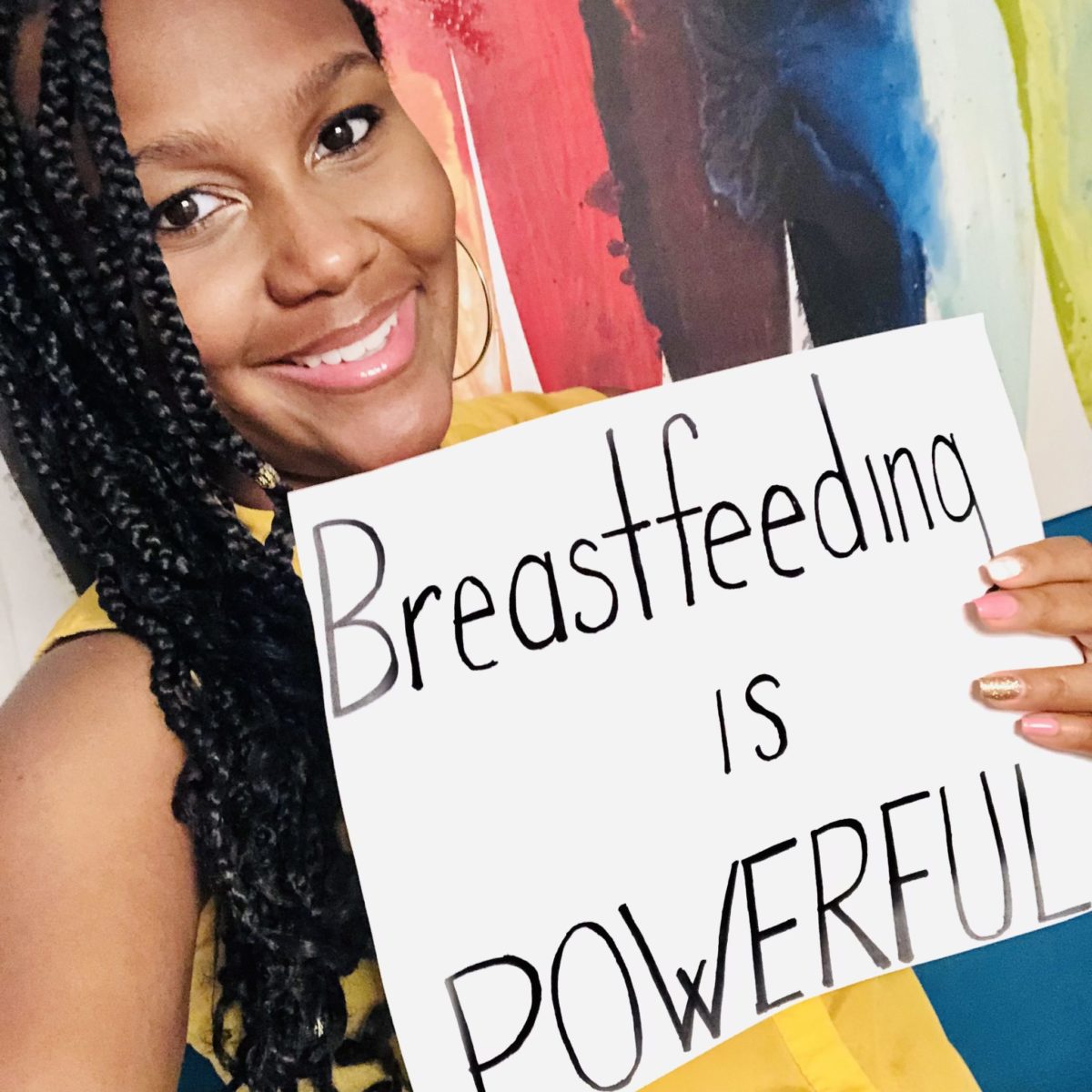
In celebration of National Breastfeeding Month, peer counselors from DC WIC are participating in the #BreastfeedingIs campaign launched by 1,000 Days and the National WIC Association. They are sharing what breastfeeding means to them and why it is so important to support their clients along their breastfeeding journeys.

Follow along on social media to hear their stories: @1000Days (Twitter & Facebook) and @first1000days (Instagram) + @dcwic (Instagram)

Asian American Native Hawaiian and Pacific Islander Breastfeeding Week: Reclaiming Our Tradition

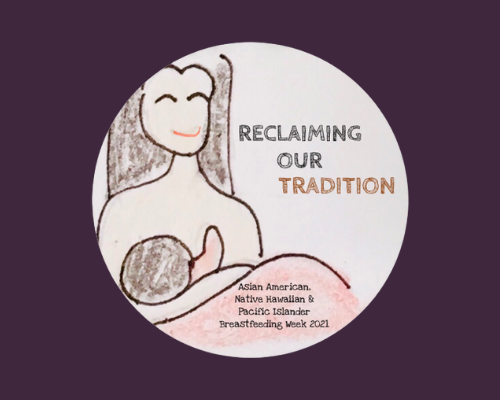
AANHPI Breastfeeding Week’s official logo, art by To-wen’s 8-year-old son

August 15-21 marks an exciting milestone: the first nationwide Asian American, Native Hawaiian and Pacific Islander (AANHPI) Breastfeeding Week. To celebrate, Wendy Fung and To-wen Tseng shared their thoughts with us about AANHPI Breastfeeding Week. Both Wendy, a WIC supervisor, and To-wen, a TV reporter-turned-freelance writer, are founding members of the Asian Pacific Islander (API) Breastfeeding Task Force.

AANHPI Breastfeeding Week has been in the works since 2017, when the API Breastfeeding Task Force was started in Los Angeles. Through the advocacy of many individual volunteers and agencies, the Los Angeles County Board of Supervisors declared the third week of August 2020 to be API Breastfeeding Week. In just one year, advocates have brought the week to the entire United States.

Through AANHPI Breastfeeding Week, Wendy and To-wen hope to “raise awareness of breastfeeding and to combat breastfeeding stigma in AANHPI communities.” This year’s theme, Reclaiming Our Tradition, highlights the cultural shift in AANHPI communities toward viewing infant formula as superior to breast milk or as a sign of higher socioeconomic status. They explain, “while breastfeeding is traditionally a common practice in most Asian countries, Asian American women have been shown to introduce foods other than mother’s milk to their infants earlier than any other ethnic group, according to a 2016 study.” They are working to reclaim breastfeeding through the first six months of a baby’s life as the norm for the AANHPI community.

Another goal of the week is to “connect mothers and to form a sense of ‘village’.” The API Breastfeeding Task Force, in collaboration with PHFE WIC, has released a campaign with videos of AANHPI-descent mothers saying “I breastfeed” in their preferred language. Forming a sense of village is important because surveys indicate that more than 90% of new mothers feel lonely after the birth of their first child. “Through events like AANHPI Breastfeeding Week, we realize that none of us is alone.”

Wendy and To-wen remind parents that “this is YOUR week, so go ahead, make noise and show up. Breastfeeding parents and babies become healthier and build stronger bonding, one breastfeeding session at a time. So it’s worth celebrating, no matter how long you breastfed: one day, three months, or six years. This week, tell yourself and other breastfeeding parents in your life, “Good job!” You deserve it.”

To-wen says that one of the joys of AANHPI Breastfeeding Week is the ability to celebrate her own breastfeeding experience, as a mother of Asian descent who has breastfed two children for a total of five years. She goes on, “and celebration is always more fun when you celebrate with those who share the same experience and values with you!” Her family has even gotten involved in the celebration: her 8-year-old son designed this year’s logo for AANHPI Breastfeeding Week.

The work will not be done when the 2021 AANHPI Breastfeeding Week is over. Two of the biggest barriers to breastfeeding Wendy and To-wen have observed in the AANHPI community are aggressive marketing of infant formula and lack of cultural humility in lactation support. To continue the work, they invite lactation professionals “to recognize the AANHPI breastfeeding families they work with, to talk and listen to them with [an] open heart, to try to understand them and find out how to better support these families.”