Topic: Nutrition

5 tips for healthy kids drinks

Just because it is a “kid’s drink” does not mean that it is actually healthy for kids. Here are 5 protips for healthy drinks for healthy kids:

  1. Kick out beverages with added sugars. Even low calorie sweeteners aren’t recommended for young kids.
  2. Look for juices labeled as 100% juice. And remember, a little juice can go a long way by adding water.
  3. Knock out the caffeine. Don’t kids have enough energy anyway?
  4. Make water the go-to drink. Great to playtime, mealtime and anytime.
  5. Give the right milk for the right age. 0-1 years get breast milk or infant formula. 1-2 years get whole milk. 2+ years get low-fat (1%) or fat-free (skim) milk.

Cheers!

Learn more at www.healthydrinkshealthykids.org.

How to swap out sugary drinks

Many kids drinks have too much sugar and should be swiped out for a healthier option. Here are some tips:

  • Swap fruit-flavored drinks for 100% fruit juice or, even better, slices of fruit.
  • Instead of sports drinks use water for hydration.
  • Avoid flavored milks and stick with plain milk.
  • Steer clear of caffeinated or energy drinks … don’t kids have enough energy anyway?

When little ones have sugary drinks now, it can lead to big health and weight problems later. And when in doubt, check the nutrition label for any added sugar. If there’s sugar, swap it out!

Cheers!

Learn more at www.healthydrinkshealthykids.org.

What milk is good for my kid?

At different ages, kids need different types of milk.

  • 0-12 Months: From birth to age 1, your baby only needs breast milk or infant formula.
  • 1 Year: Starting at age 1, plain, pasteurized whole milk is good for your toddler. It is full of nutrients such as calcium, protein and vitamin D that are important for growing bodies. The recommended amount is 2 to 3 cups per day.
  • 2+ Years: At age 2, kids should transition to plain, pasteurized fat-free (skim) or low-fat (1%) milk. The recommended amount is up to 2 cups a day. Transitioning to lower fat milks helps children maintain a healthy weight. However, if your child is underweight or has other medical needs, consult with your health care provider to choose the best beverages for your child.

What about flavored milks?
Stick to plain milk. Flavored milks like chocolate and strawberry milk have too many added sugars.

What if my child cannot have cow’s milk?
When medically directed or culturally preferred, talk to your health care provider about non-dairy milks. Just remember to look for unsweetened options.

Do toddlers need a special “milk” when transitioning from breast milk/infant formula to cow’s milk?
Nope! Once your baby turns 1, she is ready for plain whole milk. Products known as “toddler formulas” or “toddler milks” often have added sugars, and most kids can get the nutrients they need from a healthy diet.

And that’s it! Keep it plain and simple. Cheers!

Learn more at www.healthydrinkshealthykids.org.

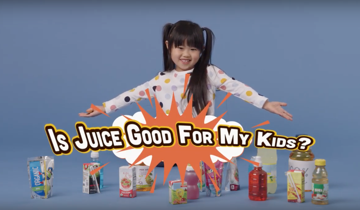
Is juice good for my kids?

Eating slices of fruit is more nutritious and satisfying for little bellies than drinking juice. But a little bit of the right juice in the right portions can be OK. Here’s what you need to know:

  • Look for 100% Fruit Juice. A lot of sugary drinks try to disguise themselves as fruit juice, but don’t be fooled by imposters. Check the ingredient list to make sure there are no added sugars.
  • Give the right amount for the right age. Fruit juice is not recommended for kids under age 1. For ages 1-3 years, no more than 4oz of 100% fruit juice per day. For ages 4-5, not more than 4-6oz of 100% fruit juice per day.
  • Healthier tips. You can help make a little juice go a long way by adding water. Or even better, switch it up. Try adding real fruit to your kids’ water.

Cheers!

Learn more at www.healthydrinkshealthykids.org.

How much water do kids need?

The amount of water each child needs might vary from day-to-day based on how active she is, the weather, or the amount of fluids she gets from other beverages like milk or foods like soups and applesauce. It also depends on age:

  • 0-6 Months: No water
  • 6-12 Months: Once solid foods are introduced around 6 months, you can offer a few sips of plain water at mealtimes. It helps babies develop cup-drinking skills and learn to like the taste of water, which takes time.
  • 1-3 Years: Toddlers should drink 1 to 4 cups of water daily to get enough fluids.
  • 4-5 Years: Preschoolers should drink 1.5-5 cups of water daily to get enough fluids.

Avoid waters with added sugar or low-calorie sweeteners. If you want to add a little flavor and fun to water, try adding fruit.

Cheers!

Learn more at www.healthydrinkshealthykids.org.

What should my toddler drink?

From ages 1-3, your toddler only really needs two things: Water & Milk. Water is a great go-to drink throughout the day (1-4 cups of water per day). Milk is great for mealtime. Starting at age 1, plain whole milk is recommended (2-3 cups of milk per day). It has fats and nutrients that are important for your child’s rapidly growing brain. At ages 2 and 3, you can offer plain fat-free (skim) or low-fat (1%) milk (up to 2 cups of milk per day). If your little one can’t have dairy, talk to your health care provider about unsweetened alternatives. What about juice? If you choose to serve juice, use 100% fruit juice and no more than 4oz per day. Cheers!

12-24 months

Drink:

Water

  • Children between 12 and 24 months should drink 1 to 4 cups of water daily to get enough fluids.
  • The amount of water each child needs might vary from day-to-day based on how active s/he is, the weather, or the amount of fluids s/he gets from other beverages like milk or foods like soups and applesauce.

Milk

  • Children between 12 and 24 months old can be introduced to plain, pasteurized whole milk, which is full of nutrients such as calcium, protein and vitamin D that are important for growing bodies. The recommended amount is 2 to 3 cups per day.
  • Whether your one-year-old needs 2 cups or 3 will depend on how much solid food s/he eats. As children get closer to 2 years and transition to eating more food at mealtimes, they will need less milk.
  • If there is a family history of obesity or heart disease, reduced-fat (2%) or low-fat (1%) milk may be considered in place of whole milk, in consultation with your child’s pediatrician.

Limit:

100% Fruit Juice

  • Children 12 to 24 months old should drink no more than 4 ounces of 100% fruit juice per day. Adding water to 100% fruit juice can make a little bit go a long way.
  • As much as possible, children should meet their daily fruit intake by eating fruit in fresh, canned, or frozen forms without added sugars, rather than by drinking juice, as this is the best option.
  • If this is not possible, then a combination of whole fruit and 100% fruit juice is okay, as long as a child does not drink more than the upper limit of 4 ounces per day.
  • This is because juice, even 100% fruit juice, can contribute to dental cavities, and if kids drink more than is recommended, it can have other negative health impacts such as weight gain.

Avoid:

  • Children 12 to 24 months old should not drink flavored milks (e.g., chocolate, strawberry), “transition” or “weaning” formulas (sometimes called toddler milks, growing up milks, or follow up formulas), plant-based and non-dairy milks (e.g., almond, rice, oat), caffeinated beverages (e.g., soda, coffee, tea, energy drinks), low-calorie sweetened beverages (e.g., “diet” or “light” drinks, including those sweetened with Stevia or Sucralose), or sugar-sweetened beverages (e.g., soda, fruit drinks and fruit flavored drinks, fruit-ades, sports drinks, energy drinks, sweetened waters, and sweetened coffee and tea beverages).
  • Plant milks/non-dairy beverages are not recommended for exclusive consumption in place of milk. Evidence indicates that, with the exception of fortified soy milk, many plant-based/non-dairy milk alternatives lack key nutrients found in cow’s milk. Our bodies cannot absorb nutrients in these non-dairy milks as well as they can from regular milk. Non-dairy milks may be a good choice if a child is allergic to dairy, lactose intolerant, or is in a family that has made specific dietary choices such as abstaining from animal products. Be sure to consult with your health care provider to choose the right milk substitute to ensure that your child is still getting adequate amounts of the key nutrients found in milk, such as protein, calcium, and vitamin D, which are essential for healthy growth and development.
2-3 years

Drink:

Water

  • Children 2 to 3 years old should drink 1 to 4 cups of water daily to get enough fluids.
  • The amount of water each child needs might vary from day-to-day based on how active s/he is, the weather, or the amount of fluids s/he gets from other beverages like milk or foods like soups and applesauce.

Milk

  • Children 2 to 3 years old should transition to plain, pasteurized fat-free (skim) or low-fat (1%) milk. The recommended amount is up to 2 cups a day.
  • Transitioning to lower fat milks helps children stay within daily calorie recommendations, which helps promote a healthy weight. However, if your child is underweight or has other medical needs, consult with your health care provider to choose the best beverages for your child.

Limit:

100% Fruit Juice

  • Children 2 to 3 years old should drink no more than 4 ounces of 100% juice per day. Adding water to 100% fruit juice can make a little bit go a long way.
  • As much as possible, children should meet their daily fruit intake by eating fruit in fresh, canned, or frozen forms without added sugars, rather than by drinking juice, as this is the best option.
  • If this is not possible, then a combination of whole fruit and 100% juice is okay, as long as a child does not drink more than the upper limit of 4 ounces per day.
  • This is because juice, even 100% fruit juice, can contribute to dental cavities, and if kids drink more than is recommended, it can have other negative health impacts such as weight gain.

Avoid:

  • Children 2 to 3 years old should not drink flavored milks (e.g., chocolate, strawberry), “transition” or “weaning” formulas (sometimes called toddler milks, growing up milks, or follow up formulas), plant-based and non-dairy milks (e.g., almond, rice, oat), caffeinated beverages, low-calorie sweetened beverages (e.g. “diet” or “light” drinks, including those sweetened with Stevia or Sucralose), or sugar-sweetened beverages (e.g., soda, fruit drinks and fruit flavored drinks, fruit-ades, sports drinks, energy drinks, sweetened waters, and sweetened coffee and tea beverages).
  • Plant milks/non-dairy beverages are not recommended for exclusive consumption in place of milk. Evidence indicates that, with the exception of fortified soy milk, many plant-based/non-dairy milk alternatives lack key nutrients found in cow’s milk. Our bodies cannot absorb nutrients in these non-dairy milks as well as they can from regular milk. Non-dairy milks may be a good choice if a child is allergic to dairy, lactose intolerant, or is in a family that has made specific dietary choices such as abstaining from animal products. Be sure to consult with your health care provider to choose the right milk substitute to ensure that your child is still getting adequate amounts of the key nutrients found in milk, such as protein, calcium, and vitamin D, which are essential for healthy growth and development.

Learn more at www.healthydrinkshealthykids.org.

What should my preschooler drink?

From ages 4-5, your preschooler only really needs two things: Water & Milk. Water is a great go-to drink throughout the day (1.5-5 cups of water per day). Low-fat (1%) or fat-free (skim) milk is great for mealtime (up to 2.5 cups of milk per day). If your kid can’t have dairy, talk to your health care provider about unsweetened alternatives. What about juice? If you choose to serve juice, use 100% fruit juice and no more than 4-6oz per day. Cheers!

4-5 years

Drink:

Water

  • Children 4 to 5 years old should drink 1.5 to 5 cups of water a day.
  • The amount of water each child needs might vary from day-to-day based on how active s/he is, the weather, or the amount of fluids s/he gets from other beverages like milk or foods like soups and applesauce.

Milk

  • Children 4 to 5 years old should drink plain, pasteurized fat-free (skim) or low-fat (1%) milk. The recommended amount is up to 2.5 cups a day.

Limit:

100% Fruit Juice

  • Children ages 4 to 5 years old should drink no more than 4-6 ounces of 100% juice per day. Adding water to 100% fruit juice can make a little bit of juice go a long way.
  • As much as possible, children should meet their daily fruit intake by eating fruit in fresh, canned, or frozen forms without added sugars, rather than by drinking juice, as this is the best option.
  • If this is not possible, then a combination of whole fruit and 100% juice is okay, as long as a child does not drink more than the upper limit of 6 ounces per day.
  • This is because juice, even 100% fruit juice, can contribute to dental cavities, and if kids drink more than is recommended, it can have other negative health impacts such as weight gain.

Avoid:

  • Children 4 to 5 years old should not drink flavored milks (e.g., chocolate, strawberry), “transition” or “weaning” formulas (sometimes called toddler milks, growing up milks, or follow up formulas), plant-based and non-dairy milks (e.g., almond, rice, oat), caffeinated beverages (e.g., soda, coffee, tea, energy drinks), low-calorie sweetened beverages (e.g. “diet” or “light” drinks, including those sweetened with Stevia or Sucralose), or sugar-sweetened beverages (e.g., soda, fruit drinks and fruit flavored drinks, fruit-ades, sports drinks, energy drinks, sweetened waters, and sweetened coffee and tea beverages).
  • Plant milks/non-dairy beverages are not recommended for exclusive consumption in place of milk. Evidence indicates that, with the exception of fortified soy milk, many plant-based/non-dairy milk alternatives lack key nutrients found in cow’s milk. Our bodies cannot absorb nutrients in these non-dairy milks as well as they can from regular milk. Non-dairy milks may be a good choice if a child is allergic to dairy, lactose intolerant, or is in a family that has made specific dietary choices such as abstaining from animal products. Be sure to consult with your health care provider to choose the right milk substitute to ensure that your child is still getting adequate amounts of the key nutrients found in milk, such as protein, calcium, and vitamin D, which are essential for healthy growth and development.

Learn more at www.healthydrinkshealthykids.org.

What should my baby drink in the first year?

From 0-6 months, your baby gets all of the nutrients he needs from breastmilk or infant formula. Once solid foods are introduced around 6 months, you can offer a few sips of plain water at mealtimes. It helps babies develop cup-drinking skills and learn to like the taste of water, which takes time. Cheers!

0-6 months

Drink: Young infants need only breast milk or infant formula to get enough fluids and proper nutrition.

Avoid: Infants younger than 6 months should not drink juice, milk, flavored milks (e.g., chocolate, strawberry), “transition” or “weaning” formulas (sometimes called toddler milks, growing up milks, or follow up formulas), plant-based and non-dairy milks (e.g., almond, rice, oat), caffeinated beverages (e.g., soda, coffee, tea, energy drinks), low-calorie sweetened beverages (e.g., “diet” or “light” drinks, including those sweetened with Stevia or Sucralose), or sugar-sweetened beverages (e.g., soda, fruit drinks and fruit flavored drinks, fruit-ades, sports drinks, energy drinks, sweetened waters, and sweetened coffee and tea beverages).

6-12 months

Drink:

  • Infants between 6 and 12 months should still rely on breast milk or infant formula to get most of their daily nutritional needs. Breast milk and/or infant formula also provide all of the baby’s fluid needs during this time.
  • Once solid foods are introduced, which is typically around 6 months, try adding in a couple of sips of water during meal times. It helps babies develop cup-drinking skills and learn to like the taste of water, which takes time.

Avoid: Infants younger than 12 months should not drink juice, milk, flavored milks (e.g., chocolate, strawberry), “transition” or “weaning” formulas (sometimes called toddler milks, growing up milks, or follow up formulas), plant-based and non-dairy milks (e.g., almond, rice, oat), caffeinated beverages (e.g., soda, coffee, tea, energy drinks), low-calorie sweetened beverages (e.g., “diet” or “Light” drinks, including those sweetened with Stevia or Sucralose), or sugar-sweetened beverages (e.g., soda, fruit drinks and fruit flavored drinks, fruit-ades, sports drinks, energy drinks, sweetened waters, and sweetened coffee and tea beverages). These beverages can be big sources of added sugars in young children’s diets and provide no unique nutritional value beyond eating a balanced diet and sticking to water and milk. And, avoiding these kinds of beverages at a young age helps to create and maintain healthy habits down the road.

Learn more at www.healthydrinkshealthykids.org.

Nutrition in the First 1,000 Days: A Foundation for Lifelong Health

The 1,000 day window, between a mother’s pregnancy and her child’s second birthday, is a critical time that helps set the stage for the child’s future well-being. During this period, proper nutrition is crucial for supporting rapid brain development, building the immune system, and other essential functions. 1,000 Days, with support from Zero to Three and their Think Babies Campaign, has created this resource, Nutrition in the First 1,00 Days, to focus on the importance of investing in nutrition during this foundational period.