Author: Allyson Garner

Indigenous Milk Medicine Week: Nourishing Our Futures
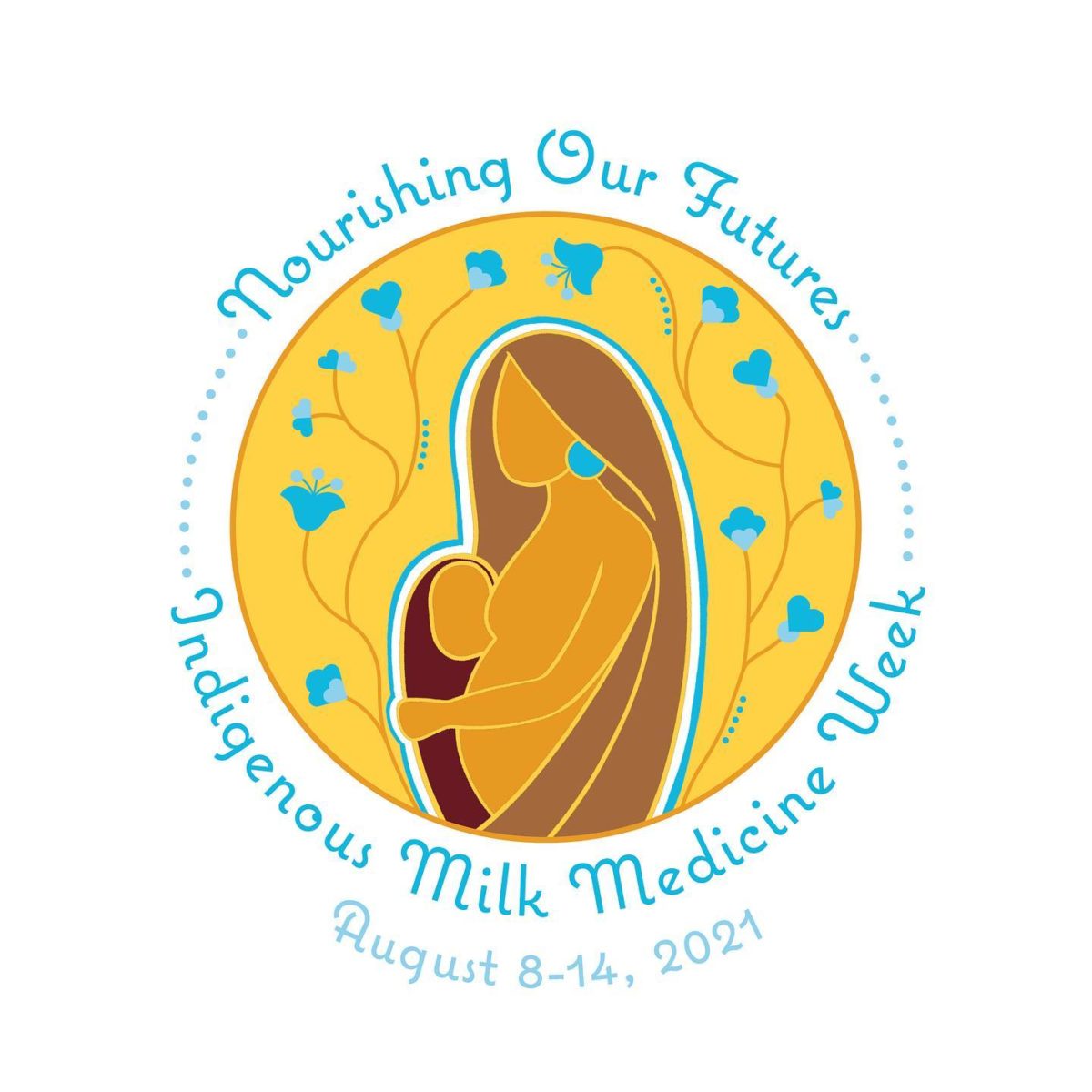
1,000 Days respectfully acknowledges that our offices are located on the traditional lands of Piscataway and Nacotchtank people. Artwork by Erica Pretty Eagle Moore: @ericaprettyeagle.

The third annual Indigenous Milk Medicine Week is taking place this week, August 8-14. Formerly known as Native Breastfeeding Week, the weeklong celebration has now evolved to be more inclusive and to emphasize the healing power of those who breastfeed or chestfeed.

Native American children are breastfed at lower rates than the United States average. According to the CDC, 84.1% of all infants in the United States ever breastfeed, while only 80.7% of Native infants ever breastfeed. By six months of age, this disparity widens: only 19.6% of Native infants are exclusively breastfed, lower than the United States average of 25.6%.

The ongoing effects of historical trauma and structural barriers to accessing lactation support have affected breastfeeding rates. Family and community bonds were interrupted by the United States government’s forced relocation and assimilation programs, reducing the community’s ability to pass down traditions like breastfeeding. There are also few Native American lactation professionals in the United States, and other healthcare professionals are often more focused on issues like substance abuse than on lactation.

Indigenous Milk Medicine Week aims to help the community heal from this collective trauma. Courtney Peyketewa, a member of the planning committee, explains that Indigenous Milk Medicine Week exists “to increase support and resources, promote healing and wellness, and to provide stories and knowledge to the limited data regarding Native breastfeeding/chestfeeding and lactation.”

Learn more about Indigenous Milk Medicine Week by following @IndigenousMilkMedicineWeek on both Instagram and Facebook. Throughout the year, these accounts build community for Indigenous lactating parents and lactation supporters through statements of encouragement, news, and artwork that shares the joys and beauty of Indigenous breastfeeding and chestfeeding. Other social media channels uplifting Indigenous breastfeeders and chestfeeders include @CihuapactliCollective and the Navajo Nation Breastfeeding Coalition.

Looking beyond Indigenous Milk Medicine Week, there is more to be done to honor the power of Indigenous milk medicine and ensure that all families can meet their infant feeding goals. For example, more research involving or led by community stakeholders and elders is needed to inform lactation policies and programs. And importantly, all lactation support professionals need to practice cultural humility when working with Indigenous families.
Statement on House Introduction of the Global Malnutrition Prevention and Treatment Act

The Global Malnutrition Prevention and Treatment Act is a critical step in addressing maternal and child malnutrition in priority countries, to ensure that children everywhere can have a healthy first 1,000 days. COVID-19 has only exacerbated the crisis of malnutrition, with recent research suggesting that an additional 13.6 million children suffering from wasting (low weight in comparison to height), 3.6 million more children stunted (low height in comparison to age), and an additional 283,000 child deaths. Building on decades of American leadership, these provisions will ensure that USAID has the tools necessary to implement evidence-based interventions, coordinate with international partners, and integrate nutrition priorities into existing, successful programs to advance a multisectoral strategy. The Nutrition Leadership Council, housed at USAID, would be tasked with reviewing the efficacy of existing programs, identifying opportunities for interagency and international cooperation, and reporting to Congress on progress made towards specific, measurable goals towards ending global malnutrition. 1,000 Days is grateful to House Foreign Affairs Committee Ranking Member Michael McCaul, Chairman Gregory Meeks, and Representatives Chrissy Houlahan and Young Kim for their continued leadership, and we look forward to working closely to build support for this important legislation.”

Solianna Meaza, Director of Policy and Advocacy, 1,000 Days, an initiative of FHI Solutions

Even Olympians Fight to Overcome Breastfeeding Obstacles

“I’ve always wanted to be a mom, and I’ve also wanted to become an Olympian and compete at the highest level of our sport. I never thought I was going to be at the Olympics as a new mom.” – U.S. Olympic marathoner Aliphine Tuliamuk

Only 1 in 562,400 people make it to the Olympic games. Without question, even getting to the Olympics means you are a champion.

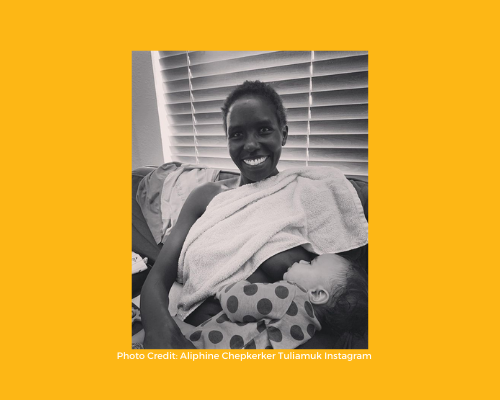
While all of us at 1,000 Days are excited to watch this year’s games, we are especially keeping an eye on one Olympian, American marathoner Aliphine Tuliamuk who has already blazed a new trail heading into these unique Olympic Games. Due to the COVID-19 pandemic, restrictions would have separated her from baby daughter, Zoe, who is still breastfeeding. So Tuliamuk petitioned the Organizing Committee and now is cleared to bring baby Zoe to Tokyo so mom and baby can continue breastfeeding.

This is exciting on many fronts. First the basics: breastfeeding gives babies the very best start to life, and the benefits reach far into the future. Breastfeeding promotes healthy cognitive and social-emotional development. It also saves lives by helping to protect babies from infections, conditions such as sudden infant death syndrome (SIDS) and diseases like diarrhea and pneumonia. And breastfeeding also has powerful health benefits for moms and birthing people. It helps women’s bodies recover from childbirth and decreases the risk of postpartum bleeding. It also reduces a woman’s risk of heart disease, breast cancer, ovarian cancer, type 2 diabetes and depression.

Second, this again shines a light on how difficult it is to be a breastfeeding person! Successful breastfeeding relies on parents having enough time, energy and capacity – but people in every corner of the world face too many barriers to start and continue breastfeeding. No one breastfeeds alone. It takes support from everyone – from parents to policymakers, health facilities, communities and employers. No one is immune from these obstacles – even an Olympian like Tuliamuk has to fight to continue her breastfeeding journey.

“I want to make sure my daughter understands that this world is not easy but that does not mean that you give up. It means that you double down and you work very, very hard and you seize every opportunity that you get. That’s how you achieve your goals,” Tuliamuk said in an interview with Good Morning America.

At 1,000 Days, an Initiative of FHI Solutions, we lead the fight to build a strong foundation for mothers and pregnant people, children, and future generations to thrive. Our mission is to make the well-being of women and children in the first 1,000 days a policy and funding priority, both in the United States and around the world. We encourage you to join us by participating in August Breastfeeding Month and World Breastfeeding Week. Everyone is welcome to participate in the August 2021 #BreastfeedingIs Campaign to lift your voice to build a landscape of breastfeeding support.


What We’re Watching in Congress – June and July 2021

This month, much attention on the Hill and around Washington, DC has been paid to ongoing, bipartisan negotiations on an infrastructure package. This important proposal, focused on roads, bridges, and other “hard” infrastructure developments, will likely be paired with some version of President Biden’s proposed American Families Plan, focused on making a once-in-a-generation investment in our children and our families. While 1,000 Days has been working closely with partners and allies in Congress to ensure that the needs of moms, pregnant people, babies, and their families are met in these packages, we are also focused on a number of other developments related to maternal and child health and nutrition. Here are a few recent actions we’ve been monitoring.

Committee and floor action on maternal and child health legislation:

Throughout May and June 2021, several Congressional committees moved to advance popular, bipartisan legislation to support the health of moms and babies, and a number of these bills received consideration on the House floor. Rep. Lauren Underwood (D-IL)’s Protecting Moms Who Served Act passed out of the Veterans Affairs Committee and received bipartisan support in a floor vote, marking the passage of the first piece of the Black Maternal Health Momnibus. In June, reauthorization for an important newborn screening program, long-championed by Rep. Lucille Roybal-Allard (D-CA), received unanimous approval from the House. Additionally, the House Committee on Energy and Commerce held a hearing on the importance of quality data collection to improving public health that included consideration of two maternal health bills, Rep. Sharice Davids’ (D-KS) Data to Save Moms Act and Rep. Lucy McBath’s (D-GA) Social Determinants for Moms Act. These hearings and floor votes build on the productive consideration of several maternal health bills in the Senate Health, Education, Labor, and Pensions Committee before Mother’s Day. 1,000 Days will continue to share the stories of moms, pregnant people and babies with their representatives in Congress as we fight to make equitable, affordable, quality health care accessible to families everywhere.

Advocates hold week of action on paid leave:

In mid-June, 1,000 Days participated with partners from more than three dozen organizations and the Paid Leave for All campaign on a series of lobby days, bringing constituents to Congress to tell their representatives why their families and communities need paid leave. Culminating in a virtual rally with remarks from advocates, workers, and Congressional champions, this event brought together a wide range of advocates to speak with one voice to say that the time for action on paid leave is now.

Committee hearing on paid leave:

The House Committee on Oversight and Reform held a hearing on “Leading by Example: The Need for Comprehensive Paid Leave for the Federal Workforce and Beyond” to discuss the recent, full implementation of paid parental leave for federal employees and opportunities to expand leave for both government staff and the broader workforce. This comes on the heels of similar attention to the need for a universal, equitable federal paid family and medical leave program in the Senate Health, Education, Labor, and Pensions Committee, as well as the House Ways and Means Committee.

Funding for WIC fresh fruits and vegetables benefit:

In late June, the House Agriculture Appropriations Subcommittee released their spending proposal for FY22, which included an extension of the increased WIC Cash Value Benefit for fresh fruits and vegetables. This program provides moms and babies on WIC with $35 a month to purchase fresh, nutritious fruits and vegetables: a more than three-fold increase from the prior benefit. This program, most recently extended in the American Rescue Plan Act, has helped ensure the nutrition security of WIC families during the pandemic, and has received wide support for extension into the future. 1,000 Days looks forward to working with partners and Congressional champions during the appropriations and Child Nutrition Reauthorization processes to continue strengthening WIC and ensuring the program meets the needs of moms, pregnant people, babies, and their families.

Nutrition for Growth Summit Dates Announced!

Today, the Government of Japan announced the official dates of the Nutrition for Growth Summit: December 7-8, 2021. With about five months left on the race toward the Summit, and with key U.N. Food Systems Summit (UNFSS) pledging moments in between, the Government of Japan continues to work closely with the nutrition community on Summit preparations. Preparations continue in earnest as this year’s host country leads by example to build a successful N4G that celebrates new and SMART commitments to accelerate progress in the fight against all forms of malnutrition by 2030.

GNR Nutrition Accountability Framework: The world’s first, independent and comprehensive global accountability framework for nutrition aims to drive better decision-making and accelerate progress in tackling poor diets and making the fight against all forms of malnutrition winnable across all geographies and sectors. The Nutrition Accountability Framework (NAF) will minimize the burden of reporting – making it easier to identify gaps in action, measure impact, determine the most impactful actions, and allocate resources where they are needed most. Data and evidence are essential to building smarter policies and approaches to improving nutrition. Find out more here.

Find advocacy materials to help support this announcement below.

Template Media Advisory

Sample Tweets:

  • Save the date! The Tokyo Nutrition for Growth Summit, a culmination of a year of action on nutrition, is December 7-8, 2021. It provides an opportunity to transform how the world tackles the global challenge of ending #malnutrition. #NutritionYearOfAction https://bit.ly/2UOG60V

  • The Government of Japan has announced the official dates of the Nutrition for Growth Summit. Mark your calendars for December 7-8, 2021! #NutritionYearOfAction #Nutrition4Growth https://bit.ly/2UOG60V

Social Media Tiles:

Join Us to Celebrate August Breastfeeding Month with #BreastfeedingIs

August 1st marks the beginning of National Breastfeeding Month and World Breastfeeding Week, celebrating the benefits of breastfeeding for families in the U.S. and around the world. All month long we’ll be highlighting breastfeeding in different communities and how we can build a landscape of breastfeeding support.

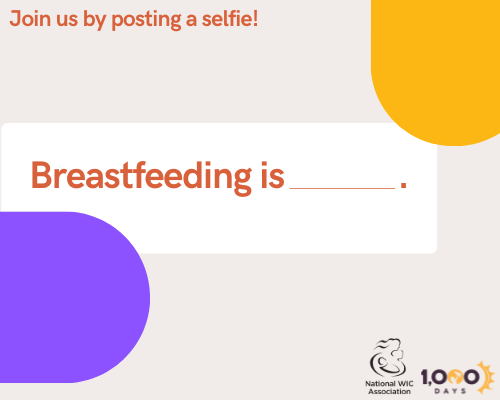
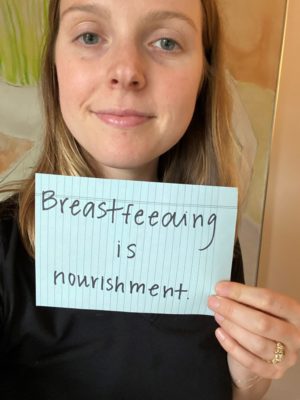
In honor of the month, we’re launching a new campaign with the National WIC Association: #BreastfeedingIs. Join us by posting a selfie or a video on social media that explains what breastfeeding means to you! Whether you’re breastfeeding or chestfeeding now, have done so in the past, or support others who breastfeed, we’d love to hear from you. Directions on how to get involved below.

Step 1. Write Down What #BreastfeedingIs to You

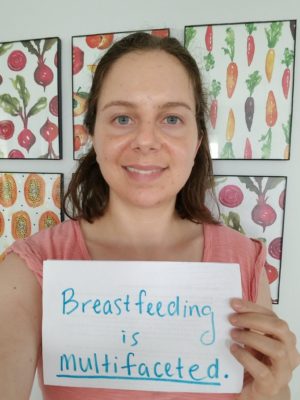
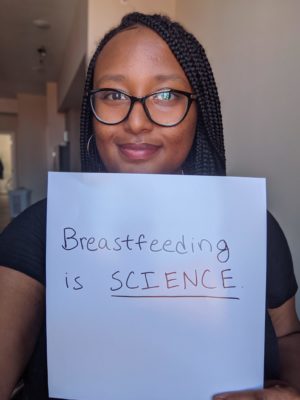
First, write down “Breastfeeding is ____” on a blank piece of paper and fill in the blank with one word that sums up what breastfeeding is to you. Some examples to help brainstorm: powerful, challenging, love, bonding, gratifying, a struggle.

Step 2. Taking Your Photo or Video

After writing your message on a notecard or piece of paper, hold it up to your face, then grab your phone and take a selfie! If you’d like the chance to explain your response further, we invite you to record a short video (<60 seconds) of yourself talking about what breastfeeding is to you.

Step 3. Social Media Language

The last step is the most important: Share your message on social media. Talk to people about your breastfeeding journey and/or why protecting, promoting and supporting breastfeeding matters to you! And remember — attach your photo or video and use #BreastfeedingIs when you post! Please also tag @1000Days (Twitter & Facebook) and @first1000days (Instagram) + @NatWICAssoc (Twitter & Instagram) and @NationalWICAssociation (Facebook).

If you’re not quite sure what to say, here are some messaging examples:

  • Join me along with @1000Days and @NatWICAssoc this National Breastfeeding Month in sharing what #BreastfeedingIs to you. [Attach your selfie]
  • This National Breastfeeding Month, I want to share what #BreastfeedingIs to me! @1000Days @NatWICAssoc [Attach your selfie]

Breastfeeding is a universal solution that gives everyone a fair start in life and lays the foundation for moms and babies to survive and thrive. We all have a role to play in supporting breastfeeding, and we hope you’ll join us this National Breastfeeding Month as a breastfeeding champion.

Community Statement on the President’s Budget Request for Global Nutrition Accounts

June 14, 2021

Community Statement on Biden Administration FY22 Discretionary Budget Request for Global Nutrition Accounts — 

The funds provided through the Global Health Nutrition sub-account, Maternal and Child Health (MCH) sub-account, Feed the Future, and Food for Peace Title II are critical to helping families around the world recover from the COVID-19 pandemic. We thank the Administration for continuing to invest in these accounts in their budget proposal and for highlighting that investments in the first 1,000 days—the period between the start of pregnancy to a child’s second birthday—greatly contribute to the reduction of child mortality and support long-term health, cognitive development, physical growth, and school and work performance later in life. 

We are grateful for the increased funding provided for the MCH sub-account. Largely flat funding for the rest of these critical accounts is not sufficient to meet the critical nutrition needs around the globe, especially in the context of COVID-19. Even before the COVID-19 pandemic, nearly 1 in 3 people around the world had at least one form of malnutrition. Malnutrition-related deaths are entirely preventable, yet malnutrition contributes to roughly 3 million under-5 child deaths every year – one child in every 10 seconds. Those who do survive malnutrition in early childhood are much more likely to suffer from lifelong illness and impaired cognitive development, including up to an 18-point reduction in expected IQ and a 33 percent lower chance of escaping poverty as adults. These losses cost the world $3.5 trillion in lost productivity and healthcare costs every year.

The COVID-19 pandemic has only exacerbated existing inequities. By 2022, COVID-19 could lead to an additional 13.6 million children suffering from wasting (low weight in comparison to height), 3.6 million more children stunted (low height in comparison to age), and an additional 168,000 child deaths. The estimated additional burden of childhood stunting and child mortality would result in future productivity losses between the ages of 18 and 65 years (using country-specific life expectancy) of $44.3 billion. This pandemic has also highlighted how disruptions to national health and food systems disproportionately impact access to affordable and nutritious foods. Evidence shows that good nutrition, especially in the first 1,000-day window, has the power to promote health and long-term resilience to stressors like infectious diseases. Malnourished individuals are at far greater risk of contracting and dying from infectious diseases, in turn allowing these diseases to spread more easily.

Increased funding to these accounts will prevent thousands of maternal and child deaths and give millions of children the opportunity to grow and develop to their full potential. This critical funding to the supports many vital nutrition-specific and nutrition-sensitive interventions such as prevention and treatment for children with wasting, Vitamin A supplementation, nutrition education, school feeding programs, exclusive breastfeeding, and infant and young child feeding practices.

For the U.S. to maximize the return on its investments across development and humanitarian assistance, nutrition is a smart investment. Each dollar invested into nutrition returns $35 in economic benefits and has the power to save lives. Addressing malnutrition will be a key pillar in building community resilience to future pandemics and improving global health security. We look forward to working with Congress and the Administration to ensure that the United States can effectively lead this global effort.

Sincerely,
1,000 Days, an initiative of FHI Solutions
Action Against Hunger 
Alliance to End Hunger 
Bread for the World
CARE USA
Catholic Relief Services
CORE Group
Edesia
Farm Journal Foundation 
Food for the Hungry
HarvestPlus
Helen Keller International 
InterAction
Meds & Food For Kids 
National Cooperative Business Association CLUSA International
RISE Institute 
Save the Children
The Hunger Project
The Manoff Group
Women of the Evangelical Lutheran Church in America

1,000 Days statement on Biden Administration FY22 Discretionary Budget Request

“Last Friday, the Biden Administration released their first budget proposal, building on President Biden’s call to make a “once-in-a-generation investment in our families and our children.” The proposal includes significant funding for several 1,000 Days’ key policy priorities, including:

  • $225 billion over 10 years for a new, comprehensive, universal paid family and medical leave program
  • $6.7 billion for the Special Supplemental Nutrition Program for Women, Infants, and Children (WIC), including $100 million for technology modernization
  • $3 billion over 10 years to reduce maternal mortality and morbidity and to address racial and ethnic disparities in maternal health outcomes, including investments in Maternal Mortality Review Committees, rural maternity programs, and implicit bias training for healthcare providers
  • $150 million for international maternal and child nutrition assistance, including support for exclusive breastfeeding, diet quality and diversification, and delivery of nutrition services

“These investments and many more outlined in the President’s budget request will be critical to helping families in the United States and around the world recover from the pandemic. This crisis has only exacerbated existing inequities and we are encouraged by the Administration’s ambitious vision. 1,000 Days looks forward to working with the Administration and partners in Congress to advance and strengthen this proposal.”

Forward Momentum in Congress: Supporting Moms and Babies

In January 2019, women in the United States achieved a milestone: They made up more of the work force than men. But unfortunately, the COVID-19 global pandemic has quickly stunted that progress, and according to recent estimates, now only 56 percent of American women are working for pay, the lowest level since 1986. At 1,000 Days, we know that paid family and medical leave is a public health imperative. We’re listening and learning from women, and we’re raising their voices to inspire Congressional leaders to address the crisis in our care economy. Access to paid leave is especially important during the 1,000-day window and during the periods of pregnancy and infancy, which are critical to shape a person’s long-term health and their developmental potential.

As we have previously shared in our qualitative study, paid leave supports healthier pregnancies, better birth outcomes and more successful breastfeeding, in addition to the physical and mental health of both mom and baby in the postpartum period. Universal access to a comprehensive paid leave program is also an important step in addressing maternal and infant racial and ethnic health disparities, helping to ensure that all families can have a healthy first 1,000 days. Both the Biden Administration and Representative Richard Neal (D-MA), chairman of the key Ways and Means Committee in the House, recently introduced comprehensive, universal paid family and medical leave proposals. We will continue to work with allies in Congress, the White House, and coalition partners to ensure that paid leave is a central component of upcoming legislation to help American families and the American economy recover from the coronavirus pandemic and build toward a healthier future.

Federal policy change can positively affect the health of millions, and we are thrilled to see so much activity and engagement from lawmakers focused on creating the best conditions for families. Just this month (May 2021), the Pregnant Workers Fairness Act passed the House, and the Providing Urgent Maternal Protections (PUMP) for Nursing Mothers Act was introduced in both Houses of Congress with bipartisan support. Several key pieces of legislation to address the maternal health crisis, including the Rural MOMS Act and the Maternal Health Quality Improvement Act, were advanced by the Senate Health, Education, Labor, and Pensions (HELP) Committee with unanimous support this week.

There have also been several hearings on paid family and medical leave in both the House and the Senate this Spring. Most recently, the Senate HELP Committee held a hearing on paid leave and child care. 1,000 Days led a community sign on letter from four dozen leading maternal and child health groups and their allies, in support of comprehensive, universal, equitable paid family and medical leave, which was introduced for the record by Senator Bob Casey (D-PA).

1,000 Days has also worked closely with coalition partners to underline the importance of investing in programs for children as Congress seeks to help families rebuild from the devastation of COVID-19. Following President Biden’s joint address to Congress, we published an op-ed in the Hill with our partners at Bread for the World, arguing for an investment in a “1,000 day infrastructure” for the health and well-being of American families. We are continuing conversations with Members of Congress on both sides of the aisle as they prepare to make a once-in-a-generation investment in our nation’s infrastructure, echoing President Biden’s call that we also need “a once-in-a-generation investment in our families and our children.”

The 1,000-day window from pregnancy to age 2 is a window of opportunity to create brighter, healthier futures. The nutrition, care, and support a mother and her child receive during this time have a profound impact on their immediate and long-term health and well-being. We continue to advocate and raise awareness of issues that can help us reach our goal: every family—no matter where they are born or their background—will have a healthy first 1,000 days and the opportunity to reach their full potential.

Tackling Malnutrition: Improving Both Food and Health Systems

Even before the COVID-19 pandemic, nearly one in three people around the world had at least one form of malnutrition, and based on current trends this number is set to rise to one in every two by 2025. Now due to the COVID-19, the world risks backsliding nutrition gains with irreversible impacts on mortality and lost potential. By 2022 COVID-19 could result in an additional 11.9 million severely malnourished children. In many parts of the world, malnutrition will likely be the most deadly and long-lasting consequence of the COVID-19 pandemic – killing more people than the virus itself. The COVID-19 pandemic has made it clearer now more than ever, in order to tackle malnutrition, an overhaul of the world’s food and health systems is needed.

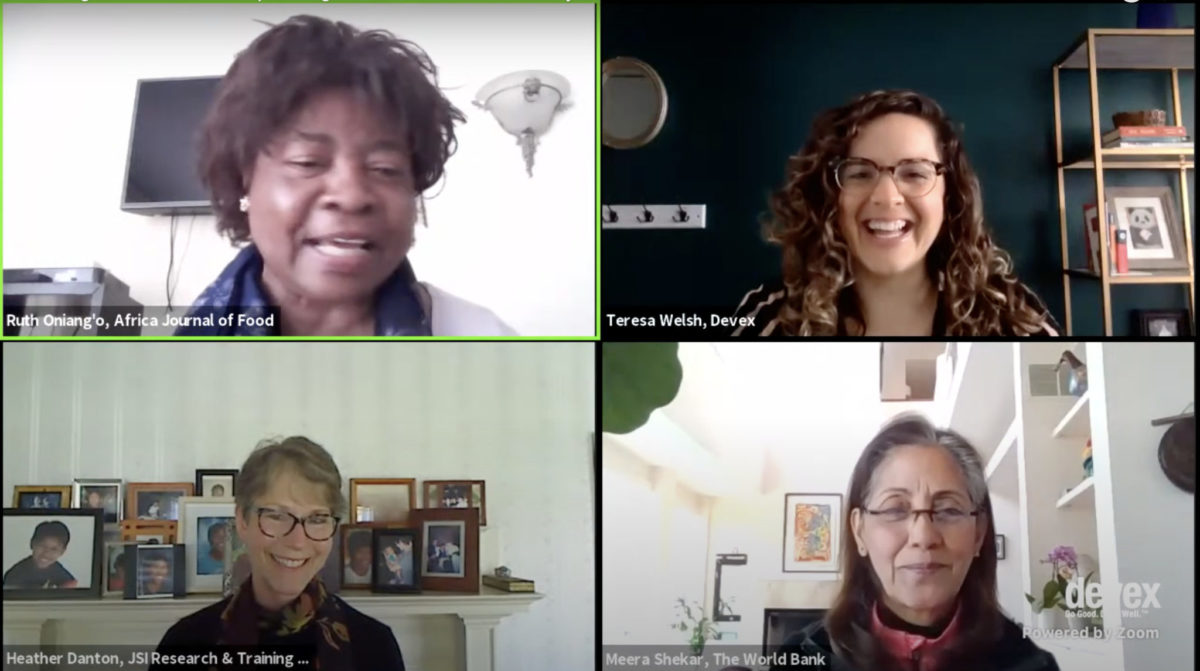
Panelists for the dialogue included.

Hosted by Devex and 1,000 Days, we heard experts across the nutrition community discuss the impacts of COVID-19 on food security and nutrition, highlighting the necessary solutions found in both health and food systems.

Watch a full recording of the webinar below.