Global Breastfeeding Collective: Breastfeeding Advocacy Toolkit – Increasing Funding for Breastfeeding Policy Brief
Led by UNICEF and WHO, the Global Breastfeeding Collective (the Collective) is a partnership of more than 20 international organizations with the goal of increasing investment and policy change to support breastfeeding worldwide, which requires advocacy at the global, national, and sub-national levels.Developed by the Collective, this document is one of seven briefs that provide guidance and resources to stakeholders on how to advocate for adoption of these policy actions with government ministries, health care workers and managers, employers, donors, and other key decision-makers.
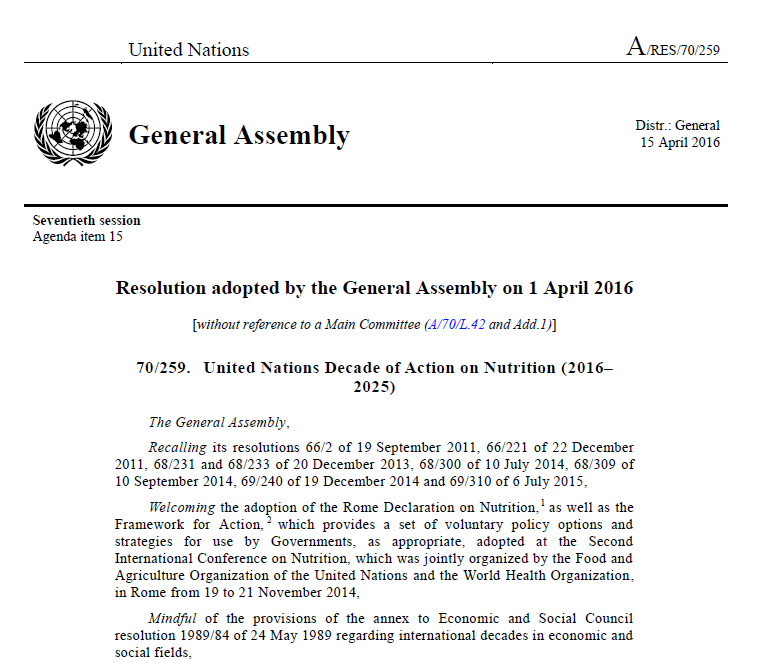
UN Decade of Action on Nutrition

The UN Decade of Action on Nutrition is a commitment of Member States to undertake ten years of sustained and coherent implementation of policies and programmes, following the recommendations and commitments of the ICN2 Framework for Action and the 2030 Agenda for Sustainable Development. The Decade will increase visibility of nutrition action at the highest level and ensure coordination, strengthen multi-sectoral collaboration, create synergies and measure progress towards sustainable food systems and food and nutrition security for all.

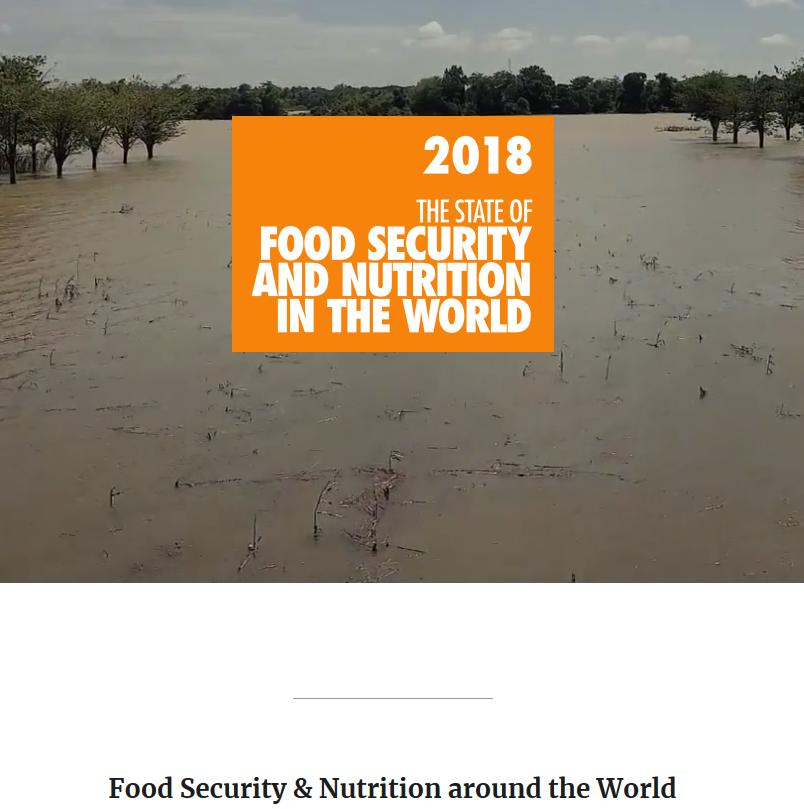
State of Food Insecurity and Nutrition in the World

This report monitors progress towards the targets of ending both hunger (SDG Target 2.1) and all forms of malnutrition (SDG Target 2.2), and provides an analysis of the underlying causes and drivers of observed trends. While the prevalence of undernourishment is at the forefront of monitoring hunger, the prevalence of severe food insecurity – based on the Food Insecurity Experience Scale (FIES) – was introduced last year to provide an estimate of the proportion of the population facing serious constraints on their ability to obtain safe, nutritious and sufficient food. The report also tracks progress on a set of indicators used to monitor World Health Assembly global targets for nutrition and diet-related non-communicable diseases, three of which are also indicators of SDG2 targets.

2018 Global Nutrition Report

The 2018 Global Nutrition Report shares insights into the current state of global nutrition, highlighting the unacceptably high burden of malnutrition in the world.

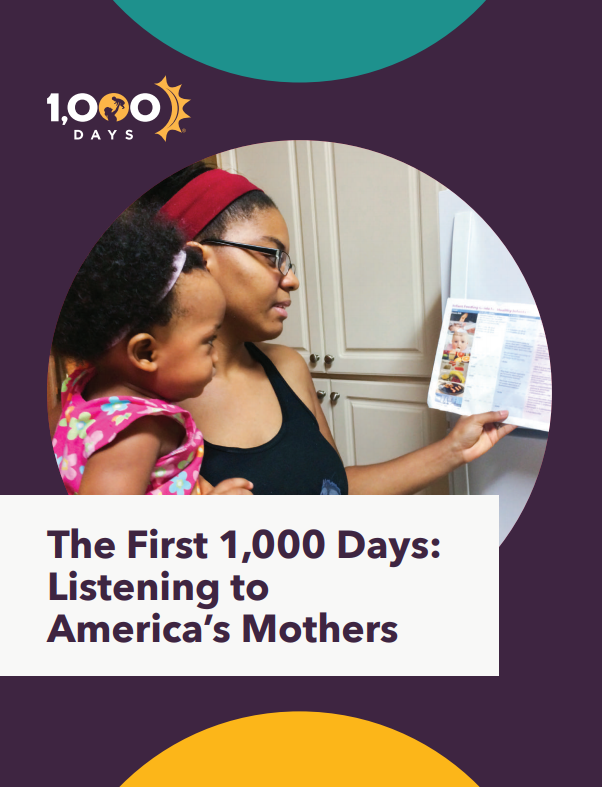
The First 1,000 Days: Listening to America’s Mothers

The First 1,000 Days: Listening to America’s Mothers summarizes the findings from in-depth interviews and ethnographies conducted by 1,000 Days with nearly 60 mothers of young children from across the country. Building upon our first-of-its-kind report on the nutritional health of America’s mothers, babies and toddlers – The First 1,000 Days: Nourishing America’s Future – this new report goes beyond the numbers to lift up the voices and stories of moms themselves.

Global Breastfeeding Collective: The Investment Case for Breastfeeding

Breastfeeding is one of the smartest investments a country can make to build its future prosperity. It offers children unparalleled health and brain-building benefits. It has the power to save the lives of women and children throughout the world, and the power to help national economies grow through lower health care costs and smarter workforces. Yet many societies are failing to adequately support women to breastfeed, and as a result, the majority of the world’s children – along with a majority of the world’s countries – are not able to reap the full benefits of breastfeeding.

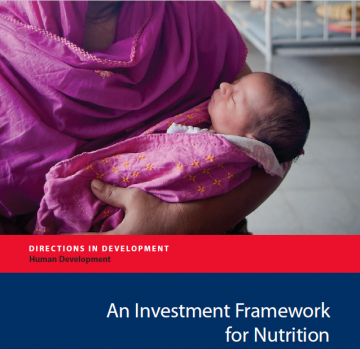
An Investment Framework for Nutrition

In 2012—in an effort to rally the international community around improving nutrition—the 176 members of the World Health Assembly endorsed the first-ever global nutrition targets, focusing on six areas: stunting, anemia, low birthweight, childhood overweight, breastfeeding, and wasting. These targets aim to boost investments in cost-effective interventions, spearhead better implementation practices, and catalyze progress toward decreasing malnutrition.

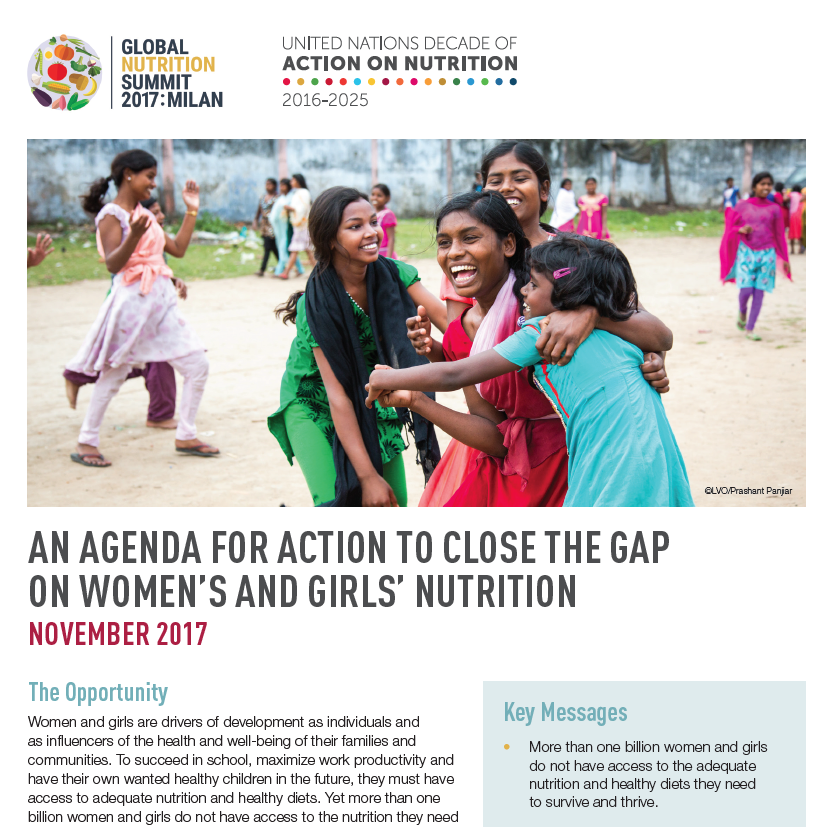
An Agenda for Action to Close the Gap on Women’s and Girls’ Nutrition

This action agenda aims to increase attention to and investment in action for women’s and girls’ nutrition by empowering women and girls to take control over their nutrition and overall health. Women and girls represent a substantial portion of the malnutrition burden; focused attention will drive strategic and rapid progress towards the agreed World Health Assembly nutrition targets, SDG 2.2 (ending all forms of malnutrition), and other global goals linked to women’s and girls’ nutrition.

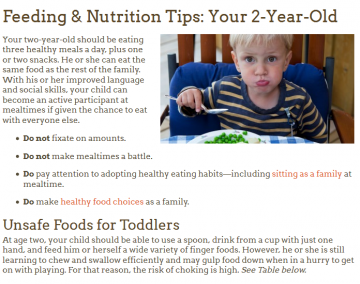
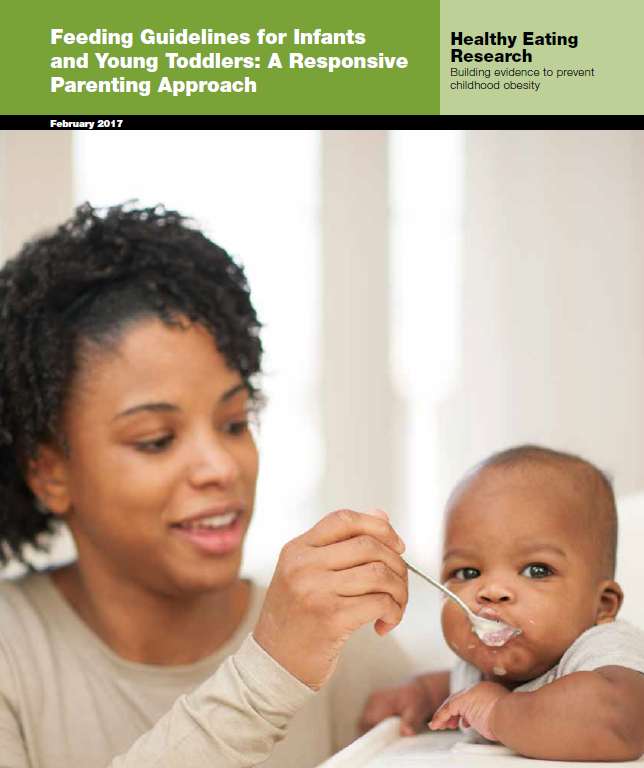
Feeding Guidelines for Infants and Young Toddlers: A Responsive Parenting Approach

Early life diet and feeding behaviors play an important role in establishing healthy food preferences and behaviors and are crucial for preventing childhood overweight and obesity. This report presents evidence-based recommendations for promoting healthy nutrition and feeding patterns for infants and toddlers from birth to 24 months, with an emphasis on dietary quality, portion sizes, and mealtime environment. Physical activity, soothing, and sleep are also discussed in the report, as they have also been shown to influence early life feeding behaviors and weight outcomes. These guidelines were developed by an expert panel convened by Healthy Eating Research, a national program of the Robert Wood Johnson Foundation. They are based on current scientific evidence related to responsive parenting practices. The aim of the guidelines is to empower caregivers to address the nutrition and well-being of infants and toddlers by offering them healthier food and beverage options in response to their behavioral cues. The guidelines can be used by parents and caregivers in the home, as well as be applied in child-care settings where many infants and toddlers are served.