Category: Uncategorized

Statement on the Reintroduction of the FAMILY Act

In the United States, too many parents are forced to choose between the jobs they need and the families they love.

Without guaranteed paid time off from work, 1 in 4 women return to work just 10 days after giving birth and 40% of women do not reach their breastfeeding goals. Yet evidence shows that paid leave contributes to healthier outcomes for children and their families.

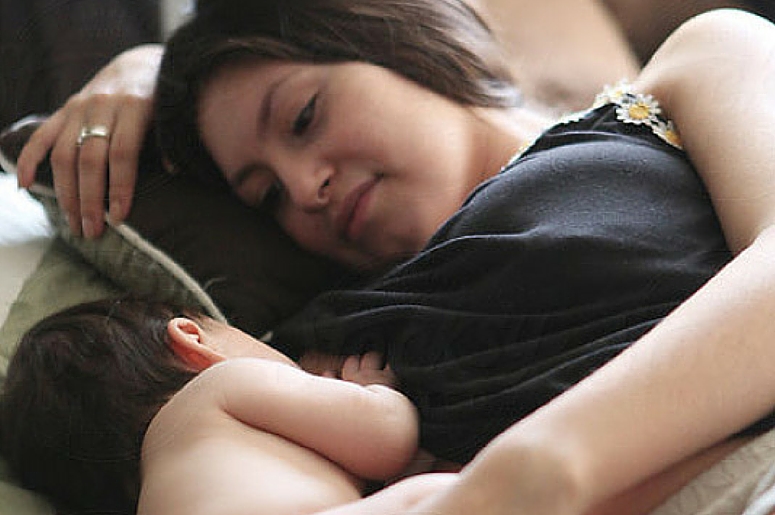
Parents need time to bond with their babies. Moms need time to recover from childbirth. And mom and baby need time to establish breastfeeding, which is proven to have significant health benefits for both women and children.

The United States is the only industrialized country in the world without a national paid leave policy. America’s families deserve better and our children deserve the strongest start to life.

We applaud Representative DeLauro and Senator Gillibrand, along with their Congressional colleagues, for standing up for the health and economic security of all American families by introducing the FAMILY Act.

Why I’m Marching in the Women’s March on Washington

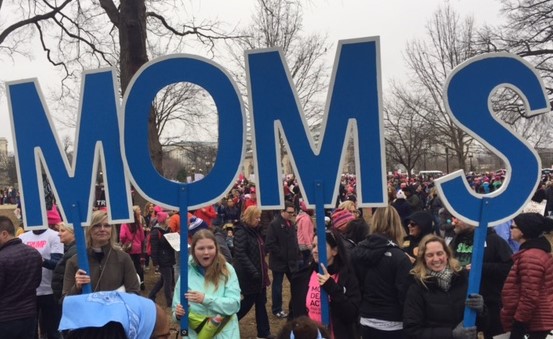
UPDATE: On Saturday I marched in the Women’s March on Washington with my little girl. I also marched alongside an elderly woman using a walker. And with a father pushing a stroller. And with a group of teenagers from Virginia and a woman and her mother from New York (whose own 9-month old was back home). We were all strangers to one-another and had many different reasons for marching. Yet as we walked down Pennsylvania Avenue a woman turned to my daughter and said “we’re marching for you”.

I was touched. To me, her comment captured the spirit of the march – while we were there for different reasons, we were all marching for a purpose bigger than ourselves. For me personally, I was marching for something bigger than my family. Even bigger than who is or is not in the White House. I was marching for the future of our children.

Our nation’s babies and toddlers provide a glimpse of America’s future. They will be the country’s nurses and doctors, teachers and engineers. Unfortunately too many infants and young children in the U.S. suffer from poor health and nutrition, with life-long consequences.

At 1,000 Days we believe that all children deserve a healthy first 1,000 days and the opportunity to reach their full potential. We also believe that we all have a role to play in nourishing our nation’s youngest children. Participating in the Women’s March may have been a small act, but it was something I was honored to do on behalf of women, infants and young children everywhere.

This morning as the pundits asked what’s next, I put on my (rain) boots, kissed my daughter, and headed out the door to continue to fight for the health and well-being of moms and babies.

Right now 1,000 Days is working to ensure the health of women and children is not forgotten in the debate over the Affordable Care Act (ACA). If you’d like to add your voice to this effort, please consider signing our petition asking Congress to stop any effort to repeal, weaken or defund the ACA. The future health of moms and babies depends on us.


On Saturday, I will be participating in the Women’s March on Washington with my daughter. She’s eight months old.

This might be the first march of many in her lifetime – or it may be her first and last. I have many hopes for my daughter as she grows but I don’t have a crystal ball – I don’t know what life will bring her, what opportunities she will have or what challenges she will face.

Which is precisely why I’m marching.

As parents, it’s safe to say we all want to build a better world for our children. We might have different perspectives on what that world entails, but I believe it’s in all of our best interests to build a society that gives ALL children the opportunity to reach their full potential.

In working at 1,000 Days I have come to understand that equality starts in the earliest years of a child’s life.

Indeed, many of the issues our policymakers will be grappling with in the years to come are rooted in a child’s earliest years. Women need access to high quality, affordable health care. Families need access to affordable and nutritious foods. And moms and moms-to-be should be valued and supported to nourish and care for their families.

Ultimately, we all have a stake in whether children get a strong start to life. Not just my child or your child, but all children.

And for that reason I am proud to march with and for my daughter and with and for families and children everywhere.


Reflecting on 2016

As 2016 comes to a close, we at 1,000 Days are struck by the important work that has been accomplished – and how much is left to be done. Over the past year we have continued to fight for a healthier future for moms and babies here in the U.S. and around the world. We launched new findings and reports, we worked with new partners and champions, we grew our team – we even added two new babies to our 1,000 Days family!

Here are a few of our highlights from the last year:

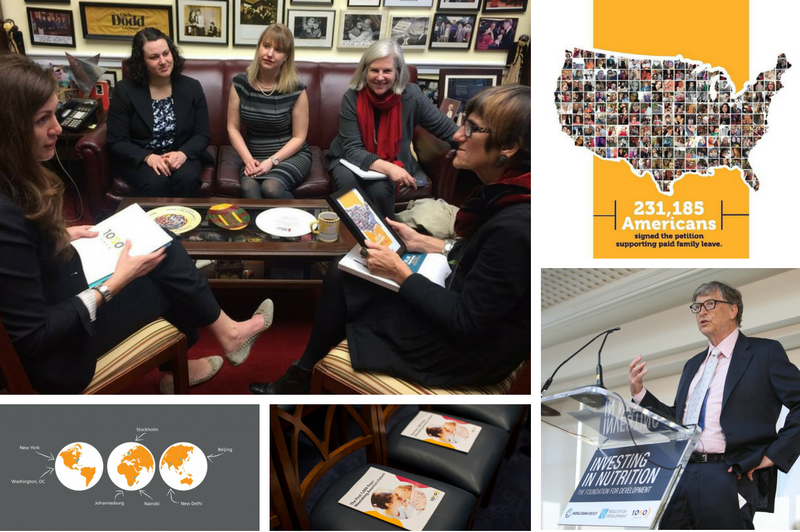
  • In January we hand-delivered over 230,000+ petition signatures in support of paid family leave to members of Congress.
  • In April – at an event featuring Bill Gates – we launched a groundbreaking study providing a roadmap for how the world can accelerate progress against malnutrition.
  • Also in April, we sent a letter to President Obama – signed by over 100 athletes – in support of all children receiving a fair start to life with good nutrition.
  • In August we launched our Babies Unite video series in support of ending malnutrition worldwide (which has received over 400,000 views and counting!)
  • In September we released a first-of-its-kind report on nutritional health of America’s mothers, infants and toddlers.
  • In November we urged the presidential candidates to prioritize paid family leave and encouraged the FDA to regulate misleading infant formula marketing.
  • In December we presented findings from qualitative research we conducted to better understand the realities of the first 1,000 days among low-income families in the U.S.

This work would not have been possible without the incredible support of our partners and supporters. You help power our work at 1,000 Days, whether we’re pushing for a national paid family leave policy, fighting for greater investment in programs that save lives of children around the world, or supporting and promoting every woman’s right to breastfeed.

We’ve come a long way this past year, laying the groundwork in our fight for healthy moms and babies. But, there is still more to be done. We look forward to continuing to help build a healthier and more prosperous future for children and their families in the year to come, for there is no better investment we can make than in the health and well-being of our children.

The Health of Moms and Babies Should Not Be Left To Luck

Through my work at 1,000 Days, I have had the opportunity to listen to countless stories from new moms across the country struggling with little or no paid time off.

Women like Samantha whose son was born three months premature and – after spending what maternity leave she did have at the NICU – was forced to make the horrible decision between caring for her son and returning to work. She decided to quit – a choice no new mother in this country should be forced to make.

I heard Stephanie’s story – a single working mom working at a high-end hotel restaurant, which offers no paid leave for new parents, yet offers healthcare for employees’ pets.

I even had the opportunity to share some of these stories with Members of Congress in Washington, DC. Earlier this year we teamed up with our colleagues at the National Partnership for Women and Families to deliver more than 230,000 signatures from men and women around the country calling on Congress to support paid family leave.

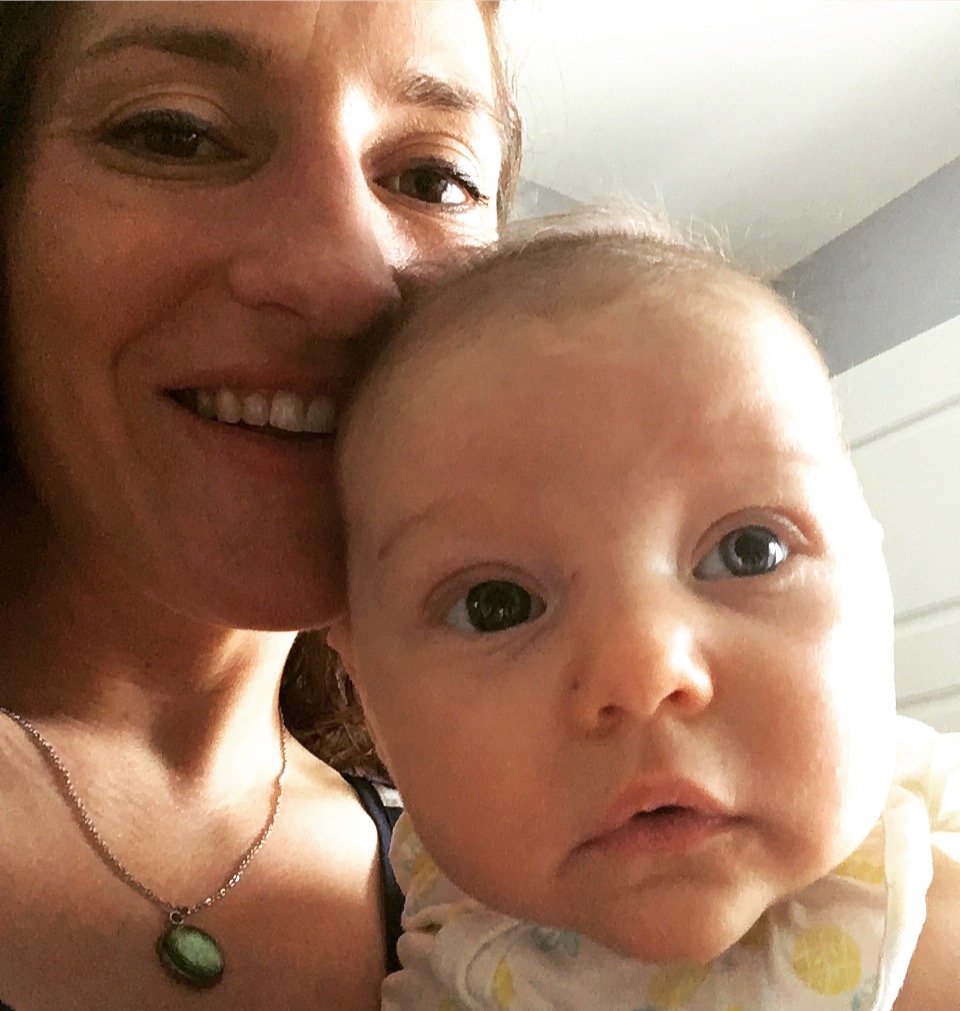
Six months ago my work became personal when I gave birth to my baby girl. And just like that I had something in common with all the women whose stories I had heard.

But here’s where my story differs – I had paid leave through my employer 1,000 Days. I was not forced to choose between my job and caring for my daughter. I am that lucky.

During my leave I was very aware of my luck.

In the sleep-deprived haze of those first few weeks of my daughter’s life, in which I was recovering from surgery and learning to breastfeed, I can distinctly remember thinking that I could not imagine going back to work after just two weeks. Yet so many new moms in America are forced to – 1 in 4 according to data from the Department of Labor.

I was incredibly lucky to have had the time I needed to care for myself and my daughter. But the health of America’s moms and babies should never be left to luck.

Parents need time to bond with their newborns. Moms need time to recover from childbirth. And mom and baby need time to establish breastfeeding, which is proven to have significant health benefits for both women and children.

While 80% of women initiate breastfeeding, only 50% of women meet their breastfeeding goals.

Right now we have a patchwork of policies, where some lucky Americans (just 12%) have access to paid leave through their employers. Some people live in states like California and Rhode Island with paid leave policies, and the rest are just…out of luck.

American families deserve better.

All workers in America should have access to paid leave – it’s in the best interest of all of us, as individuals and as a society.

Adrianna Logalbo
Managing Director
1,000 Days

Statement on the election of Donald J. Trump

At 1,000 Days, we believe that America’s greatness depends on the health and well-being of young children and their families—here at home and throughout the world. We know that how well a child is nourished and cared for in his or her first 1,000 days has a profound impact on his or her ability to grow, learn, and thrive—and a lasting effect on a nation’s health and prosperity. For a new president, the first 100 days in office can be of comparable significance as it is a window of opportunity to shape a legacy.

History will judge President-elect Trump by the legacy that he leaves for future generations.  For this reason, we urge the President-elect to use his first 100 days as America’s leader to build a healthier and more prosperous future by investing in the policies and programs that help young children and their families thrive.

All of us have a stake in whether children get a strong start to life.  As a society, when we don’t nourish a child’s potential, we all feel the consequences. It is our sincerest hope that the President-elect will act with integrity and good will to protect our nation’s and our world’s most precious and vulnerable resource—young children.


Lucy M. Sullivan
Executive Director
1,000 Days

FDA Takes Steps Against Misleading Infant Formula Marketing

More than 1,250 Americans joined 1,000 Days in support of the U.S. Food and Drug Administration’s (FDA) effort to protect families from misleading infant formula marketing.

For the first time ever, the FDA is considering to ask infant formula manufacturers to substantiate claims they make on product labels and marketing materials. They want to encourage makers of formula to provide strong, scientific evidence to back up the health claims they make about their products.

Unsubstantiated claims like “reduces colic” or “aids digestion” are confusing to families who are looking to make decisions about what to feed their babies.

Families who depend on infant formula need to know that the products they are feeding their babies are as effective as the companies claim. That is why the FDA’s recommendations are an important first step in protecting families from bogus health claims made by manufacturers of infant formula.

1,000 Days submitted a letter in support of the FDA’s recommendations and also invited its community of grassroots supporters to add their name to the following letter. And in less than two weeks, 1,259 Americans added their name.


November 8, 2016

Susan T. Mayne
Director, Center for Food Safety and Applied Nutrition
c/o Division of Dockets Management (HFA-305)
Food and Drug Administration
5630 Fishers Lane, Room 1061
Rockville, MD 20852

Re: Draft Guidance for Industry on Substantiation for Structure/Function Claims in Infant Formula Labels and Labeling

Dear Dr. Mayne,

It is encouraging to see that for the first time ever, the Food and Drug Administration (FDA) is asking infant formula companies to substantiate the claims made on infant formula labels.

As moms, dads, and caregivers, we have a right to know that the infant formula we buy is safe and effective. We need to have confidence that the claims made on formula labels are accurate and supported by scientific evidence. Companies need to step up and provide credible scientific research to back up the claims they make on their formula, such as “reduces colic” or “aids digestion.”

Given that so many babies in the U.S. rely on infant formula for their nutrition, we believe the FDA also needs to provide stronger oversight of these products and require companies to provide scientific proof that their products deliver the benefits that they claim.

As consumers and parents, we need accurate, credible information about what we’re feeding our babies. Our government needs to do all that it can to protect families from bogus health claims made by manufacturers of formula.

We, the undersigned, applaud the FDA’s proposed Substantiation for Structure/Function Claims Made in Infant Formula Labels and Labeling: Guidance for Industry and encourage the FDA to do more in protecting parents and babies from misleading marketing.

After all, the health and well-being of our country’s babies are at stake.

Sincerely,

1,259 Americans

Doesn’t every child deserve a fair start?

On August 5th, the Rio Olympics brought the world together. Nutrition leaders used the occasion to celebrate gains made against malnutrition and gear up for another round of action.

Each year, malnutrition claims the lives of almost 3 million children, robs over 2 billion people of their health and wellbeing, and costs the global economy over $3 trillion in lost productivity and health care costs. It is a massive problem that causes untold suffering.

Yet governments have historically undervalued nutrition. Only 1% of official aid money is spent on the type of nutrition-specific programs that deliver high-impact, life-saving impact.

Nutrition for Growth

The tide is, however, beginning to turn. Over the past few years, momentum to fight malnutrition has been steadily building and on August 4th, the torch was officially lit!

On the night before the opening ceremony of the Rio Summer Olympics, the Brazilian, British and Japanese governments united to host a Nutrition for Growth Olympic moment. Together, champions like Jamie Oliver, Director-General of WHO Margaret Chan, the Director-General of FAO Graziano da Silva and Kenyan athlete Tegla Loroupe kicked off the race to end malnutrition!

While this meeting demonstrates the developing political will, recent analysis shows that the world still has a long way to go before we can meet global nutrition goals. The world needs to invest an additional $7 billion a year over the next 10 years to help moms and babies everywhere reach their full potential through basic nutrition.

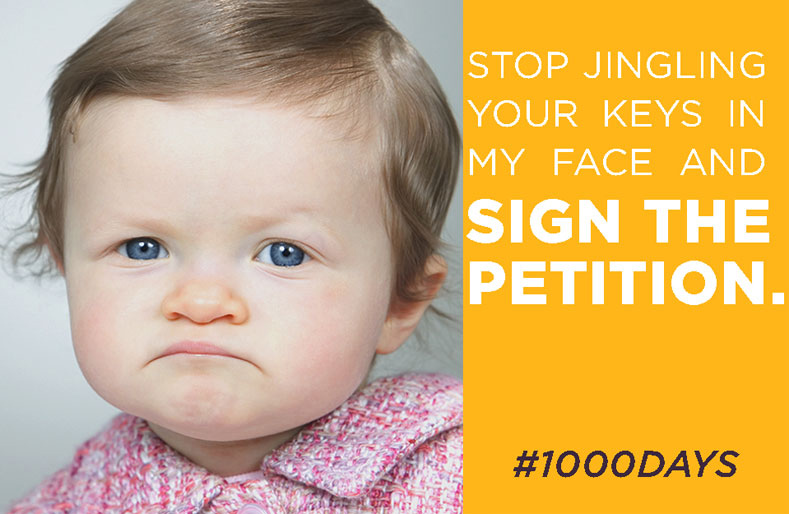
Sign the Petition to End Child Malnutrition

We need everybody to lend their voice and advocate for increased investments in nutrition in the critical first 1,000 days between a woman’s pregnancy and her child’s second birthday.

The Olympic athletes who helped us tell world leaders that every child deserves a fair start are competing in Rio as we speak, so we’ve enlisted a new group of advocates to carry the torch: grumpy babies. As we all know, a grumpy baby is a force to be reckoned with, and these babies are no exception. Check out the newest video we’ve released to help spread the word.

Please share this with your friends and, we can’t believe we’re saying this, help these babies make some noise! Together we can end malnutrition and truly start a #FoodRevolution

(A version of this blog was shared by the Jamie Oliver Foundation at www.jamiesfoodrevolution.org.) 

New Research Sheds Light on Breaking Cycle of Malnutrition

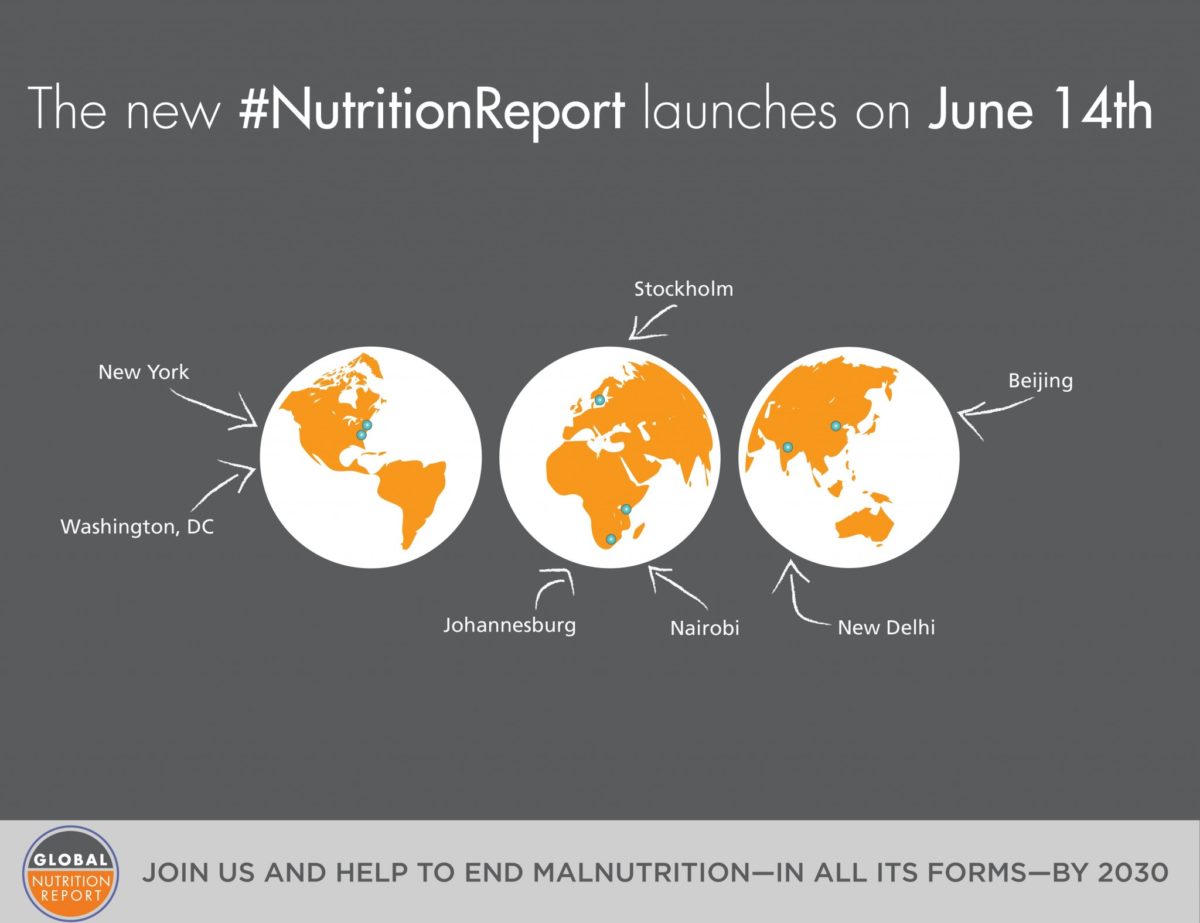
Launched in cities around the world, The 2016 Global Nutrition Report underscores that malnutrition is a truly global problem affecting 1 in 3 people worldwide. The report examines how countries around the world are doing in reducing this number, and puts forward several recommendations to spur progress.

“We now live in a world where being malnourished is the new normal. It is a world that we must all claim as totally unacceptable,” said Lawrence Haddad, Co-Chair of the Global Nutrition Report’s Independent Expert Group and Senior Research Fellow at the International Food Policy Research Institute.

Urgent action is needed is needed if the world is going to break this “new normal.” Here are two recommendations put forward by The 2016 Global Nutrition report:

  1. Drawing on research from the World Bank and Results for Development, the report estimates that countries will need to invest $7 billion in nutrition specific interventions in the next decade to meet the World Health Assembly (WHA) global nutrition targets on anemia, stunting, wasting and exclusive breastfeeding.
  2. The report also show the importance of collaborating across other sectors, like agriculture, water, sanitation and hygiene, and education in order to improve nutrition.

With this need for collaboration in mind, the United States government announced at the report launch in Washington, DC a plan to better coordinate between eleven U.S. agencies to align nutrition programming. This announcement fulfils a commitment made by the U.S. in 2013 as part of the first Nutrition for Growth summit.

In order to end malnutrition, the world can no longer accept it as the “new normal.” It is unacceptable that so many people suffer every day from the scourge of malnutrition. Pope Francis, in his remarks to the World Food Programme Board in Rome on Monday, June 13 said it best: “It is not enough to offer broad reflections or engage in endless discussion, constantly repeating things everyone knows. We need to “de-naturalize” extreme poverty, to stop seeing it as a statistic rather than a reality.” When the world normalizes extreme poverty, hunger and malnutrition, the faces and lives of the most effected are ignored.

As this new Global Nutrition Report highlights critical progress against malnutrition and the continued work that is needed, it is important not forget the stories of the people driving the progress – mothers working to nourish themselves and their children, small-holder farmers producing fruits and vegetables, and advocates speaking up for the importance of these programs in the U.S. and abroad.

Momentum for Global Nutrition Building in Wake Of Athlete Letter

In April, over 100 athletes sent a letter to President Obama urging global action on malnutrition. Since then, thousands of American citizens have signed on to a petition urging world leaders to make this August the start of the race to end malnutrition.

Read the full letter from the athletes below.


Dear President Obama:

This year, the Olympic moment is about more than sports. It’s an opportunity to shape the future.  On the eve of the 2016 Summer Olympics, world leaders will meet in Rio de Janeiro, Brazil at the Nutrition for Growth Summit and commit their governments’ support to ending malnutrition.

We ask that you make a gold medal pledge on behalf of the United States that will give kids around the world a winning start.  Good nutrition right from the beginning enables children to grow up healthy and strong, providing them the opportunity to reach their full potential.

As you know, malnutrition is responsible for nearly half of all childhood deaths around the world – more deaths than HIV/AIDS, malaria, and TB combined.  For a quarter of the world’s children, malnutrition early in life leaves them physically and developmentally stunted—an irreversible condition that limits a child’s ability to grow, learn, and thrive.  And yet only a tiny fraction of the funding for global health programs goes to the proven, life-saving nutrition programs that children need to grow up healthy.

It’s time to prioritize the nutrition of the world’s young children to ensure brighter and healthier futures.  It’s time for the United States to use the opportunity of the Nutrition for Growth Summit to make a bold commitment to give kids the strongest start to life.

We hope you will join us in racing toward a world free from malnutrition.

Sincerely,

Nia Ali

2016 Olympic Hopeful

USA Track & Field


Sirena Alise

2016 Olympic Hopeful

USA Track & Field


Anita Alvarez

2016 Olympic Hopeful

USA Synchronized Swimming


Phoebe Alvarez

2016 Olympic Hopeful

USA Synchronized Swimming


Jordin Andrade

2016 Olympic Hopeful

USA Track & Field


Yael Averbuch

FC Kansas City

Women’s Soccer


Jade Barber

2016 Olympic Hopeful

USA Track & Field


Melissa Barber

World Champion

USA Track & Field


Brigetta Barrett

Olympian

USA Track & Field


Claire Barton

2016 Olympic Hopeful

USA Synchronized Swimming


Alison Bartosik

Olympian

USA Synchronized Swimming


Amanda Bingson

Olympian

USA Track & Field


Eric Bird

Men’s Soccer


Muggsy Bogues

National Basketball Association


Shannon Boxx

Three-time Olympian

USA Women’s Soccer


Nicole Branagh

Olympian

Beach Volleyball


Landria Buckley

2016 Olympic Hopeful

USA Track & Field


Rachel Buehler (Van Hollebeke)

Olympian

USA Women’s Soccer


Quentin Butler

2016 Olympic Hopeful

USA Track & Field


Landrai Buckley

2016 Olympic Hopeful

USA Track & Field


Amber Campbell

Two-time Olympian

USA Track & Field


Kristin Castlin

2016 Olympic Hopeful

USA Track & Field


Kori Carter

2016 Olympic Hopeful

USA Track & Field


Japheth Cato

2016 Olympic Hopeful

USA Track & Field


Kendra Chambers

2016 Olympic Hopeful

USA Track & Field


Jaime Crane-Mauzy

USA Skiing


Jeanee Crane-Mauzy

USA Skiing


Virginia Crawford

US Champion

USA Track & Field


Nicole Davis

Two-time Olympian

USA Volleyball


Sharon Day-Monroe

Two-time Olympian

USA Track & Field


Korey Dropkin

2016 Olympic Hopeful

USA Curling


Adam Durham

2016 Olympic Hopeful

USA Track & Field


Eric Fonoimoana

Olympian

USA Beach Volleyball

Julie Foudy

Three-time Olympian

USA Women’s Soccer


Hyleas Fountain

Two-time Olympian

USA Track & Field


Bridget Franek

Olympian

USA Track & Field


Carin Gabarra

Olympian

Women’s Soccer


Morgan Goodwin

2016 Olympic Hopeful

USA Track & Field


Jeff Gordon

NASCAR


Erin Gray

2016 Olympic Hopeful

USA Track & Field


Jeff Green

National Basketball Association


Amanda Hahn

USA Triathlon


Mia Hamm

Three-time Olympian

USA Women’s Soccer


Monica Hargrove

World Champion

USA Track & Field


Natasha Hastings

Olympian

USA Track & Field


Britney Henry

2016 Olympic Hopeful

USA Track & Field


Armintie Herrington

Women’s Basketball


Mackenzie Hil

2016 Olympic Hopeful

USA Track & Field


Mark Hollis

2016 Olympic Hopeful

USA Track & Field


Jennifer Hoy

Women’s Soccer


Nick Hundley

Major League Baseball


Tori Huster

2016 Olympic Hopeful

USA Women’s Soccer


Marvellous Iheukwumere

2016 Olympic Hopeful

Nigeria Track & Field


Samantha Johnson

Chicago Red Stars

Women’s Soccer


Vanessa Jones

2016 Olympic Hopeful

USA Track & Field


Stanley Kebenei

2016 Olympic Hopeful

USA Track & Field


Jackie Joyner-Kersee

Four-time Olympian

USA Track & Field


Phoebe Koroleva

2016 Olympic Hopeful

USA Synchronized Swimming


Ali Krieger

2016 Olympic Hopeful

USA Women’s Soccer


Bernard Lagat

Two-time Olympian

USA Track & Field


Stephanie Lebby

USA Skiing


Muna Lee

Two-time Olympian

USA Track & Field


Mechelle Lewis (Freeman)

Olympian

USA & Jamaica Track & Field


Kristine Lilly (Heavey)

Three-time Olympian

USA Women’s Soccer


Carli Lloyd

Two-time Olympian

USA Women’s Soccer


Alexis Love

2016 Olympic Hopeful

USA Track & Field


Crystal Manning

US Champion

USA Track & Field

Michael Mannozzi

2016 Olympic Hopeful

USA Track & Field


Arielle Martin

USA BMX


Alyssa Mautz

Women’s Soccer


Heather Mitts

Three-time Olympian

USA Women’s Soccer


Gary Morgan

Olympian

USA Track & Field


Alonzo Mourning

Olympian

National Basketball Association


Dikembe Mutombo

National Basketball Association


David Oliver

Olympian

USA Track & Field


Heather O’Reilly

Three-time Olympian

USA Women’s Soccer


Greg Nixon

World Champion

USA Track & Field


Kara Patterson

Two-time Olympian

USA Track & Field


Tori Pena

2016 Olympic Hopeful

Ireland Pole Vaulter


Chanelle Price

2016 Olympic Hopeful

USA Track & Field


Kiana Profit

USA Track & Field


Elli Reed

Seattle Reign FC

Women’s Soccer


Britney Reese

Two-time Olympian

USA Track & Field


Ruth Riley

Olympian

USA Women’s Basketball


Sanya Richards-Ross

Two-time Olympian

USA Track & Field


Jason Richardson

2016 Olympic Hopeful

USA Track & Field


Sarah Rodriquez

2016 Olympic Hopeful

USA Synchronized Swimming


Alex Sachs

Olympian

Brazil Women’s Soccer


N’aithan Scott

2016 Olympic Hopeful

USA Track & Field


Danielle Scott-Aruda

Five-time Olympian

USA Volleyball


Jamie Sinclair

2016 Olympic Hopeful

USA Curling


Julianne Sitch

Women’s Soccer


Awvee Storey

National Basketball Association


Jared Sullinger

National Basketball Association


Jere Summers

USA Track & Field


LaTavia Thomas

2016 Olympic Hopeful

USA Track & Field


Stephanie Trafton

Three-time Olympian

USA Track & Field


Gary Vanderwege

Two-time Paralympian

USA Fencing


Todd Wharton

Men’s Soccer


Alison Williams

2016 Olympic Hopeful

USA Synchronized Swimming


Melinda Winthrow

2016 Olympic Hopeful

USA Track & Field

U.S. Government Has Chance to Show Support for Breastfeeding

This week world leaders have the opportunity to vote on a very important resolution for the health and well-being of mothers and babies at the World Health Assembly. The WHO Guidance on Ending the Inappropriate Promotion of Foods for Infants and Young Children provides critical guidance for countries to protect and promote breastfeeding.

Around the world misleading and aggressive marketing of infant formula undermines too many women’s confidence in their ability to breastfeed, which is why it is so important that the U.S. government support the resolution put forward this week at the World Health Assembly.

The research clearly shows that the aggressive, extensive and inappropriate promotion of formulas for infants and toddlers is contributing to a decline in optimal breastfeeding, which ultimately deprives mothers and children of important health benefits. Conversely, improving the rates of optimal breastfeeding can prevent an estimated 823,000 deaths of children under the age of 5.

Did you know that the infant formula industry spends about $4 billion a year on promoting their products? That’s more than the amount that governments spend on supporting breastfeeding. No wonder breastfeeding rates are so low.

The U.S. government must step up to support this resolution at the World Health Assembly this week. To not do so would be to place commercial interests ahead of the health and well-being of moms and babies.