Category: Uncategorized

New Report: Stress Changes Babies’ Brains and Primes Them for Obesity

Childhood obesity has more than tripled in the United States since the 1970s. Currently, almost 1 in 5 children aged 2-19 is obese, putting them at increased risk for chronic health conditions like asthma and diabetes.

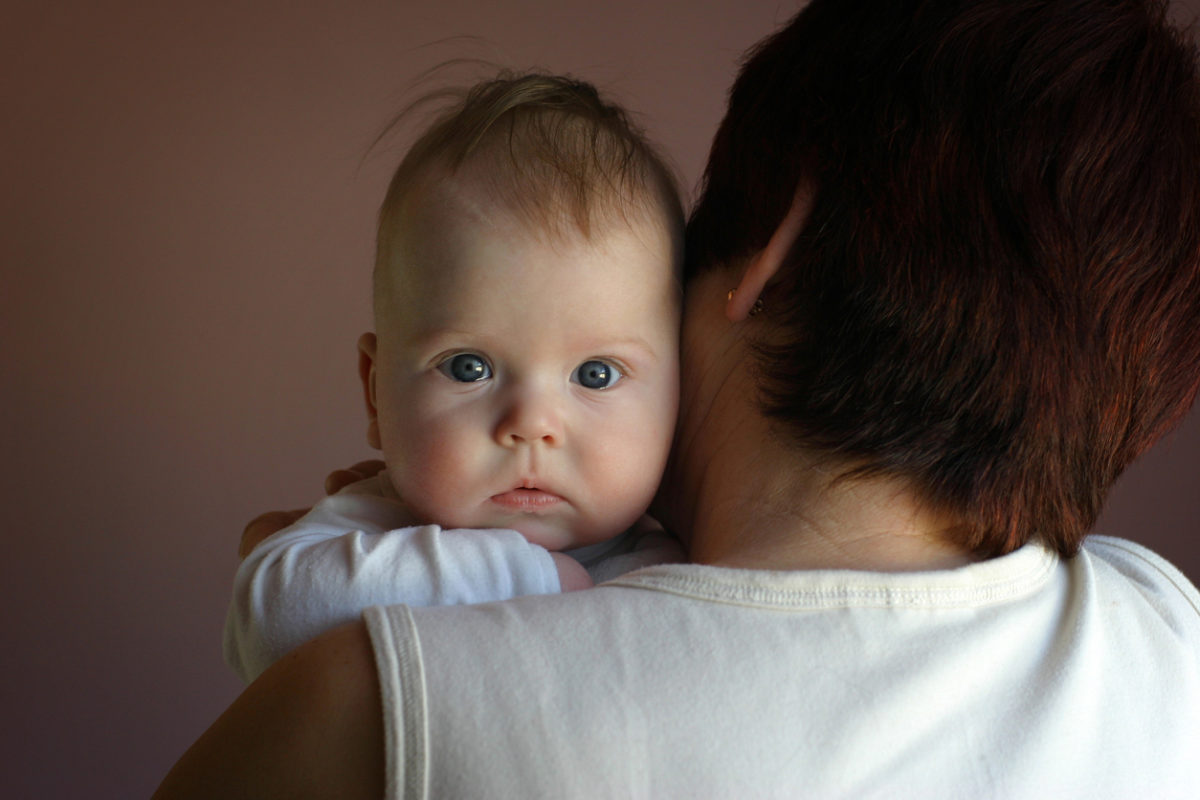
The causes of childhood obesity are complex, but one often over-looked factor is stress. Poverty, food insecurity, abuse, violence, and unpredictable or unstable caregiver relationships are all stressors that can have a profound and long-lasting impact on a child’s developing brain, obesity risk, and life-long health. Babies and toddlers are especially vulnerable to the damaging effect of stress. Healthy Eating Research (HER) recently released a new research review on Stress in Early Life and Childhood Obesity Risk in order to develop a better understanding of the ways in which early life stress is associated with childhood obesity risk. Below are some key findings from the report:

  • If a mom experiences acute or chronic stress before or during pregnancy it can impact the parts of her developing brain that protect against obesity, increasing the risk that the child will be obese in childhood and throughout life.
  • Chronic stress and adversity in infancy and toddlerhood can change systems in the brain that regulate self-control, potentially leading to poor eating behaviors and obesity.
  • Early stress also impacts the parts of the developing brain that control executive functions like working memory, flexible thinking and self-monitoring. Studies with young children have found that weakened executive function is linked to overweight and reduced ability to control and adjust how much is eaten.

The report also highlighted some of the ways in which poverty and food insecurity may lead to obesity-promoting diet practices. For example, young children often refuse new foods like fruits and vegetables between eight and 15 times before they are willing to eat them. One study showed that low-income families can’t afford to waste foods their children reject and are therefore more likely to purchase high calorie foods that their children will accept.

Families need support in order to combat the causes of early childhood stress and obesity. The HER researchers identified a number of programs and policies that can help families maintain stable and healthy home environments. Here are a few things families need in order to raise healthy kids:

  • Access to federal food assistance programs that fight poverty and food insecurity, such as the Special Supplemental Nutrition Program for Women, Infants and Children (WIC)
  • Access to affordable healthy food in their communities
  • Access to affordable health care and mental health care services

Investments in the health and development of young children are investments in our nation. Protecting children from stress and adverse childhood experiences is a societal responsibility that will lower the cost of healthcare and lead to a more prepared and effective workforce in the long run. It is also the only way to ensure that every child in the United States gets a fair shot at achieving their full potential.

Click here to read the full report.

Guest Post – Facts Not Fear: Protecting the One Place Where Fear Does Not Belong

We live in a world of fear. From the recent terrorist attacks in England to last year’s Orlando nightclub massacre. We have seen how the fear of outsiders has sparked powerful political movements around the world. As a frequent business traveler I sense my own anxiety as I sit on planes and trains, and as a mother I know the feeling that sweeps over me whenever I receive an incoming phone call from my children’s school.

Yes, we live in times of fear and anxiety—much of which is beyond our control.

But there is one place where fear should not exist. There is one area, where, as women and mothers, that we should insist that fear not enter—that is in the precious act of feeding our babies. From the time they are first placed in our arms, we are anxious that we will do our best. Yes, we are nervous that we will make mistakes. But we should not be made to dread our ability to mother—particularly when it comes to feeding our infants—one of our very first tasks.

That’s why a recent spate of fear-based marketing, particularly from the Fed Is Best Foundation, stoking fears that exclusive breastfeeding kills babies is both erroneous and irresponsible. But it is also the type of insidious marketing that preys on a mother’s existing insecurities that should make all women concerned. If the only way Fed Is Best can make its point is by sensationalizing infant deaths and undermining our confidence in our bodies—then maybe their point needs to be carefully considered.

Or, as women, we insist that they make it with valid facts and sans the fear mongering.

Let’s face it, women are sold fear and anxiety as a marketing tool every day. In fact, the strategy, officially known in business circles as FUD—fear, uncertainty and doubt—was designed by an IBM executive decades ago to persuade buyers to feel “safe” with IBM products rather than risk a crash, virus or server disruption. By the early 90’s it was generalized to refer to any kind of misinformation used as a competitive weapon.

Today, weaponizing fear takes many forms. We fear our faces aren’t pretty enough, so we buy cosmetics. We worry that our body isn’t the right “type” so we are sold diet plans and surgical procedures. We are told our hair isn’t shiny, bouncy or thick enough so we are sold multitudinous hair products. And then we are told to fear that our bodies may not properly do what they are biologically made to do, and we are sold infant formula.

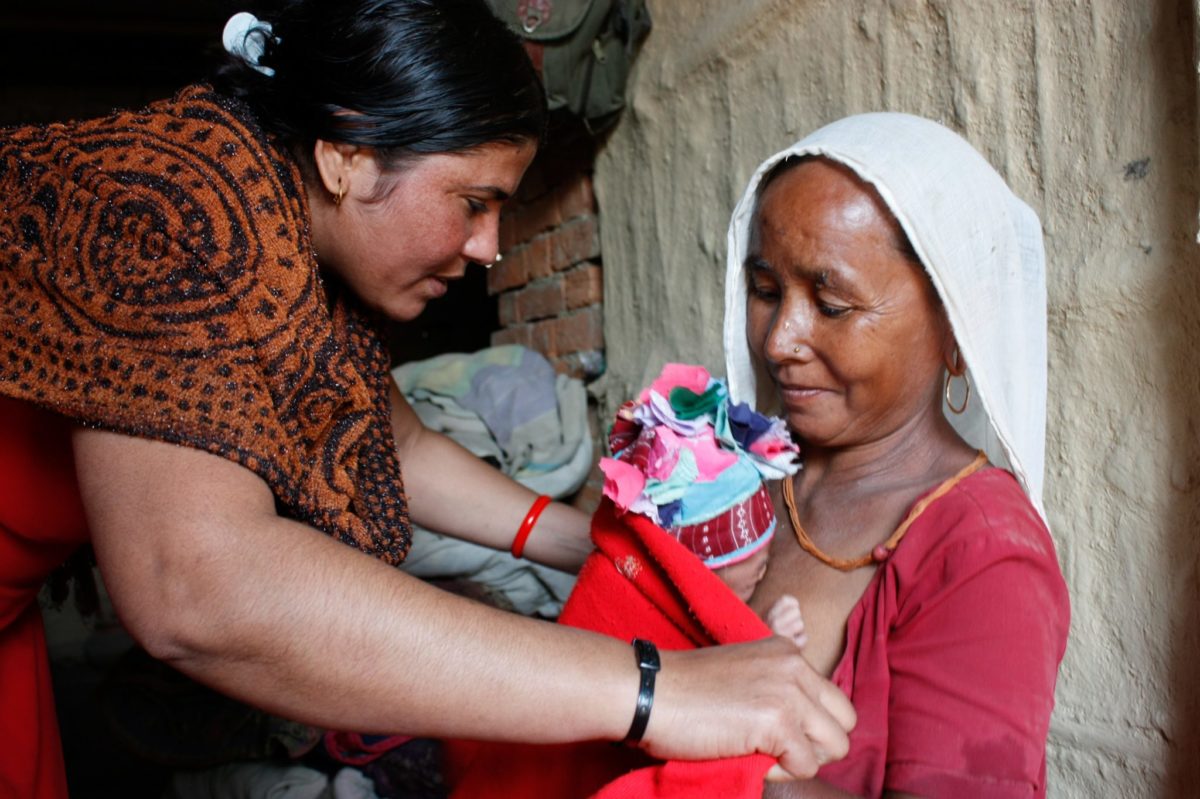
The truth is, our bodies were uniquely made to feed the infants we create. Decades of scientific research proves that formula is nutritionally inferior to breastmilk. Admittedly, societal pressures, structural barriers such as a lack of paid maternity leave, and physicians who receive little to no training in lactation science in medical school, make it very difficult for some women to fulfill their biological norm. Many women who want to breastfeed find undereducated physicians and nurses and limited post-natal support—particularly in the early days after discharge. We have much to overcome.

To be clear, infant formula is necessary. When a mother’s own breastmilk or human donor milk is not available, then infant formula is an important third option that can, at times, save lives. However, women should come to that decision fully informed, not because of marketing efforts designed to incite distrust in their own bodies or threatened with the fear of the death of their infant.

It’s no secret that, especially in the Western world, women already fear they will have insufficient milk. For some, this fear can become a self-fulfilling prophecy because fear and anxiety can literally limit lactation by stifling the letdown reflux that stimulates the milk glands. Feeding into this insecurity by promoting early formula supplementation “just in case” has been a go-to move by the formula industry for years.

As far back as the 1940s, the manufacturers of Borden KLIM evaporated milk ran a radio jingle in the Congo that stoked mother’s fears over insufficient milk. The song went:

The Child is going to die
Because the mother’s milk has given out
Mama o Mama the child cries
If you want your child to get well
Give it KLIM milk

So when Fed Is Best frequently promotes eerily similar headlines claiming, “One bottle would have saved my baby”—it seems to make early supplementation innocuous, while deploying a similar tactic used to spur sales of infant formula. The insidious message is that your breast cannot be trusted but a bottle can—this type of marketing should concern all women.

Instead of fear, we should demand the facts about why physicians and nurses don’t have more education to properly identify lactation dysfunction or failure. We should demand knowledge about other options to increase milk output such as hand expression, which can extract more milk than a pump. If formula must be used, it should be administered as a temporary bridge until a mother’s supply is established, not a breastfeeding killer for mothers who want to nurse. And we should demand standard home visitation immediately after discharge, as is the practice in the UK and other European countries.

Ultimately, women deserve facts not fear. Women have a right to guilt-free, confidence-building information and support. And it’s time that we demand it of everyone—including, and especially, from those claiming to support mothers. We cannot stand by while Fed Is Best insists that fear is best.

Kimberly Seals Allers is an award-winning journalist and nationally recognized infant health advocate. Her fifth book, The Big Letdown—How Medicine, Big Business and Feminism Undermine Breastfeeding was released in January by St. Martin’s Press. Learn more at www.KimberlySealsAllers.com and follow her on Twitter @iamKSealsAllers.

The Senate Health Care Bill – A Misguided Plan for Health Care Reform

Yesterday – after weeks of negotiations obscured in secrecy – the Senate health care bill was finally unveiled. But this draft legislation puts the health of moms and babies at risk.

The Senate bill will force women, in particular, to pay more out-of-pocket costs to get the care that they need before, during and after pregnancy by giving states the ability to design health benefit packages—eliminating protections for essential health services such as maternity care, childbirth and newborn and pediatric care.

The Senate bill will eliminate health insurance for millions of America’s most vulnerable people, including children, by fundamentally changing how Medicaid is financed and rolling back Medicaid funding.

The Senate bill will force hard-working families to pay more for lower quality insurance, endangering the health and well-being of women, infants and young children across America.

While Senate leadership is trying to cut federal spending, they are doing so at the expense of Americans’ health.

This is misguided policy, at best.

1,000 Days urges senators to find real solutions for America’s health care needs and focus on building a healthcare system that ensures all mothers, babies and toddlers in America have the care they need to thrive.

Roger Thurow Testifies: How The Effects of Famine Stretch Far Further Than Hunger

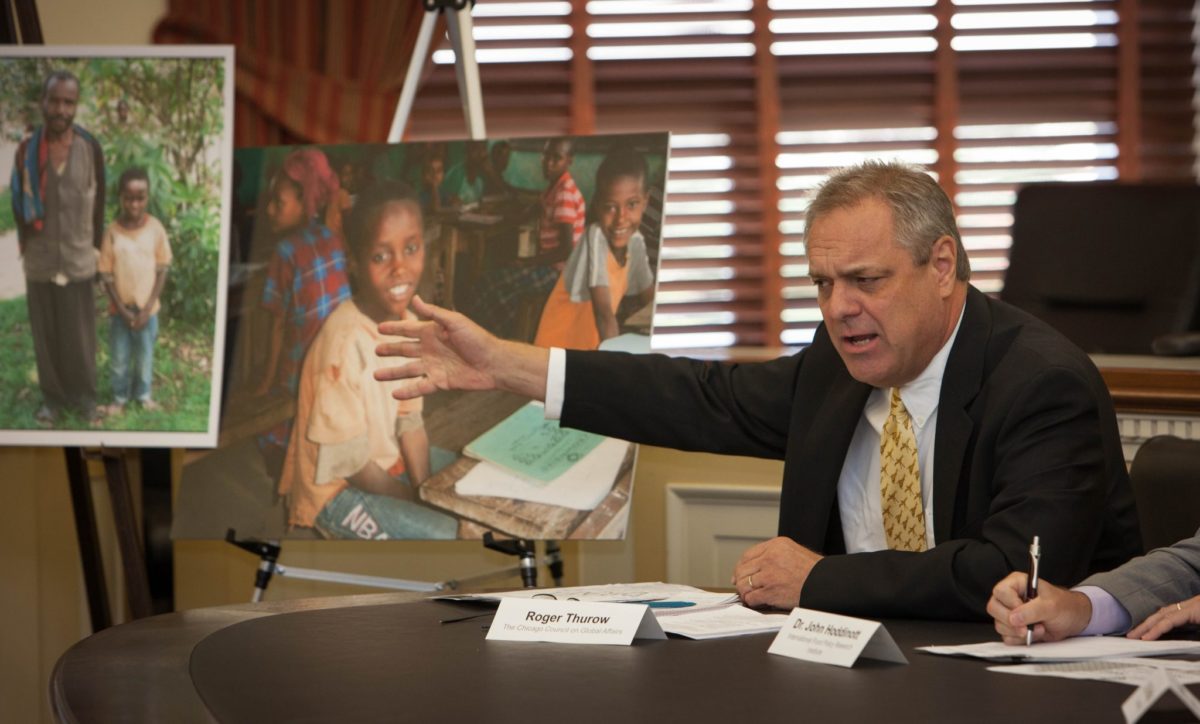
Roger Thurow, a friend of and champion for 1,000 Days, recently testified before the House Foreign Affairs Subcommittee on Africa, Global Health, Global Human Rights, and International Organizations on the individual, societal and economic costs of malnutrition and famine. Watch the hearing or read his written testimony below.

Thank you, Chairman Smith, Ranking Member Bass, and distinguished Members of the Committee for inviting me to testify today on this this very important and very timely topic. Thank you for your steadfast support of agricultural development efforts, and for raising the clamor about famine in your resolution. And thank you for this opportunity to testify about the causes and consequences of famine. That this medieval suffering continues now into the second decade of the 21st century is, I believe, the biggest stain on the world’s conscience.

I have witnessed famine and hunger crises, unfortunately, many times in my four decades as a journalist—first as a foreign correspondent with The Wall Street Journal and now as a senior fellow for the Chicago Council on Global Affairs and author of three books on hunger and malnutrition in the 21st Century.

My first travels in the hunger zones of Africa came during the Ethiopian famine of 2003, when 14 million people were on the doorstep of starvation. It was the first great hunger catastrophe of our grand new Millennium. On my first day in Addis Ababa, the capital, I met with World Food Programme workers who were scrambling to provide relief as the hunger spread. One of them gave me this piece of advice, which to me sounded like an ominous warning: “Looking into the eyes of someone dying of hunger becomes a disease of the soul. For what you see is that nobody should have to die of hunger.”

Certainly, not now, not in the 21st century when so many scientific and technological achievements are literally at our finger tips. The next day, I stepped into an emergency feeding tent filled with dozens of starving children and their parents—and I looked into their empty, lifeless eyes. What I saw did indeed infect my soul, like a disease. In addition to the immense human suffering, I saw resignation and defeat of the farmers who had lost everything. I saw families on the move—abandoning homes and hope. I saw communities shattered, an entire generation, the children, vanishing in their parents’ arms. From the women, I saw that the deepest form of misery was to be a mother unable to stop the crying of a hungry child.

For me, it was impossible to see and not act. Thus, as a journalist, an author and senior fellow at the Council I continue to write and write and write about hunger and malnutrition. I believe that those of you who recently traveled to South Sudan and Uganda also looked into the eyes of the hungry. And thus, with similarly diseased souls, I imagine you too feel compelled to act about hunger and malnutrition.

What propels my writing—and, I’m sure, your action—is the firm conviction that things don’t have to be this way. Yes, droughts will occur. Conflicts will rage. Corruption will complicate relief efforts. But starvation and famine can be avoided. Timely humanitarian response with food aid, and water, and shelter, and medical assistance, is absolutely necessary to reduce the suffering and save lives. I’ve seen it happen, heroically, with American leadership.

Emergency responses and food aid are crucial action now, but it alone won’t prevent the next famine. This we must acknowledge and remember. The next famine will only be prevented by long-term agricultural development investments—the investments that give farmers, particularly small-scale farmers, and their families resiliency against climate and economic shocks, that provide food security, that reduce conflict, that promote economic prosperity, that spread hope of better futures. The kind of investments we’ve seen under Feed the Future, made possible by the Global Food Security Act—which the Chairman staunchly championed and continues to do. Thanks to the long arc of American leadership in the post-World War II era, progress has been made on reducing hunger and malnutrition and stunting—and the 114th Congress can now add its name to that long and storied list after passing the global food security act. Now is not time to retreat. Exactly seventy years ago this month, with hunger looming in Europe after the war, the Marshall Plan was launched and now the EU is our largest trading partner. Today, famine and hunger on a scale rarely seen in Africa and the Middle East call us to act.

We know these investments in agricultural development work. The programs that have been in play on the ground in Ethiopia since the 2003 famine have created a resiliency that has the country better prepared to combat the current drought, better than its neighbors. According to new USAID evidence, Ethiopian households reached by US agricultural development programs were far more resilient than their neighbors, both within Ethiopia and in surrounding countries, to maintain their food security in the face of an historic drought.

I have seen the benefits of agricultural development investments myself. In my books, I have followed farmers and their families over time. As harvests improve, as surpluses grow, the hunger season wanes. Malnutrition disappears. Children stay in school longer—I have seen families celebrate high school and even college graduations because of increased prosperity from agricultural advancement. The farmers become more entrepreneurial, eagerly expanding their operations to feed not only their own families but their communities and their countries as well. They no longer strive merely to survive, but to robustly thrive.

Ending hunger wherever it may be is certainly the right thing to do—and that should motivate us all. We’re told by the World Food Programme that today about 5.4 million children are dangerously malnourished and more than one million are at risk of starvation during the current famines raging in Africa and the Middle East, and that without sufficient and timely relief, up to 600,000 children are at imminent risk of death in the coming months. That’s shocking and unconscionable.

Doing what we can to prevent those deaths and end that suffering is also the smart thing to do. For famine isn’t just something that happens “over there” somewhere. Famine impacts all of us. The economic ripples of hunger and malnutrition are powerful and long-lasting—they roll over time and space. Even though a famine may end, the costs continue to accumulate. The most pernicious impact of any hunger crisis—along with the lives lost—is what becomes of those who survive.

The impact is greatest on women and children, particularly in the first 1,000 days—the time from the beginning of a mother’s pregnancy to the second birthday of her child. Any lack of food, any bout of malnutrition, often leads to stunting—physically and cognitively. Stunting is a life sentence of underachievement and underperformance. Currently, in our world today, one in every four children under the age of five is stunted. One in four children. Think about that.

The toll on the individual, the family, the community are profound in the loss of education and labor productivity over time—for a stunted child becomes a stunted adult. Collectively, the problem weakens our trading partners, limits global opportunities. Childhood malnutrition and stunting can cost individual countries 8-10-12% of their annual GDP according to the World Bank. The World Bank also estimates the costs to the global economy at $3.5 trillion annually in lost productivity, higher health care costs, and lessened trade—that is “trillion” with a “T.”

Those are big numbers. But perhaps the greatest cost of childhood malnutrition and stunting are immeasurable: A poem not written. A gadget not invented. A horizon not explored. An idea not formed. An innovation not nurtured. A cure not discovered. What might a child have contributed to the world if he or she hadn’t been stunted? You see, a stunted child anywhere becomes a stunted child everywhere.

In closing, I’ll return briefly to Ethiopia. During the 2003 famine, the first eyes of a starving child I looked into belonged to a 5-year-old boy named Hagirso. He had withered away to skin and bones, the doctors and nurses worried that he might not survive. What I saw that day continued to haunt me. I often wondered whatever happened to Hagirso? Ten years later I returned to the scene of that awful famine. I was delighted to find that Hagirso had survived. But he clearly wasn’t thriving—he was severely stunted, physically and cognitively. At 15 years old, he only came up to the bottom of my rib cage. And he had just begun attending first grade classes, learning the alphabet.

For me, he is the embodiment of what is at stake when we allow famines to continue. What might this child have accomplished were he not stunted? A lost chance at greatness for one child is a lost chance for us all.

That is what compels us to act today. The American imperative to lead the way to the end of hunger and malnutrition and stunting abides, stronger than ever.

The Senate is Closing in on a Health Repeal Bill, Albeit Secretly

Earlier this year, all anyone in Washington could talk about was health care and the Republican efforts to repeal the Affordable Care Act (ACA). As details of the House of Representative’s health care bill—the American Health Care Act (AHCA)—became clear, people all over the country were talking about it and speaking out in strong opposition.

Read our statement on the House-passed AHCA.

Over the last month, the process has moved over to the Senate, where Senate Leadership has been crafting their repeal bill behind closed doors. Aside from the 13 senators (all of whom are men) working on the bill, no one yet knows the details of the plan. All the other 87 senators—Republican and Democrat alike—have not been consulted. There have been no Committee hearings and no debate. What’s worse—the public has not been offered the opportunity to weigh-in on a bill that will impact every aspect of their health, and possibly their livelihoods.

Why all the secrecy? Likely because Senate Leaders know that the House passed a bill that was bad policy.

Let us be crystal clear: the AHCA is a bill that would leave moms, babies and all of us significantly worse off than we are today, putting our health and economic security at risk. The Congressional Budget office estimates that 23 million people will lose health coverage under the AHCA over the next 10 years, 14 million in just the first year alone. According to the Center on Budget and Policy, 3 million children will lose coverage, in large part due to the deep cuts to Medicaid, the primary source of health insurance for America’s most vulnerable families. It’s worth noting that Medicaid covers half of all births in the United States—about 2 million births a year.

What little we do know about the Senate proposal is that it will be just like the AHCA.

The Senate bill will likely still result in a dramatic increase in the number of people who are uninsured, sky-rocketing premiums and deep and fundamental cuts to Medicaid. Under any version of the bill, moms and babies across the country will be charged more for less coverage, putting life-saving services out of reach.

While Senate Leadership is crafting their repeal bill—perhaps hoping no one will notice or understand the impact before it goes to a vote—now is the time to stay engaged.

Our elected officials should be listening to America’s moms who understand the value of high quality and affordable health care for themselves and their babies.

What’s your experience with health care or health insurance? What are your concerns for the future? Share your thoughts and we’ll make sure to share them with policymakers here in Washington. They need to hear from all of us. Before it’s too late.

Trump’s Paid Leave Proposal: Not the Plan America’s Families Need

The words “paid family leave” made it into the Trump administration’s 2018 spending plan. This may seem like a step in the right direction, but 1,000 Days sees this for what it is: a second-rate policy proposal that does not meet the needs of America’s hardworking families.

The Trump plan would allow states to establish programs that provide six weeks of paid leave to new mothers and fathers, including adoptive parents. For starters, six weeks of leave does not come close to meeting families’ care-giving needs. 1,000 Days supports a minimum of 12 weeks of paid leave for working parents upon the birth or adoption of a child. Furthermore, the President’s plan for paid leave is flawed in its proposed implementation. Built upon state unemployment insurance programs—the majority of which are underfunded and pay an average of just 46% of employee pay—it’s likely that America’s workers will receive just a fraction of their paycheck while on leave. Evidence from existing paid leave programs in states like California shows that when the wage replacement is too low, many workers—particularly low-wage workers, the vast majority of whom are women—cannot afford to take advantage of family leave. Given that states would have wide latitude to design the program the way they want, we don’t know what this program would look like, who would get which benefits and how much.

Details like this matter. And America’s families deserve better.

And while the inclusion of paid leave in the President’s budget is on the one hand a testament to the growing public demand for paid family and medical leave, it’s important to realize that it comes at the expense of health, nutrition and safety net programs that many families with young children rely on.

The time is now for Congress to act to support a well-designed and comprehensive paid leave program that truly benefits families. Earlier this year, Senator Kristen Gillibrand and Representative Rosa DeLauro introduced the FAMILY Act to provide up to 12 weeks of paid leave to all workers, regardless of the size of their employer, their gender, their marital status, or need for paid time off. Congress should dismiss the President’s paid leave proposal and get to work on passing common-sense legislation like the FAMILY Act to enable working families in the U.S. the opportunity to give their children the strongest start to life.

Trump’s Budget Cuts Will Harm Young Children and Families

At 1,000 Days, we believe that children are the foundation of a country’s greatness. When young children thrive, so do nations. It is why we are deeply concerned by the Trump Administration’s proposal to slash funding for basic nutrition, health and anti-poverty programs that give children here in the U.S. and around the world a strong start to life. By cutting vital domestic safety net programs and foreign assistance, the Trump Administration will not only weaken America’s foundation, it will also put vulnerable children and their families in harm’s way.

It is troubling to see that the President’s budget takes aim at programs that many hardworking American families of young children rely on to make ends meet: the Supplemental Nutrition Assistance Program (commonly known as food stamps or SNAP), the Earned Income Tax Credit and Child Tax Credit, Temporary Assistance for Needy Families, Medicaid and the Children’s Health Insurance Program (CHIP). 1,000 Days is particularly concerned about cuts to SNAP because nearly HALF of families that participate in the program include at least one child under age 5. It is unconscionable that the Trump Administration would propose massive cuts to SNAP when nearly 1/3 of preschoolers in the U.S. rely on the program each month for their nutritional needs. We are also deeply troubled by the proposal to slash funding for Medicaid and CHIP which together serve the health care needs of almost HALF of all children under the age of 6 in the U.S. These programs are vital to ensuring that all kids in America have the opportunity to reach their full potential.

By proposing deep cuts to foreign assistance, the President’s budget will also hurt young children in some of the poorest countries throughout the world. Each year nearly 3 million children under age 5 die from malnutrition—a condition that is almost entirely preventable. The U.S. has been a leader in the fight against global malnutrition and America’s investments in life-saving programs to improve maternal and young child nutrition costs a fraction of a penny of every dollar spent by the U.S. government. There is little question that eliminating or scaling down U.S. global health, development and humanitarian efforts will cost lives and reverse more than a decade of progress against poverty and disease. These devastating cuts come at a time in which the world is facing severe famines and other humanitarian crises and when over 1 million children are at risk of dying from starvation.

The President’s budget proposal is not only mean-spirited, it is also short-sighted. It will fail to balance the federal budget and will actually cost more money in the long run as taxpayers contend with the sickness and suffering that cutting vital health and nutrition programs will create.

Americans deserve better than a federal budget that puts the health and well-being of young children and their families at risk. Congress must reject the President’s proposal and start over to build a budget that is worthy of our children and our true greatness as a nation.

Babies Health or Corporate Bottom Lines

Every day, a billion-dollar battle is waged for a baby’s first food. It takes place the world over, from maternity wards in Uganda to OBGYN offices in Manhattan, from corner stores in Detroit to market stalls in Thailand. And it is fueled by a handful of large and powerful multinational food and drug companies that manufacture the bulk of the world’s infant formula and pour hundreds of millions of dollars each year into marketing their products.

As many of us know, the infant formula marketing onslaught begins before baby is born—sometimes, as soon as a few weeks after we find out we’re pregnant. Free samples, cute gifts branded with formula company logos, clever commercials, and coupons galore are all harmless right? Not quite. All this marketing is designed to do one thing and one thing only—to get you to start using infant formula, as soon as possible and as much as possible.

And while formula itself is a necessity for many babies, the marketing of it is not. For starters, marketing drives up the cost of formula. It is one of the industry’s dirty little secrets: free samples aren’t really free. Formula-feeding families end up paying dearly for these so-called free samples because the cost of making and distributing the samples (often in hospitals and doctors’ offices) is baked into the high price of name-brand formula. It is important to remember that for many parents in the U.S and throughout the world, infant formula is a costly but necessary expense that strains the family budget. The high cost of the product is one reason why financially-strapped parents sometimes end up diluting formula to make it last longer, inadvertently putting their babies at risk for malnutrition. The marketing of formula is also engineered to undermine women’s confidence to breastfeed. Infant formula companies very often employ messaging and tactics (and even messengers such as health care workers and pediatricians) that prey upon nursing mothers’ fears and anxieties—am I making enough milk? is my baby getting fed enough? is my baby getting all the nutrition he needs? This kind of marketing is not only predatory and unethical, it is also detrimental to the well-being of women and children. The more formula companies push their products, the less moms and babies benefit from breastfeeding and the more their health suffers. For mom, longer durations of breastfeeding is associated with lower risk of heart disease, ovarian cancer and breast cancer. For baby, breastfeeding protects against illnesses and infections and offers unparalleled brain-boosting benefits.

While the aggressive marketing of formula does little to help families, it does a lot to drive profits for infant formula companies and Wall Street. Make no mistake, infant formula is big business. Globally, annual sales of formula are projected to grow from about $45 billion to almost $71 billion in the next two years. Most of this growth is expected to come from emerging economies in Asia and Africa where high rates of child mortality and malnutrition persist. This global growth has meant huge profits for companies and has made formula company executives very wealthy. In fact, one of the highest paid chief executives in American business is the CEO of Abbott Labs, the maker of Similac. The U.S. accounts for about $4 billion in sales each year for formula makers, though sales here have been stagnant as breastfeeding rates have been inching upward. Even the slightest increase in breastfeeding rates can spell trouble because every breastfed baby is a lost sale for formula companies. Pressure by Wall Street investors to boost profits have led formula companies to spend big on promoting their brands and pushing new “super premium” (i.e. high-priced and heavily marketed) product offerings. It has also led companies to be even more aggressive in their promotion of formula: marketing their products as “closer than ever to breast milk”, making bogus and misleading health claims on product packaging, and pushing supplementation for breastfed babies by stoking parents’ fears about underfeeding.

As many families struggle with the high cost of formula-feeding and mothers deal with confusing and conflicting messages on how and what to feed their babies, it is time we take a stand against the aggressive promotion of infant formula. Expensive advertising and marketing tactics and bogus product claims benefit no one except the big formula companies and Wall Street investors.

If you agree, join us in taking action. On Thursday, May 18th, we’re teaming up with Public Citizen, Best for Babes and ROSE for a day of action to send a message to infant formula companies that it’s time to put #HealthOverProfit. You can get involved in this day of action here. We hope you’ll join us in standing up for formula-feeding and breastfeeding families the world over and let formula companies know that our babies’ health is more important than their bottom lines.

Statement on the Passage of the American Health Care Act

Today, the U.S. House of Representatives passed the American Health Care Act (AHCA)—a dangerous and irresponsible piece of legislation that puts the health of moms and babies at risk. Under the AHCA, millions of hard-working families stand to lose the guaranteed health benefits that are critical to ensuring that their children get a strong start to life.

With this bill, Congress will force many women to pay more out-of-pocket to get the care that they need before, during and after pregnancy, putting themselves and their babies at risk for serious medical complications. Millions of people with pre-existing conditions—which could include pregnancy itself—will no longer be guaranteed affordable coverage to meet their needs. In addition, the AHCA also takes us back to days when women can be denied coverage or charged a lot more for health insurance just for being of child-bearing age.

It is deeply troubling that the AHCA includes severe cuts to Medicaid and CHIP, which play a critical role in providing health insurance to low-income families. Almost half of all children under age 6 in America rely on these programs for health coverage. Because the AHCA cuts billions of dollars from Medicaid and weakens the program, Congress has voted to eliminate coverage for millions of low-income children and their families.

As this bill now heads to the Senate, 1,000 Days urges Senators to vigorously oppose this proposal and instead focus on building a healthcare system that ensures all mothers, babies and toddlers in America have the care they need to thrive.