The First 1,000 Days: The Case for Paid Leave in America
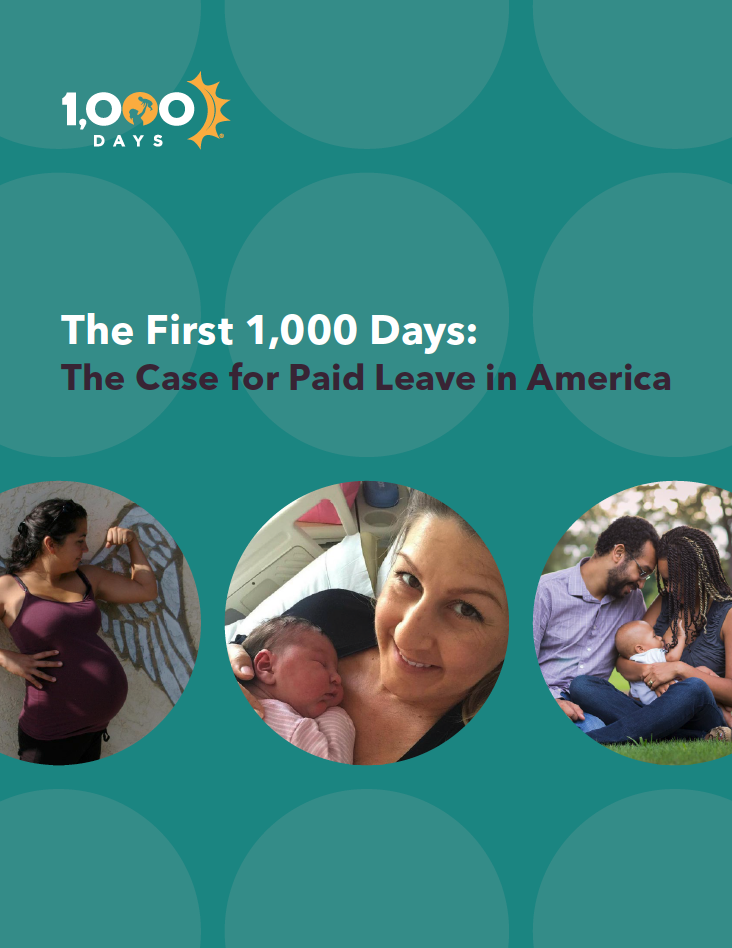
The United States is one of the only countries in the world without a national policy in place to provide mothers with paid time off to care for their health needs during and after pregnancy or to care for their newborn. As a result, nearly 1 in 4 women return to work within just 2 weeks of giving birth – a reality that has serious consequences for their health and that of their children. In a first-of-its-kind analysis, 1,000 Days builds the case for paid leave as a public health imperative and calls for a comprehensive paid leave policy that ensures all workers can take the time they need to care for themselves or their loved ones without jeopardizing their economic security.
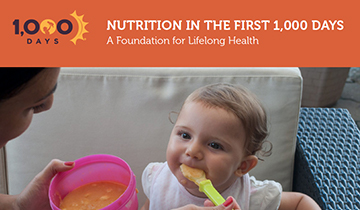
Nutrition in the First 1,000 Days: A Foundation for Lifelong Health

The 1,000 day window, between a mother’s pregnancy and her child’s second birthday, is a critical time that helps set the stage for the child’s future well-being. During this period, proper nutrition is crucial for supporting rapid brain development, building the immune system, and other essential functions. 1,000 Days, with support from Zero to Three and their Think Babies Campaign, has created this resource, Nutrition in the First 1,00 Days, to focus on the importance of investing in nutrition during this foundational period.

Toddler – Food and Feeding

Based upon evidence​, a number of desired eating behaviors were identified as critical to helping families foster healthy active living for their toddler. For each desired behavior explore the evidence, learn what parents said about these behaviors, identify opportunities to promote healthy behaviors at the point of care, review how to start conversations and access messages and resources to support families.

The International Code of Marketing of Breast-Milk Substitutes – 2017 Update

Many people who have heard about the International Code of Marketing of Breast-milk Substitutes have expressed interest in knowing more about it.The purpose of this booklet is to provide easy-to-read detailed information on specific questions related to the Code. It is intended for policy-makers, health workers and others concerned with the Code, as well as the general public.

The Lancet Series – Advancing Early Childhood Development: from Science to Scale

The 2016 Lancet Early Childhood Development Series highlights early childhood development at a time when it has been universally endorsed in the 2030 Sustainable Development Goals. This Series considers new scientific evidence for interventions, building on the findings and recommendations of previous Lancet Series on child development and proposes pathways for implementation of early childhood development at scale.

Global Breastfeeding Collective: Breastfeeding Advocacy Toolkit – Strengthening Links Between Health Facilities and Communities

Led by UNICEF and WHO, the Global Breastfeeding Collective (the Collective) is a partnership of more than 20 international organizations with the goal of increasing investment and policy change to support breastfeeding worldwide, which requires advocacy at the global, national, and sub-national levels. Developed by the Collective, this document is one of seven briefs that provide guidance and resources to stakeholders on how to advocate for adoption of these policy actions with government ministries, health care workers and managers, employers, donors, and other key decision-makers.

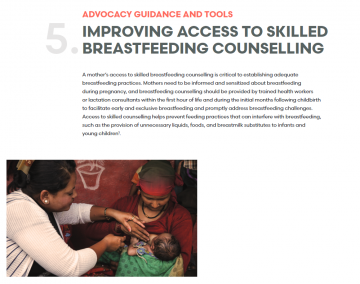
Global Breastfeeding Collective: Breastfeeding Advocacy Toolkit – Improving Access to Skilled Breastfeeding Counselling

Led by UNICEF and WHO, the Global Breastfeeding Collective (the Collective) is a partnership of more than 20 international organizations with the goal of increasing investment and policy change to support breastfeeding worldwide, which requires advocacy at the global, national, and sub-national levels. Developed by the Collective, this document is one of seven briefs that provide guidance and resources to stakeholders on how to advocate for adoption of these policy actions with government ministries, health care workers and managers, employers, donors, and other key decision-makers.

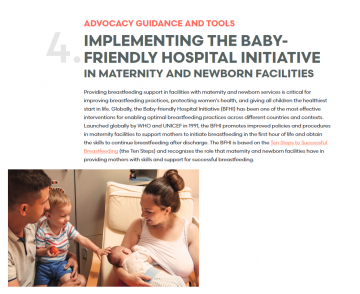
Global Breastfeeding Collective: Breastfeeding Advocacy Toolkit – Implementing the Baby-Friendly Hospital Initiative

Led by UNICEF and WHO, the Global Breastfeeding Collective (the Collective) is a partnership of more than 20 international organizations with the goal of increasing investment and policy change to support breastfeeding worldwide, which requires advocacy at the global, national, and sub-national levels. Developed by the Collective, this document is one of seven briefs that provide guidance and resources to stakeholders on how to advocate for adoption of these policy actions with government ministries, health care workers and managers, employers, donors, and other key decision-makers.